I’ll be completely honest – I avoided painting fantasy creatures for years because I thought they were “too nerdy” for a serious watercolor artist. Then one snowy afternoon, stuck inside during a blizzard, I decided to paint an ice dragon just for fun. No plan, no sketch, just let the watercolor do its thing with blues and silvers. That dragon looked absolutely ridiculous (the proportions were a mess and it somehow had six legs), but I had more fun painting it than I’d had in months.
Turns out, winter fantasy creature watercolor are basically permission slips to go wild with your favorite watercolor techniques. You want to splatter salt for texture? Great, it’s magical frost! Your paint bleeding where you didn’t want it to? Perfect, that’s ethereal mist! That weird granulation happening with your pigments? Congratulations, you just invented crystal scales!
All artwork provided is original and can be used as a reference for your own paintings.
Table of Contents
Why I Actually Started Taking Fantasy Creatures Seriously
So after my terrible six-legged dragon, I figured I should probably learn something about painting mythical creatures. I watched tutorials, studied other artists’ work, practiced dragon anatomy (yes, there are anatomy guides for creatures that don’t exist – the internet is wild). And somewhere along the way, I realized something that completely changed my approach.
Fantasy creatures aren’t actually about the creatures at all. They’re about atmosphere, emotion, and storytelling. Nobody’s going to fact-check whether your ice phoenix has the correct number of tail feathers because ice phoenixes aren’t real. What matters is whether your painting captures that feeling of something magical and otherworldly emerging from a winter storm.
This was incredibly freeing. I’d spent years stressing over whether my watercolor birds looked exactly like real sparrows or cardinals. But with fantasy creatures? The rules are whatever you decide they are. Your frost unicorn can have a mane made of actual icicles if you want. Your winter griffin can leave snowflake footprints. Nobody can tell you you’re wrong.
The Technical Side Is Actually Easier Than You Think
Here’s what surprised me most about painting winter fantasy creatures – they’re actually more forgiving than realistic wildlife. When you paint a real cardinal and get the red slightly wrong, bird watchers will notice. But when you’re painting a creature made of ice and starlight, “slightly wrong” doesn’t exist. There’s no reference photo to match.
The watercolor techniques are the same ones you’d use for any subject. Wet-on-wet for soft, misty effects. Dry brush for texture. Masking fluid for highlights. The difference is that with fantasy creatures, happy accidents aren’t mistakes – they’re magical features you totally planned all along.
What Winter Specifically Brings to Fantasy Painting
There’s something about winter themes that just works perfectly with watercolor. The natural color palette – all those blues, silvers, purples, and whites – happens to be exactly what watercolor does best. Unlike trying to paint bright, saturated summer colors (which can look muddy), winter tones stay crisp and ethereal even when they blend and flow.
Plus, winter gives you built-in atmospheric effects. Swirling snow? That’s just salt technique or white paint spatter. Frost patterns? Lifting paint with paper towels. Icicles? Masking fluid or negative painting. All these effects that might seem gimmicky in other subjects are completely justified in winter fantasy scenes.
And can we talk about how forgiving winter lighting is? Everything in winter has this soft, diffused quality. Harsh shadows are rare. Colors are muted. It’s basically the watercolor gods saying “here, we made a whole season that’s perfect for your medium.”
25 Winter Creatures That Actually Taught Me Something
I’ve organized these by what they taught me about watercolor, not by how “fantasy” they are. Some are classic mythical creatures, others are regular animals with magical twists. All of them pushed my skills in specific ways.
Ice Dragon Hatchling
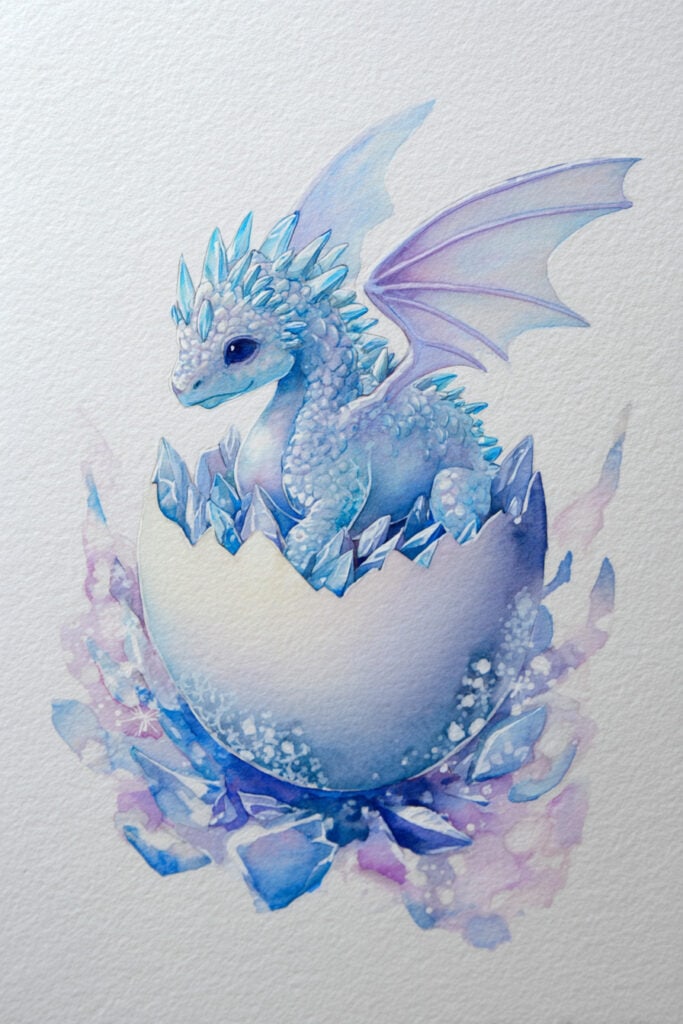
A baby dragon emerging from a pearl-toned egg, pale blue crystalline scales catching light, silver icicle spikes, translucent wings. I started with this one specifically because baby dragons are less intimidating than full-grown ones. The crystalline scales were my first real attempt at making something look both organic and mineral at the same time. Lots of wet-on-wet for the soft grey snow drifts, then going back in with more concentrated color for the dragon itself.
Arctic Phoenix Rebirth
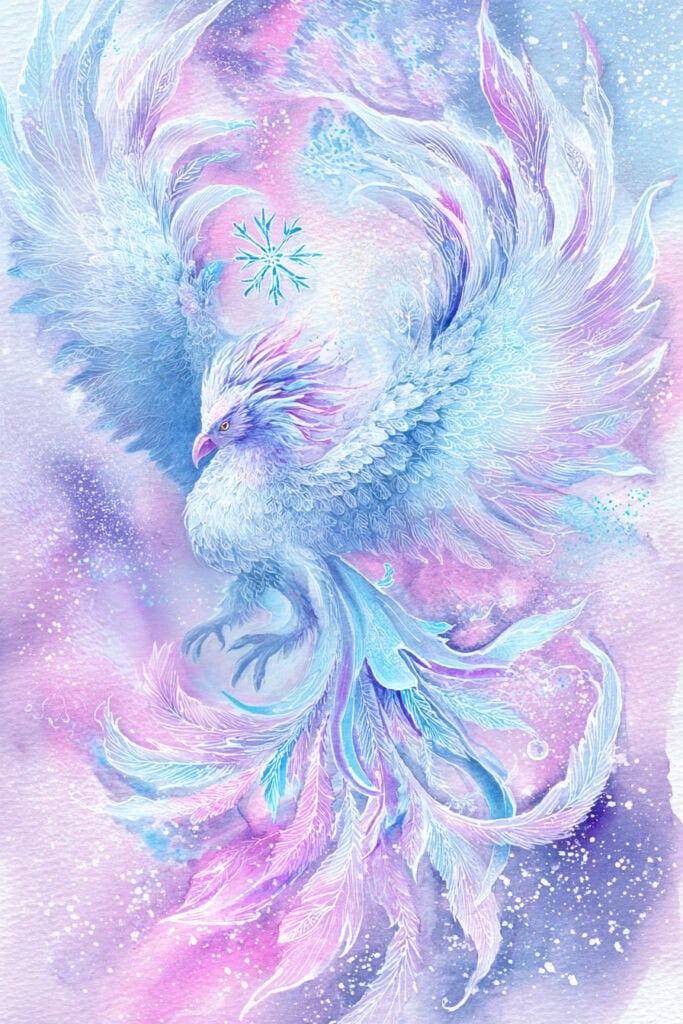
Phoenix with gradient icy feathers transitioning from pure white to pale blue, silver frost coating the plumage, cyan flames that somehow look frozen. The gradient wings were my nemesis at first – keeping a smooth transition while the paper is wet requires serious water control. But once I figured it out (lots of practice and accepting that some edges will be harder than others), it became one of my favorite techniques.
Frost Unicorn Mare
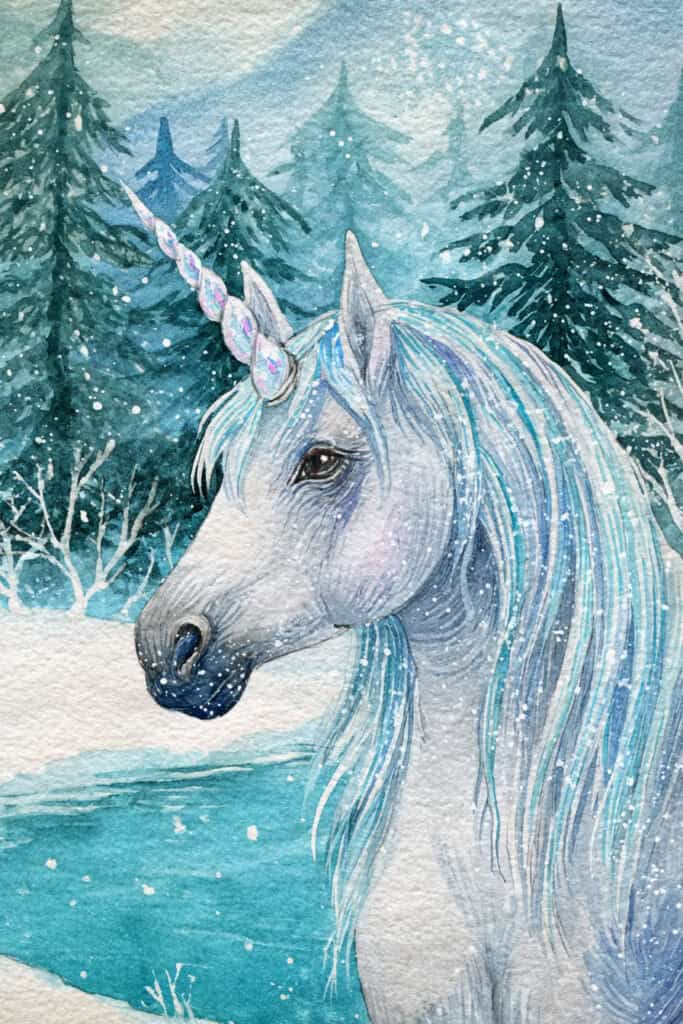
Unicorn with an opalescent horn that shifts colors, white mane with pale blue streaks, entire body coated in silver hoarfrost. Painting white on white paper seems impossible until you realize you’re actually painting shadows and letting the paper be the white. The opalescent horn was achieved by dropping multiple colors into wet paint and letting them mingle naturally.
Winter Griffin Guardian
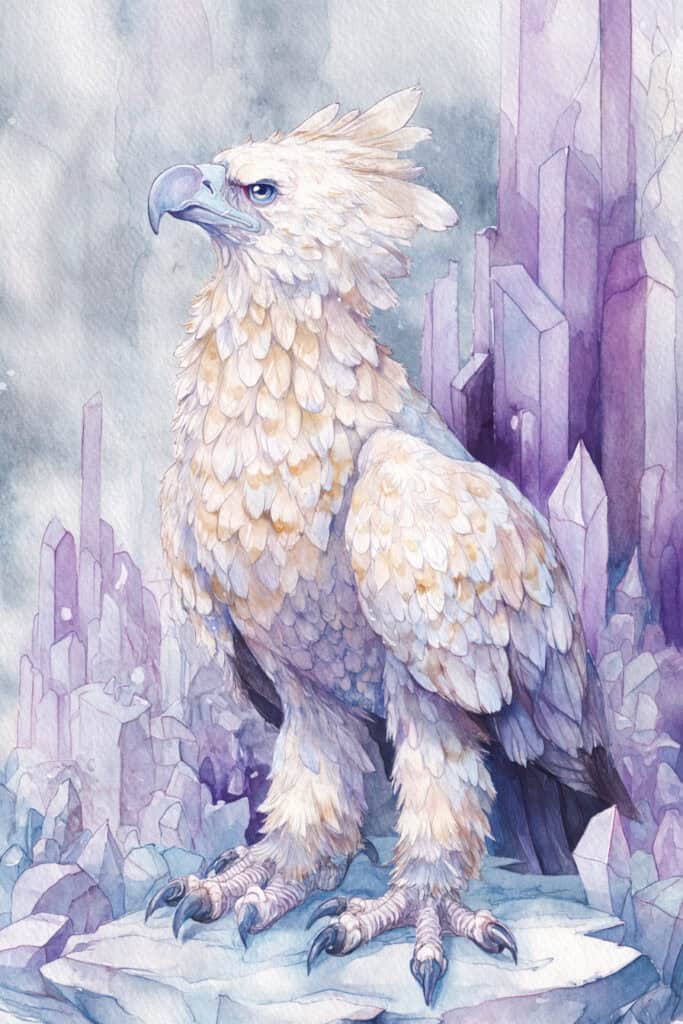
Griffin with cream feathers tipped in pale gold, silver-white fur body, icy blue claws. The challenge here was blending bird features (feathers) with mammal features (fur) in a way that didn’t look weird. Different brush techniques for each texture – dry brush for fur, softer washes for feathers.
Polar Kitsune Fox
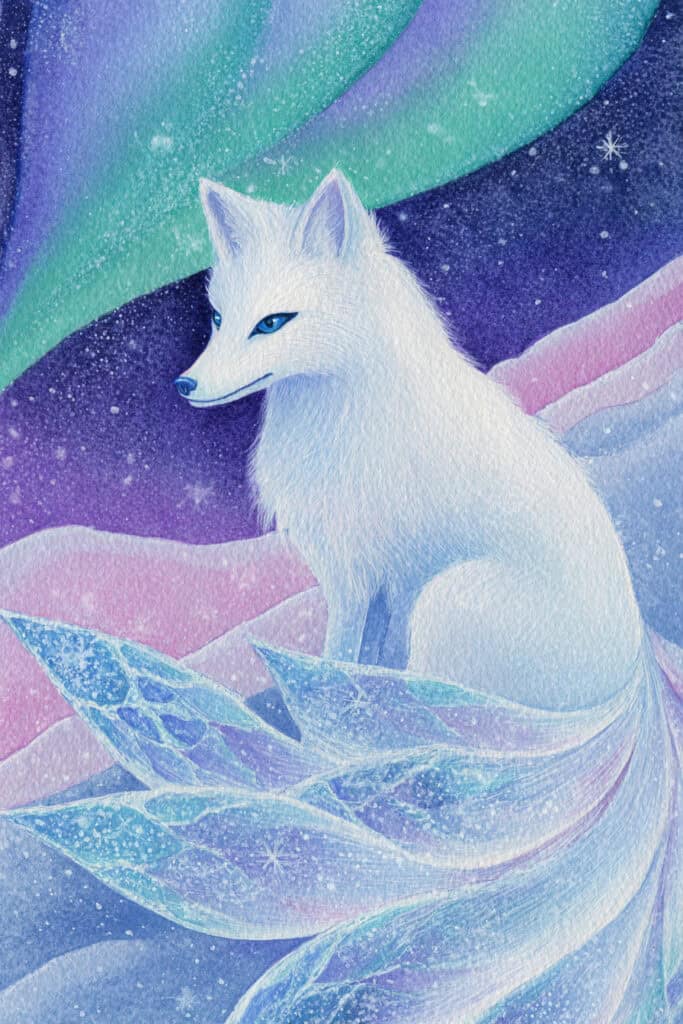
Nine-tailed fox with pure white fur and translucent blue crystal tails, silver frost patterns. Those nine tails were ambitious – I’ll admit the first attempt looked like a white mop. The trick was treating each tail as having its own light source since they’re supposedly made of crystal, which meant varying the blues and silvers on each one.
Ice Serpent Coil
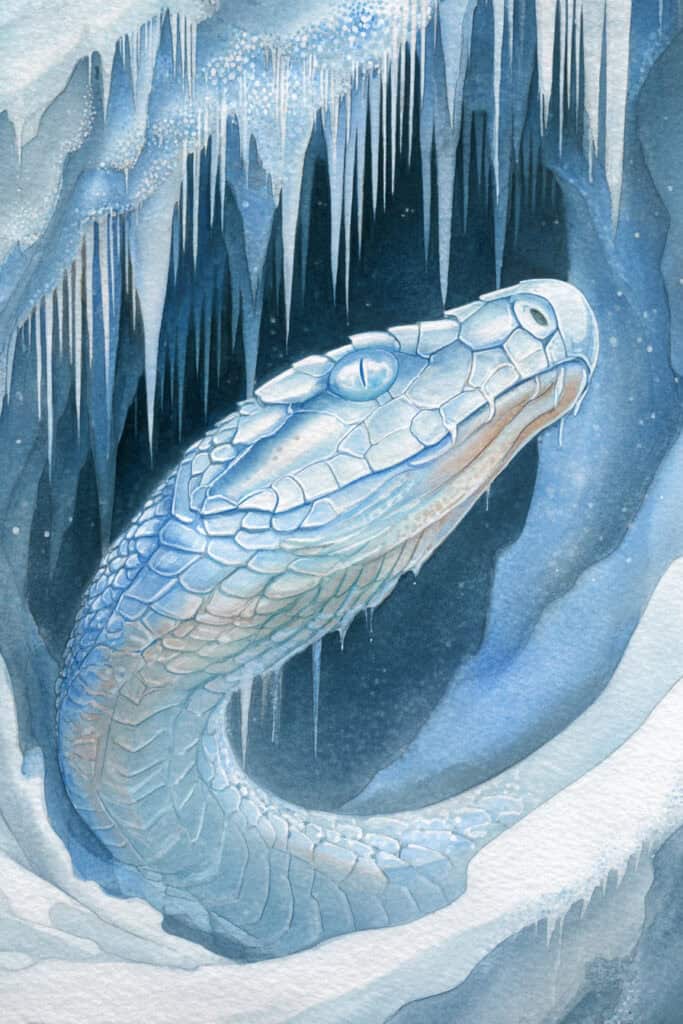
Serpent with iridescent blue-white scales, silver icicle ridges running down its spine, body made of translucent crystal. This was my masterclass in negative painting. To make something look see-through, you have to paint what’s behind it, not the thing itself. My brain hurt for a week.
Snowy Owl Familiar
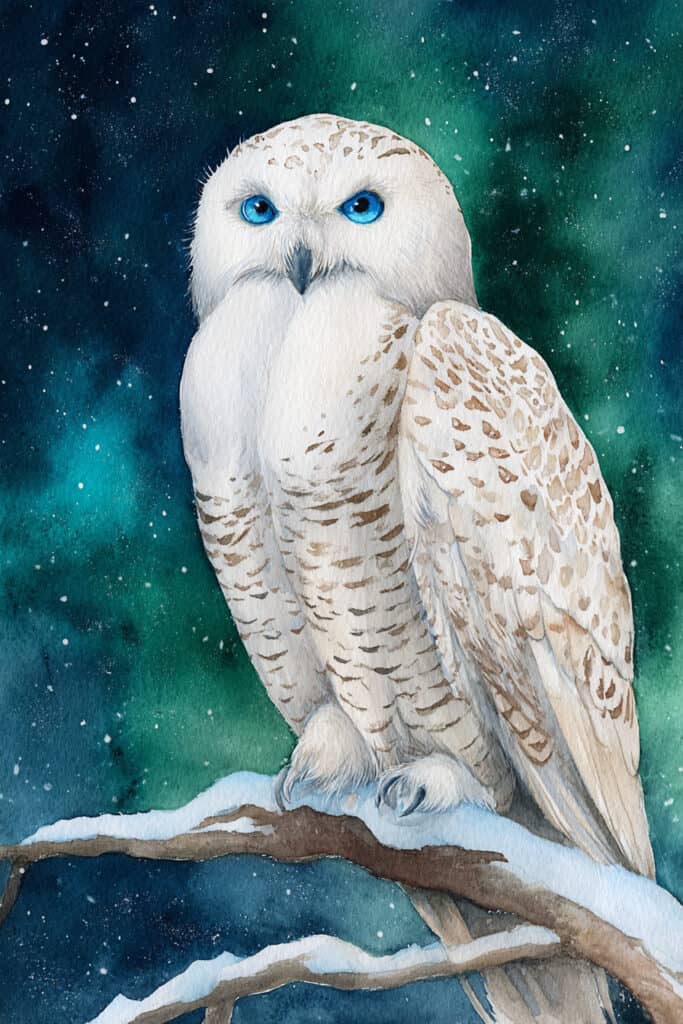
Owl with ivory plumage, soft grey speckles, impossibly bright blue eyes, perched on a frozen brown branch. I know, a snowy owl isn’t technically fantasy, but this one has an ethereal quality that tips it into magical territory. Those blue eyes became tiny pools of concentrated color in an otherwise muted painting.
Frost Pegasus Flight
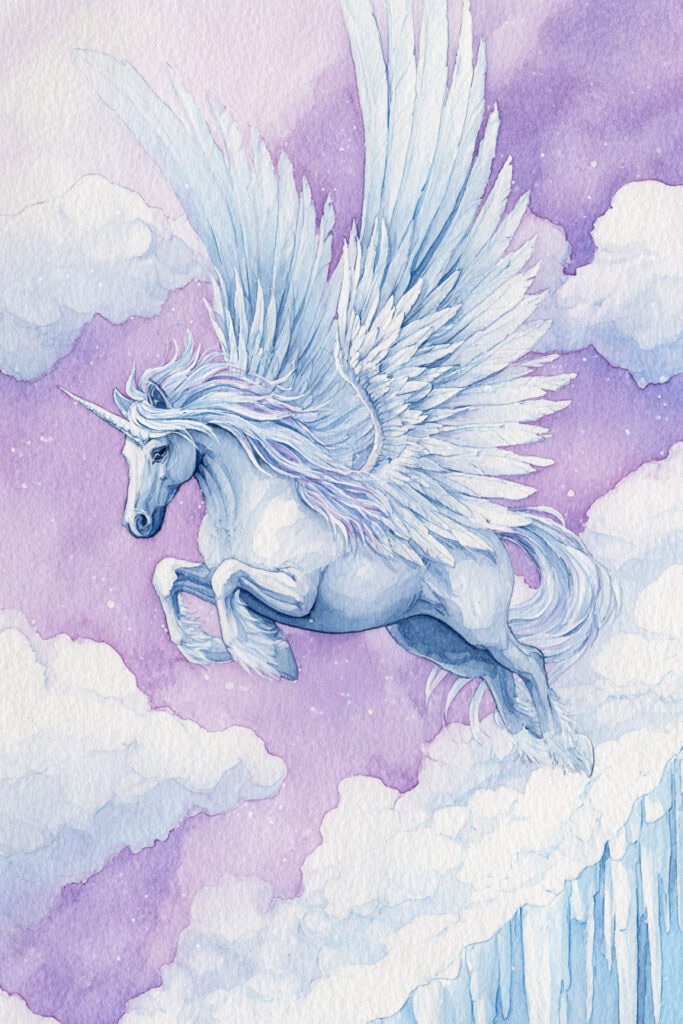
Pegasus with diamond-white wings, pale blue mane streaked with silver, leaving a trail of translucent icicles in flight. Flying creatures are tricky because you have to suggest movement while working in a medium that dries flat. I used more water and looser brushwork for the wings to imply motion.
Ice Fairy Dragon
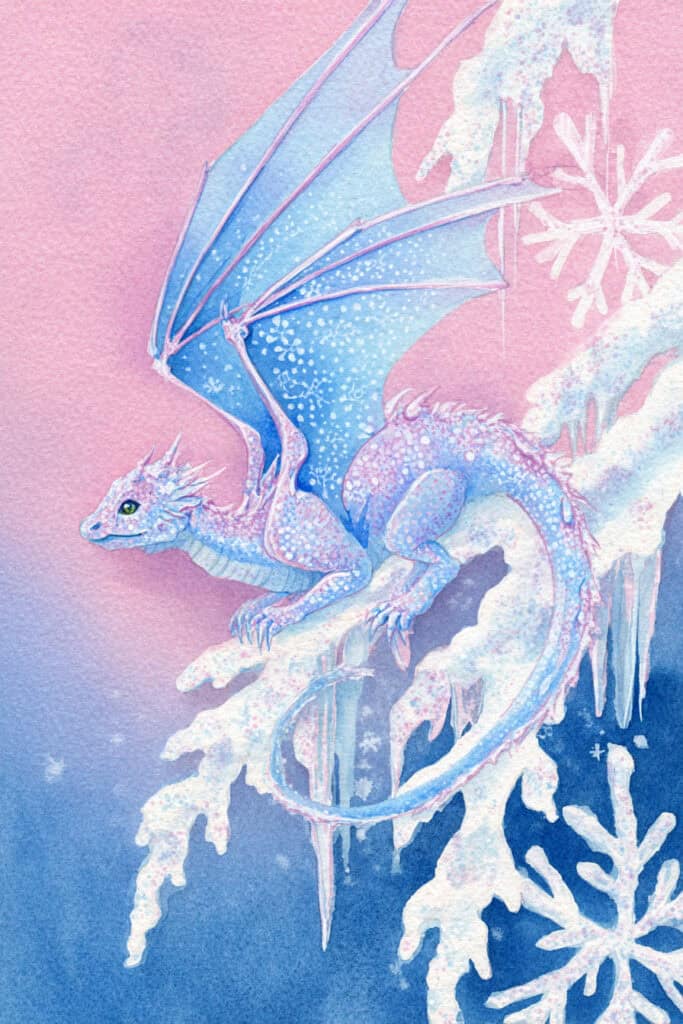
Tiny dragon with transparent blue gossamer wings like a dragonfly’s, opalescent scales, white snowflake patterns. The challenge was keeping it delicate and not overworking it. Sometimes the best approach with small, intricate subjects is to use more water and suggest details rather than trying to paint every scale.
Frost Moth Celestial
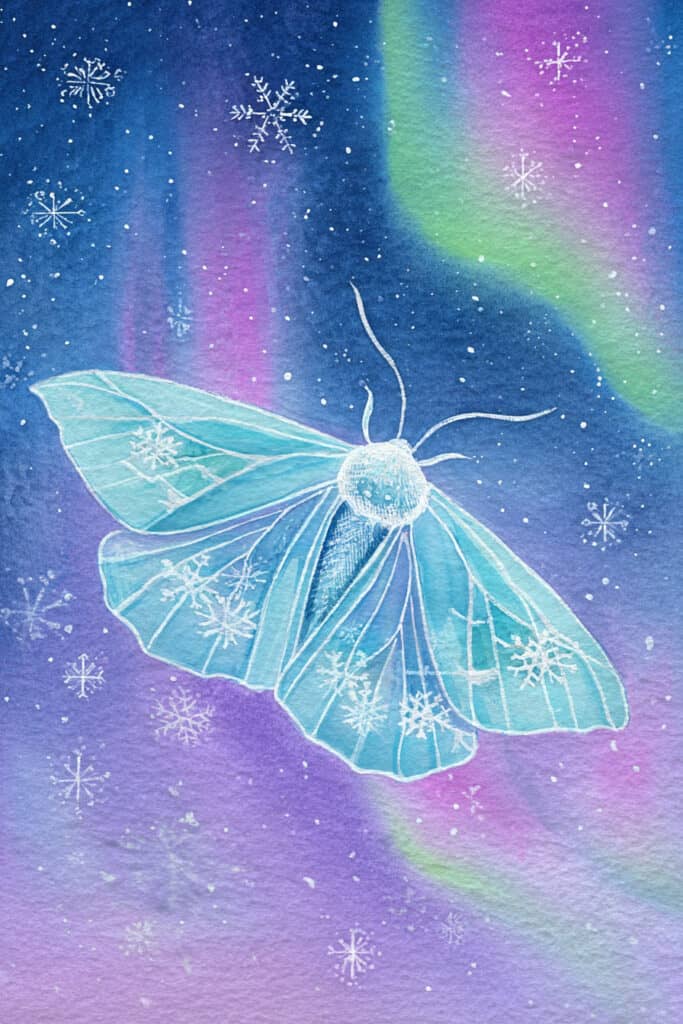
Moth with pale blue crystal wings, white antennae, silver snowflake patterns on each wing. I learned about symmetry with this one – or rather, about perfect symmetry looking unnatural. Real moths have slight variations between their wings, and keeping that asymmetry made it feel more alive despite being made of ice.
Winter Stag Deity
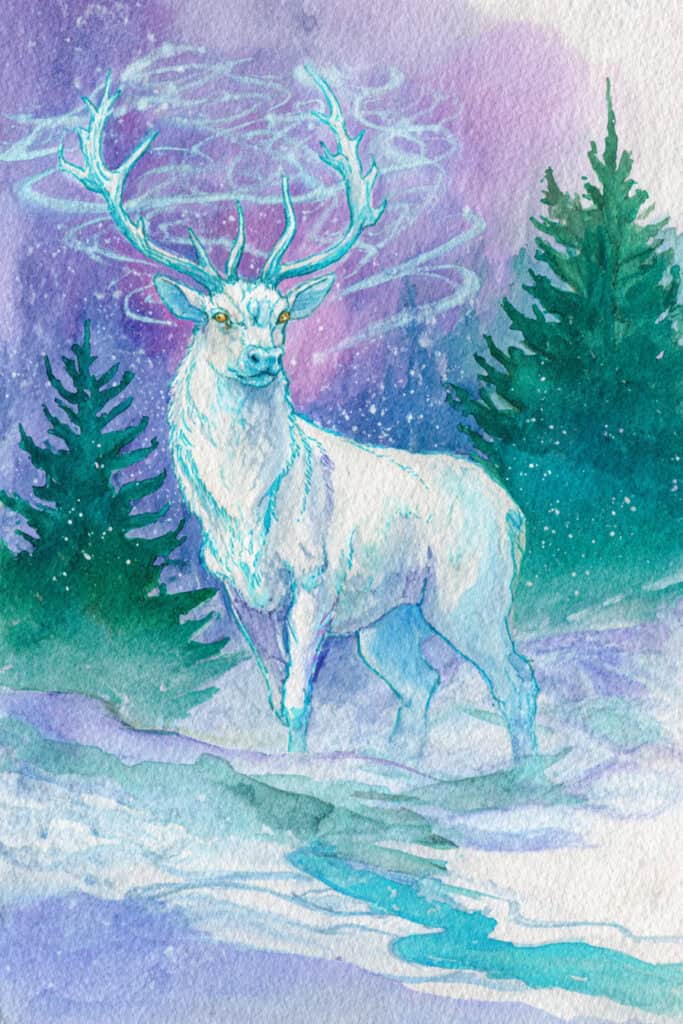
Stag with translucent blue ice antlers that look like frozen tree branches, white coat with silver undertones, cyan frost breath. The antlers took forever to figure out – how do you paint something that’s both solid and see-through? Layers. So many layers. Building up the transparency through multiple light washes.
Polar Bear Shaman
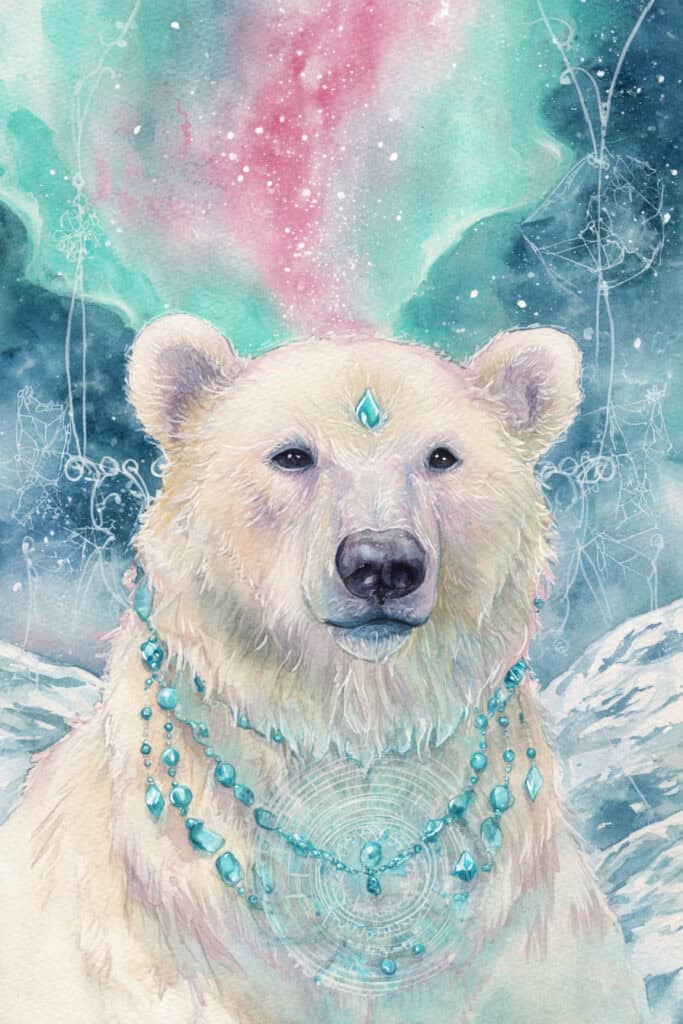
Bear with cream-white fur, wearing turquoise crystal jewelry, silver frost symbols painted on fur. The turquoise jewelry was my excuse to bring some warmth into an otherwise cool palette. Turquoise is technically blue-green, but it reads warm against all that white and silver.
Snow Rabbit Mage
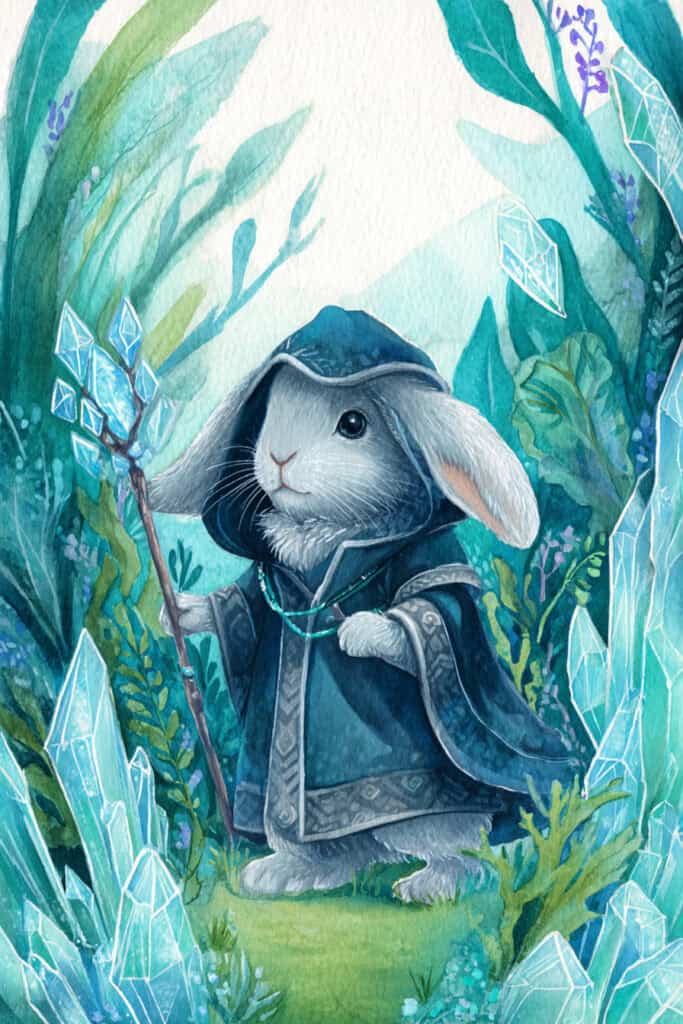
Tiny rabbit in a deep blue hooded cloak with silver trim, holding an ice blue crystal staff. Painting fabric on small creatures requires suggestion rather than detail. A few strategic folds to indicate the cloak, some highlights for the trim, and your brain fills in the rest.
Winter Deer Doe
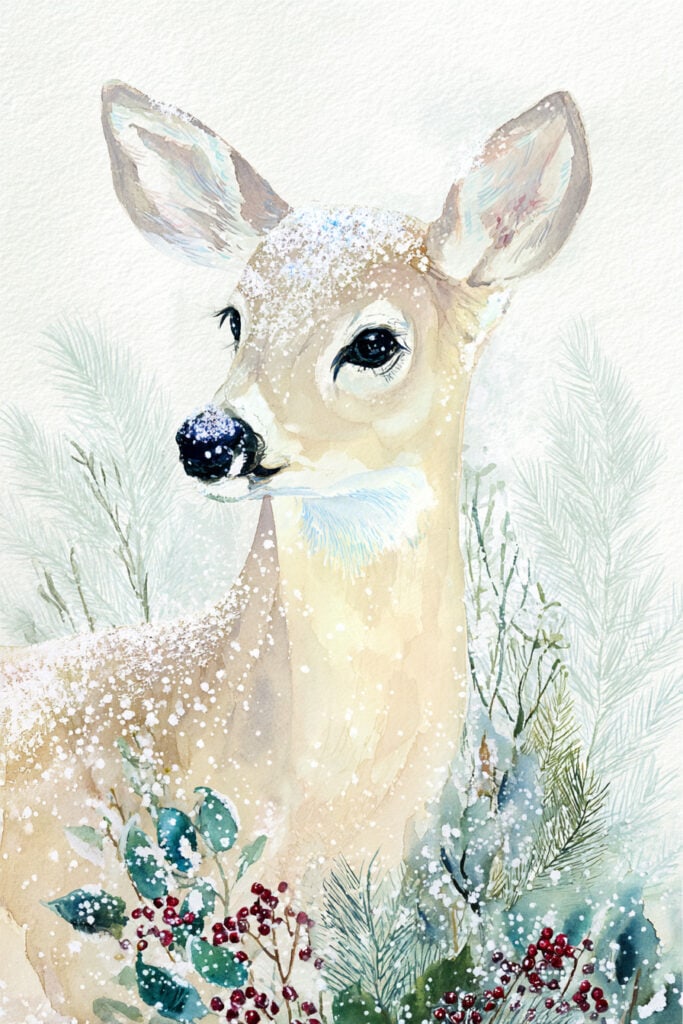
Doe with soft beige coat dusted in white snow, wearing a pale blue ice crown, silver frost on her eyelashes. The burgundy winter berries in the background were my rebellion against winter’s restricted palette. That pop of warm red makes everything else feel colder by contrast.
Arctic Lynx Hunter
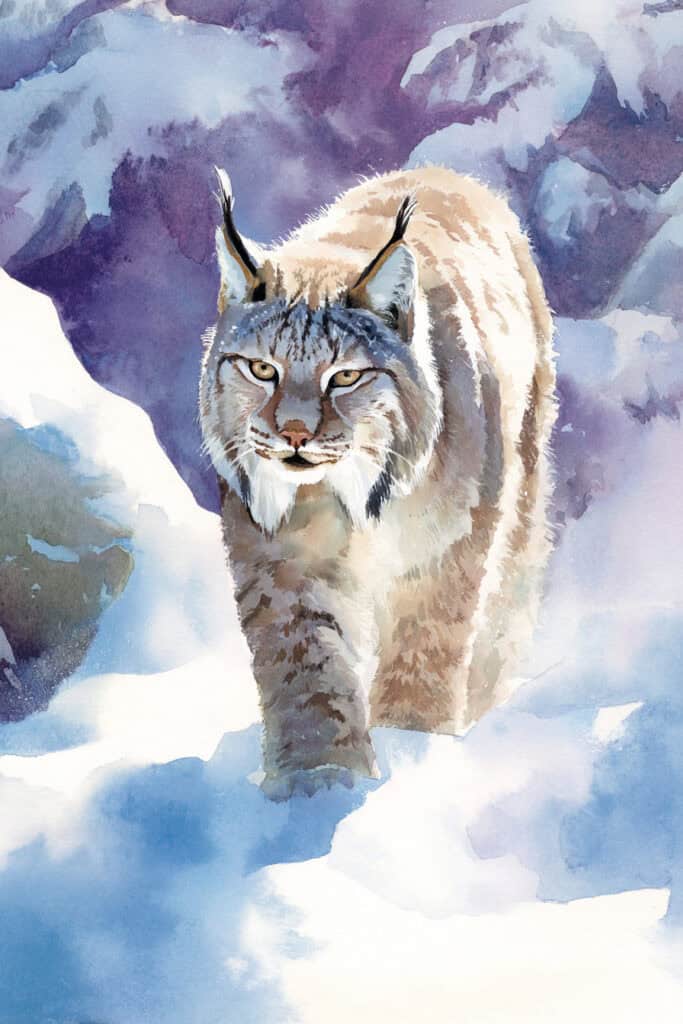
Lynx with thick grey-brown winter coat, cream ear tufts covered in frost, stalking through blue-white snow. The browns and greys were a relief after so much blue. Real animals with magical elements are easier entry points than full fantasy creatures, and this lynx just needed some strategic frost effects.
Winter Raven Familiar
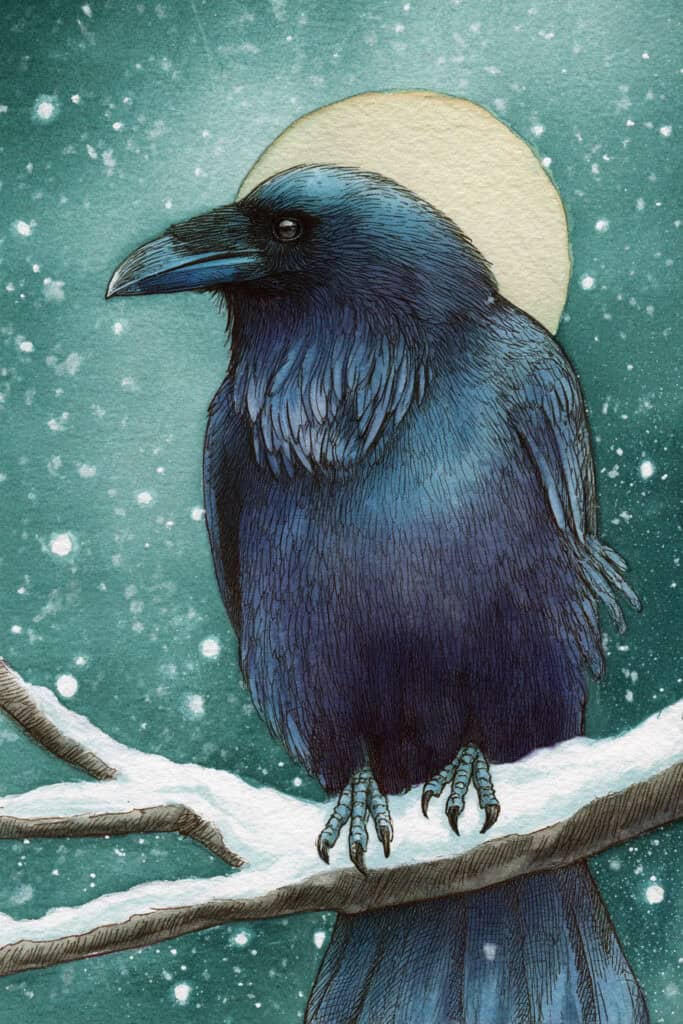
Raven with deep indigo-black feathers dusted with white frost, silver ice talons. Black in watercolor is tricky – use actual black and it looks flat and dead. But mix indigo, burnt umber, and a touch of blue? That’s the kind of black that has depth and mystery.
Frost Butterfly Swarm
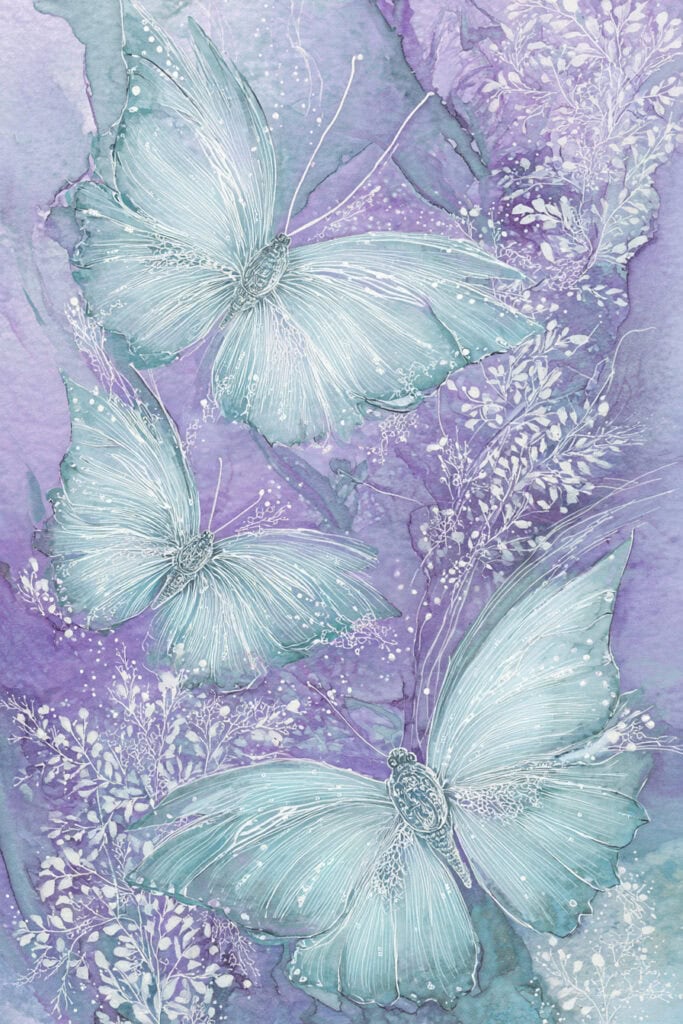
Multiple butterflies with translucent pale blue wings, white frost patterns, leaving silver trails as they swirl through lavender snow. Painting a swarm means accepting that not every butterfly gets equal detail. Some are just suggestions – a wing edge here, a flash of color there.
Snow Hare Trickster
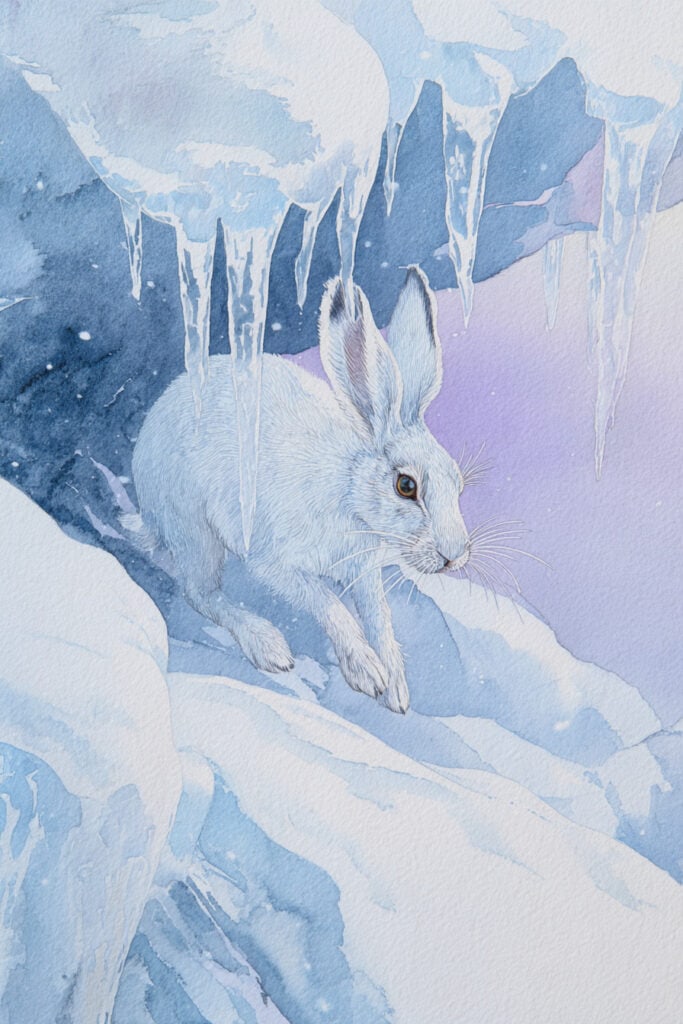
Hare with pure white winter coat, silver frost whiskers, mid-leap through a cream snowdrift. Action poses always feel risky in watercolor because you can’t really show motion blur like other mediums. Instead, I learned to use directional brushstrokes and strategic negative space to imply movement.
Ice Tiger Prowl
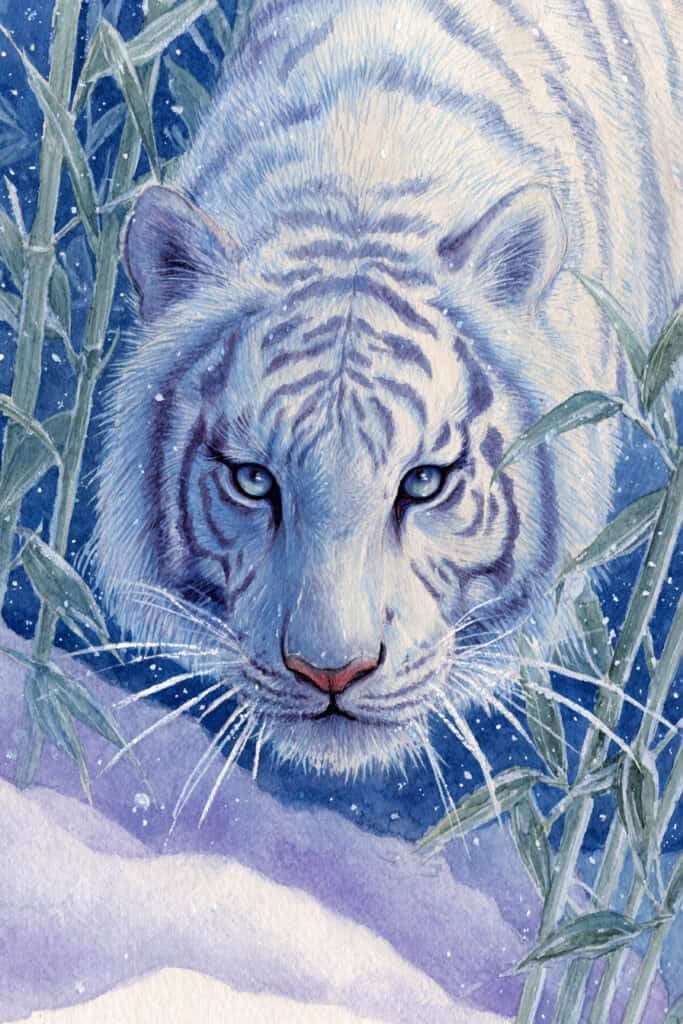
Tiger with white coat, pale blue stripes covered in frost, silver icicle whiskers, prowling through a lavender blizzard. The prowling pose has all that coiled energy – weight shifted forward, muscles tensed. Getting that tension in a fluid medium takes planning in the initial sketch.
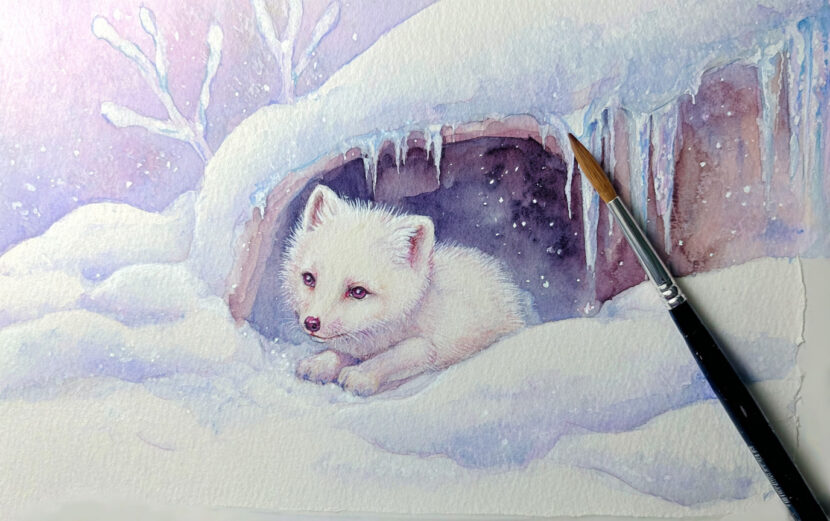
Snow Fox Kit
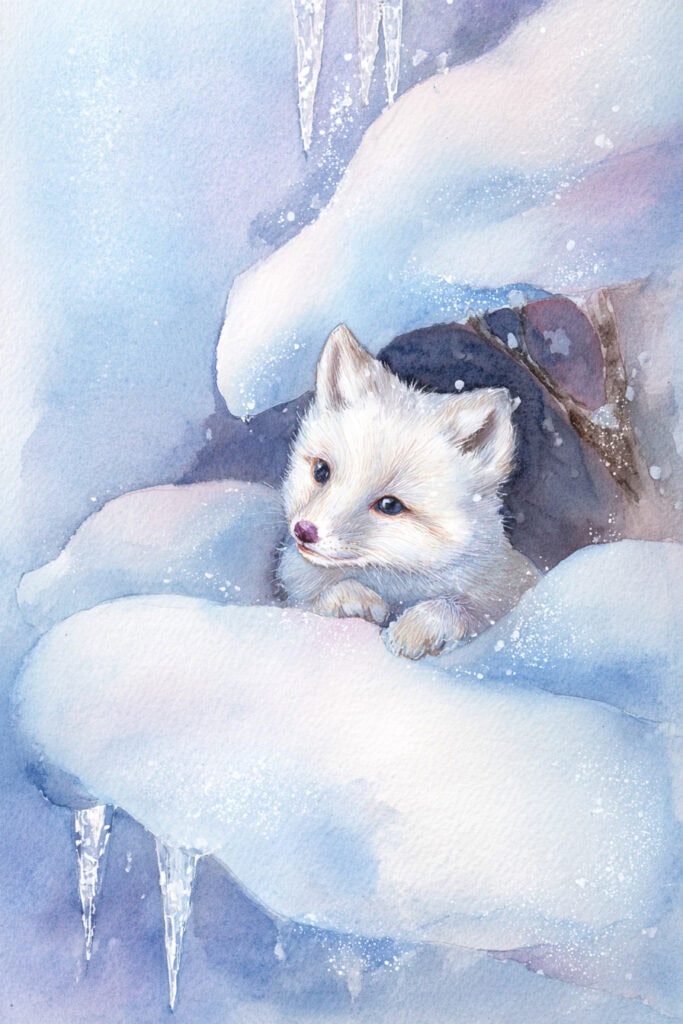
Baby fox with soft white winter coat, pink nose touched with frost, playing in cream snow. Baby animals automatically add movement and playfulness. Even in a still painting, a kit’s pose suggests the pouncing and tumbling that happened seconds before and will happen seconds after.
Arctic Wolf Pack
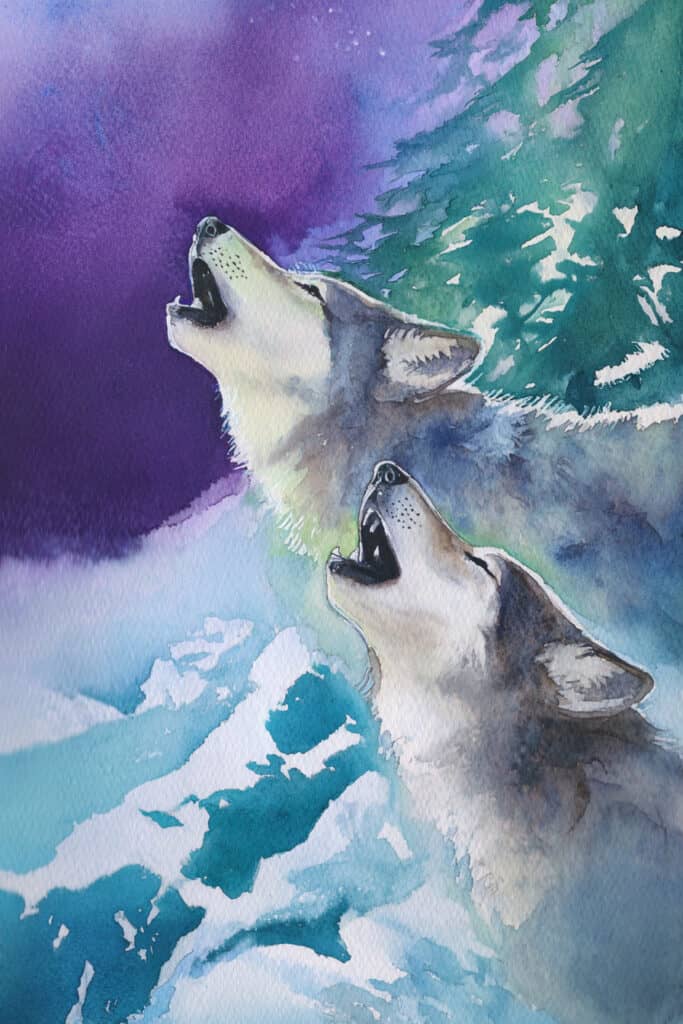
Multiple wolves with silver-grey winter coats, white frost on their muzzles, howling under a violet sky. Group compositions are challenging – each wolf needs to be an individual while also working as part of the pack. Different poses and slightly varied colors help with that.
Winter Elk Monarch
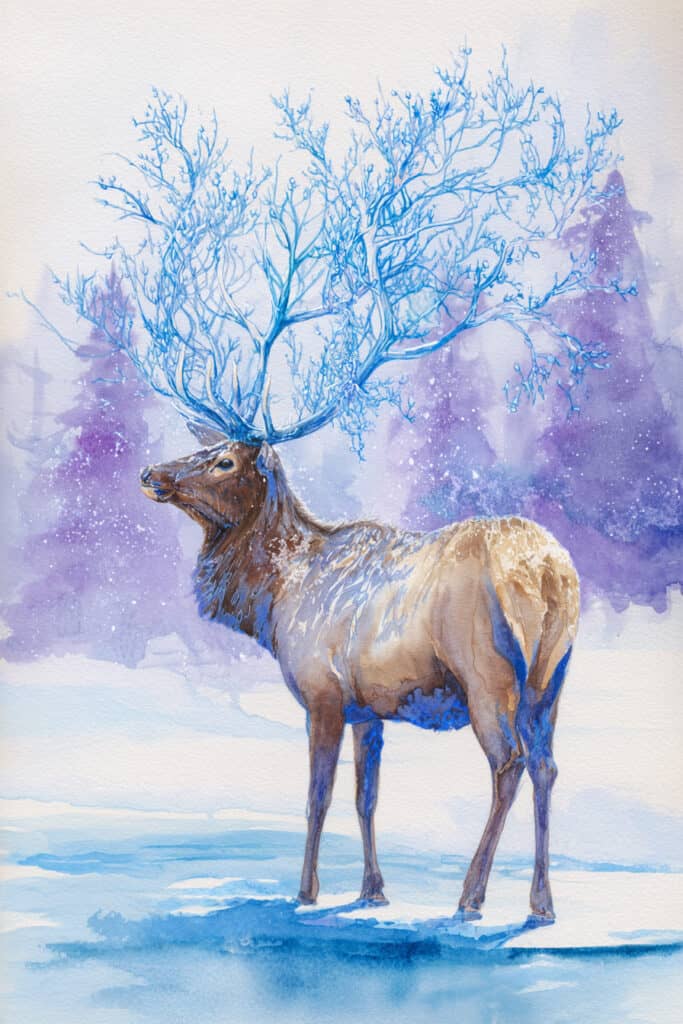
Elk with translucent blue ice-branch antlers, grey-brown coat covered in white snow, silver frost breath. The combination of realistic elk anatomy with completely fantastical antlers taught me about balancing the familiar with the impossible.
Winter Reindeer Majesty
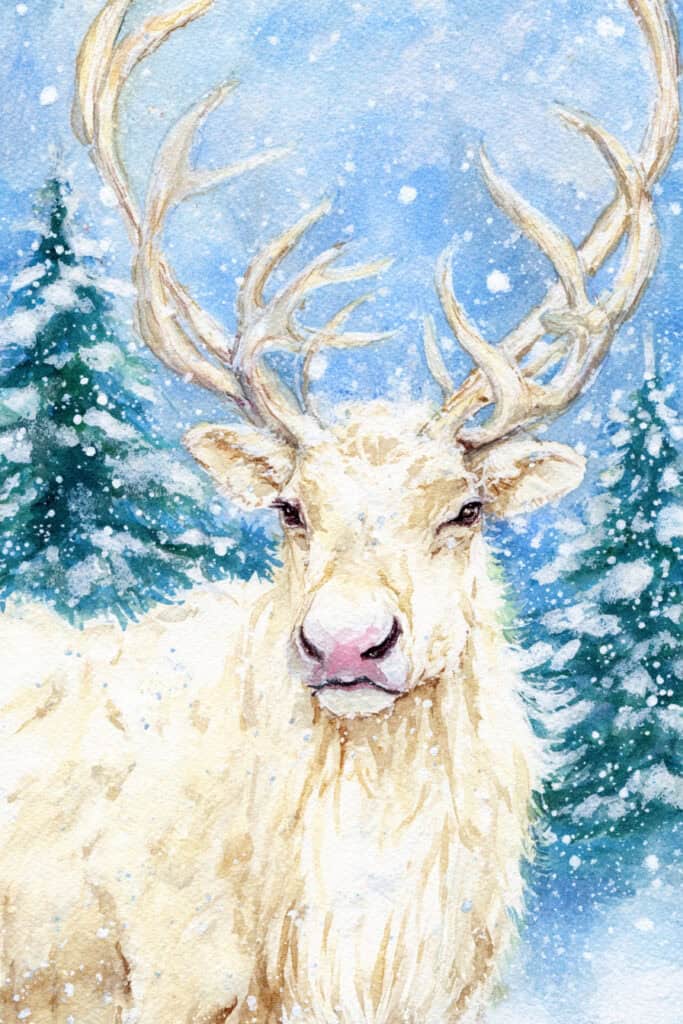
Reindeer with cream-white coat, pale gold antlers dusted with snow, soft pink nose. Sometimes the most magical thing is restraint. This is basically a real reindeer painted in a beautiful setting with careful attention to light. The magic is in the treatment, not the subject.
Ice Crystal Hummingbird
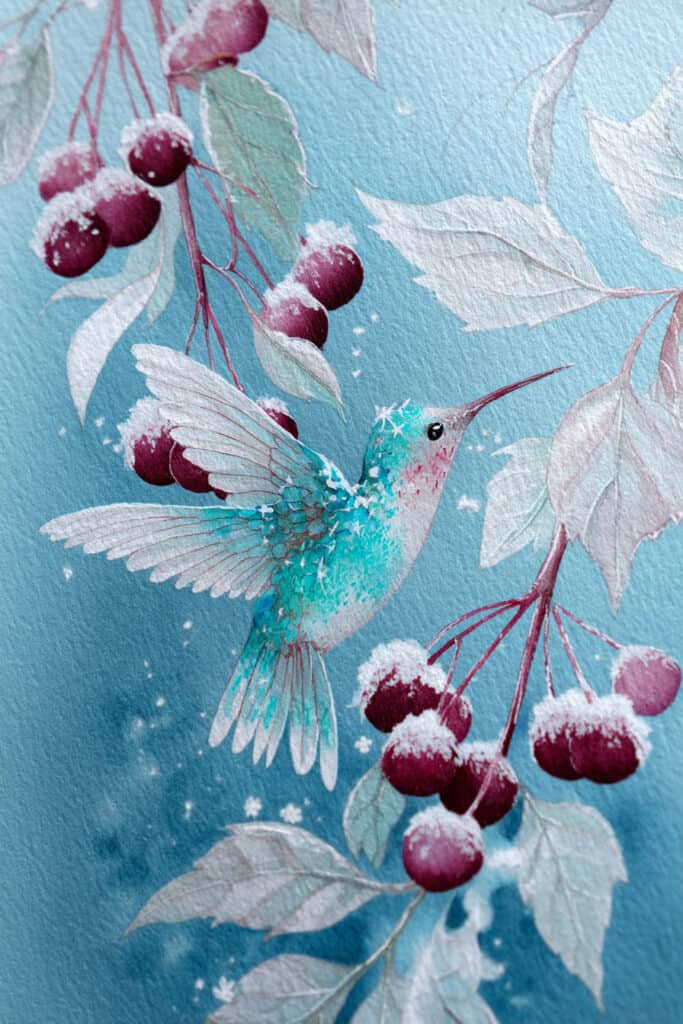
Tiny hummingbird with iridescent turquoise-white feathers, translucent wings, hovering near frozen burgundy berries. Hummingbirds are already impossible-looking creatures. Making one ice-themed was just leaning into the absurdity. The challenge was keeping something so small and detailed from getting overworked.
Frost Swan Elegance
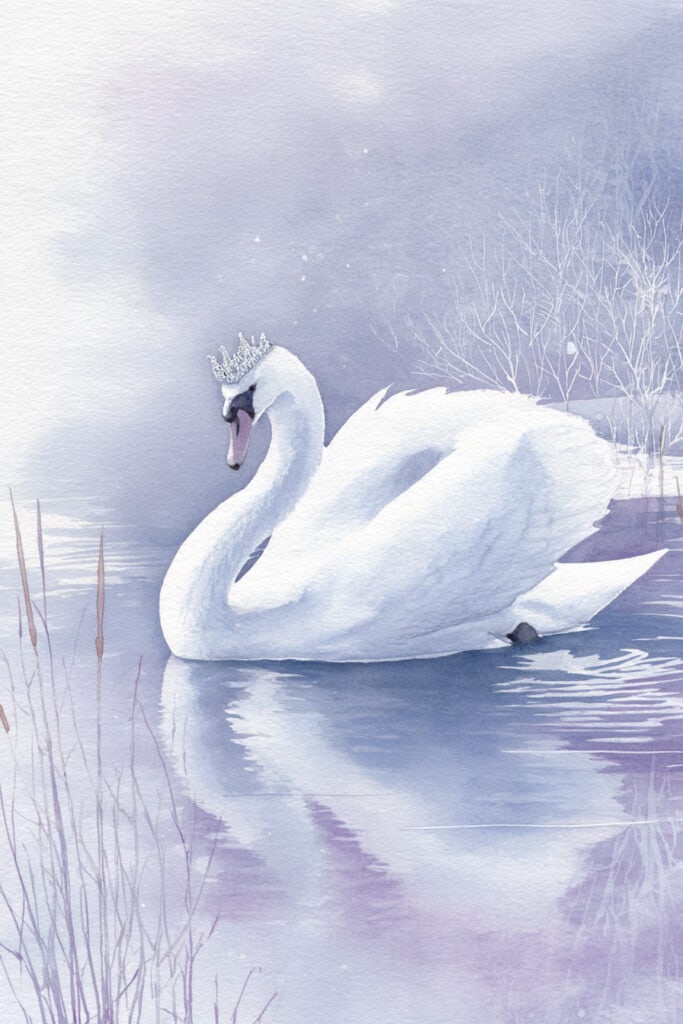
Swan with pure white plumage, pale blue wing highlights, silver ice crown, swimming in a misty ice blue lake. Swans already look pretty magical in real life. Adding just a touch of fantasy – the ice crown, the mist – pushes them into otherworldly territory without losing their essential swan-ness.
What Actually Matters in Fantasy Creature Painting
After painting probably hundreds of fantasy creatures by now (still can’t believe I’m saying that), I’ve figured out what actually makes them work:
Atmosphere beats accuracy every time. Nobody cares if your dragon’s wing anatomy is technically correct. They care if the painting makes them feel something – wonder, mystery, cold beauty, whatever emotion you’re going for.
Color temperature tells the story. A warm-toned winter scene feels cozy and inviting. Cool-toned feels mysterious or dangerous. You can have the exact same creature and completely change the mood just by adjusting your palette temperature.
White space is your friend. Don’t feel like you have to fill every inch of paper. Let the snow be white paper. Let the blizzard obscure parts of your creature. The mystery of what’s hidden can be more powerful than what’s shown.
Happy accidents are feature additions. That weird granulation in your blue? That’s now magical ice crystals. The paint that bloomed unexpectedly? That’s frost spreading. Watercolor misbehaving is just the medium helping you add magic you didn’t know you needed.
The Real Reason I Keep Painting These
Beyond all the technical stuff, beyond improving my skills, I keep coming back to winter fantasy creatures because they let me be playful in a way “serious” painting doesn’t. When you’re painting a realistic landscape or portrait, there’s always this pressure to get it right. But with a frost dragon? There is no right. There’s just your interpretation of something that doesn’t exist.
It’s given me permission to experiment with techniques I’d be too nervous to try otherwise. To use colors that “shouldn’t” work. To let the watercolor do weird things and call it intentional. And honestly? Those experimental techniques and bold choices have made my realistic work better too.
So yeah, start with something simple like the snowy owl or winter fox. Or jump straight into the ice dragon because why not? The worst that happens is you learn something and have fun doing it.