
I used to think winter village watercolor were cheesy. You know the type – perfect little cottages with impossibly straight smoke coming from chimneys, snow that looks like someone dumped powdered sugar everywhere, not a single icicle out of place. They reminded me of those mass-produced Christmas cards you see at the grocery store, and I wanted my art to be more… I don’t know, serious? Sophisticated?
Then I spent a winter weekend in a small mountain town during a snowstorm, and I got it. There’s something genuinely magical about watching lights come on in cottage windows as the sun sets and snow starts falling. The way lamplight reflects off fresh snow, creating these pools of warm gold against cool blue shadows. How chimney smoke really does curl into the twilight sky (though admittedly not in perfectly vertical lines). All those “cliché” elements exist because they’re actually beautiful.
So I went home and tried painting my first winter village scene. It was a disaster, naturally. The snow looked like I’d spilled white paint everywhere, the buildings had that “drunk architect” lean I was getting really good at, and the lighting made zero sense. But there was something about it that made me want to try again.
All artwork provided is original and can be used as a reference for your own paintings.
Table of Contents
Why Winter Villages Are Sneakily Difficult
Here’s what nobody tells you about painting winter villages – they look simple, but they’re basically asking you to master like five different skills at once. You need decent architectural perspective (those buildings aren’t going to paint themselves straight). You need to understand atmospheric effects (all that snow and mist and fog). You need to nail warm versus cool lighting (candlelight through windows against blue snow shadows). And you need to create depth and interest in what is essentially a monotone scene of white on white on white.
My first few attempts looked flat because I kept thinking “winter = white paint everywhere.” Wrong. Winter is actually about a million different shades of blue, purple, and grey, with strategic touches of warm light. The white parts? Those are mostly just unpainted paper or very, very pale washes.
The Smoke Problem Can we talk about chimney smoke for a second? I spent an embarrassing amount of time trying to paint realistic smoke before I learned the secret – you don’t really paint smoke, you paint the sky around the smoke and let the paper show through. Wet-on-wet technique, lift some paint while it’s still damp, and suddenly you have smoke that actually looks like it’s rising into the air instead of a weird grey blob floating above your chimneys.
The Snow-Covered Roof Situation
Snow on roofs should be the easiest thing in the world, right? It’s just white. Except it’s not just white – it’s got shadows, it’s got areas where the wind blew it into drifts, it’s got places where heat from inside melted it slightly. I learned this the hard way after painting a bunch of roofs that looked like someone had frosted them with cake icing. Now I use masking fluid for the brightest snow highlights and layer blue-greys for the shadows. Makes all the difference.
The Lighting That Makes or Breaks Village Scenes
The thing that finally made my winter villages stop looking like sad little card designs was understanding light sources. Winter village scenes usually have multiple light sources competing – candlelight from windows, street lamps, moonlight, maybe a fireplace glow through a window. Each light source has its own color temperature and intensity, and they all affect the snow and buildings differently.
I started doing little thumbnail sketches where I just mapped out where light was coming from and where shadows should fall. Sounds boring, I know, but it saved me from so many paintings where the light made absolutely no sense. Now when I see a village painting where every window glows with the exact same intensity and color, it drives me crazy. Real villages have variety – some windows are brighter, some are warmer, some are cooler depending on what light source is inside.
The Golden Hour Trick If you’re struggling with your village scenes, try painting them at twilight or just after sunset. That magical time when the sky is still holding some color (pale purple, deep blue, maybe some pink) but the windows are just starting to glow. The contrast between warm interior lights and cool evening shadows practically does half your work for you.
25 Village Scenes That Actually Taught Me Something
Candlelit Window Village Lane
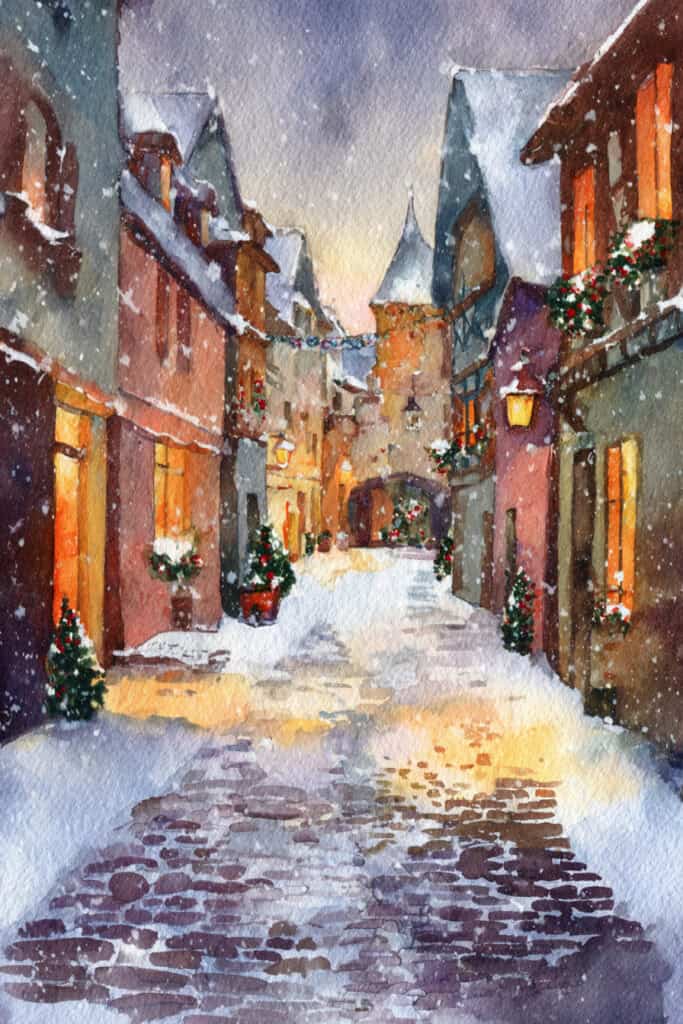
Narrow cobblestone street lined with cozy cottages, every single window glowing with warm candlelight, snow gently falling. This was my introduction to painting multiple light sources. Each window casts its own pool of golden light onto the fresh snow below, and getting those overlapping light pools to look natural took me forever. The trick is varying the intensity – not every window glows the same amount.
Hot Chocolate Cafe Corner
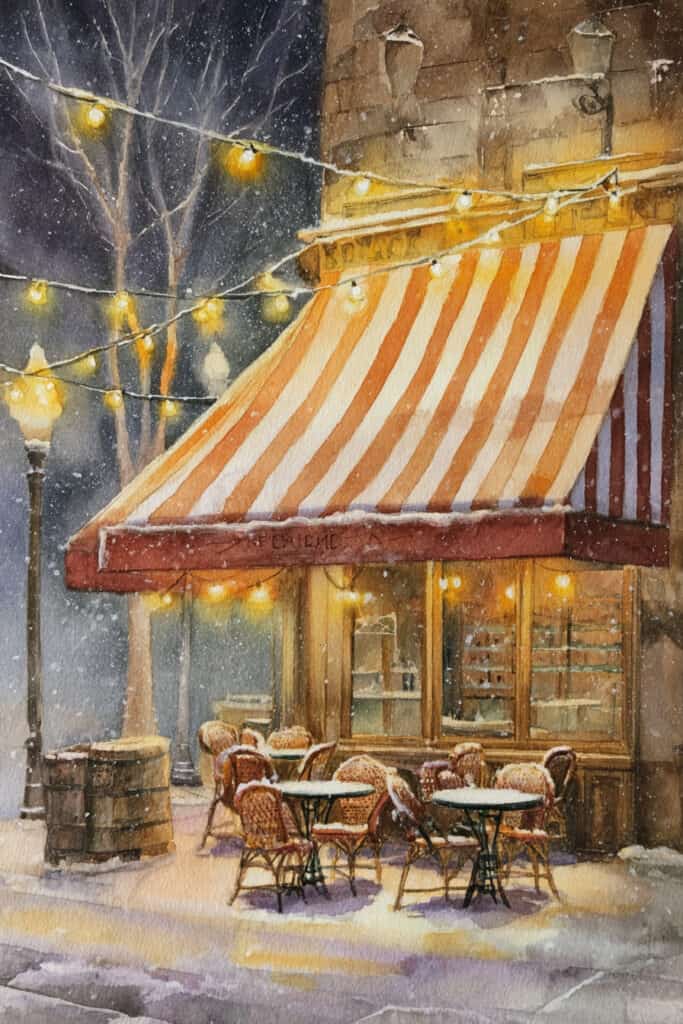
Charming corner café with outdoor seating, blankets draped over chairs, steaming mugs on tables, string lights overhead. The steam rising from the mugs seemed impossible at first – how do you paint steam? Same technique as smoke, actually. Wet the paper where you want steam, drop in a tiny bit of very pale grey, and lift some paint out. The contrast between the warm café glow and the cold outdoor seating area makes this scene work.
Smoking Chimney Row Houses
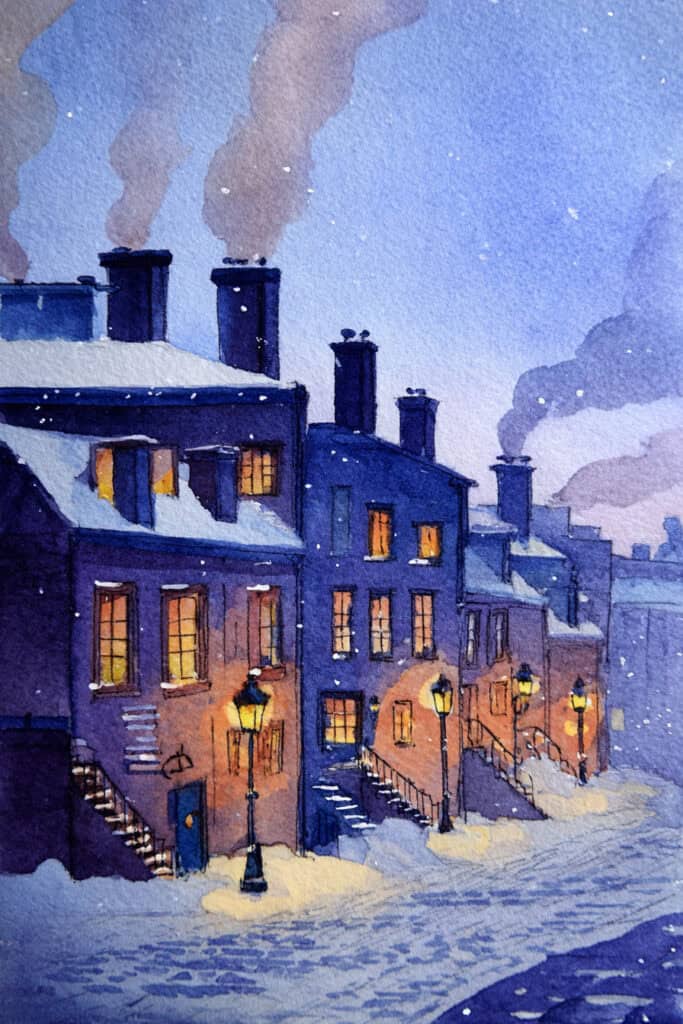
Pastel-colored row houses with chimney smoke curling against twilight sky, snow-covered rooftops. The pastel house colors were a revelation – you don’t need strong colors to create variety. Pale pink, soft yellow, light blue houses all covered in snow create visual interest without being overwhelming. The smoke against twilight sky taught me about value contrast more than any other painting.
Bakery Morning Snow
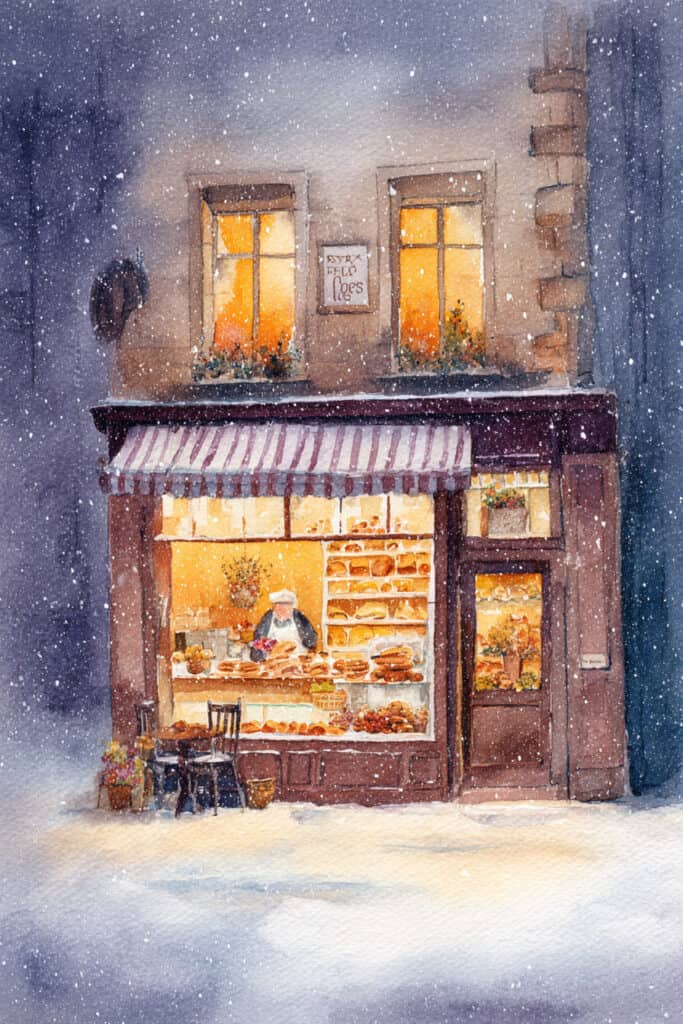
Village bakery at early morning, warm light glowing through windows, fresh bread cooling on sills, baker visible inside. Morning light is different from evening light – cooler, fresher, with longer shadows. Getting that early morning quality instead of evening warmth required cooler yellows and paler washes overall.
Village Inn Fireplace Glow
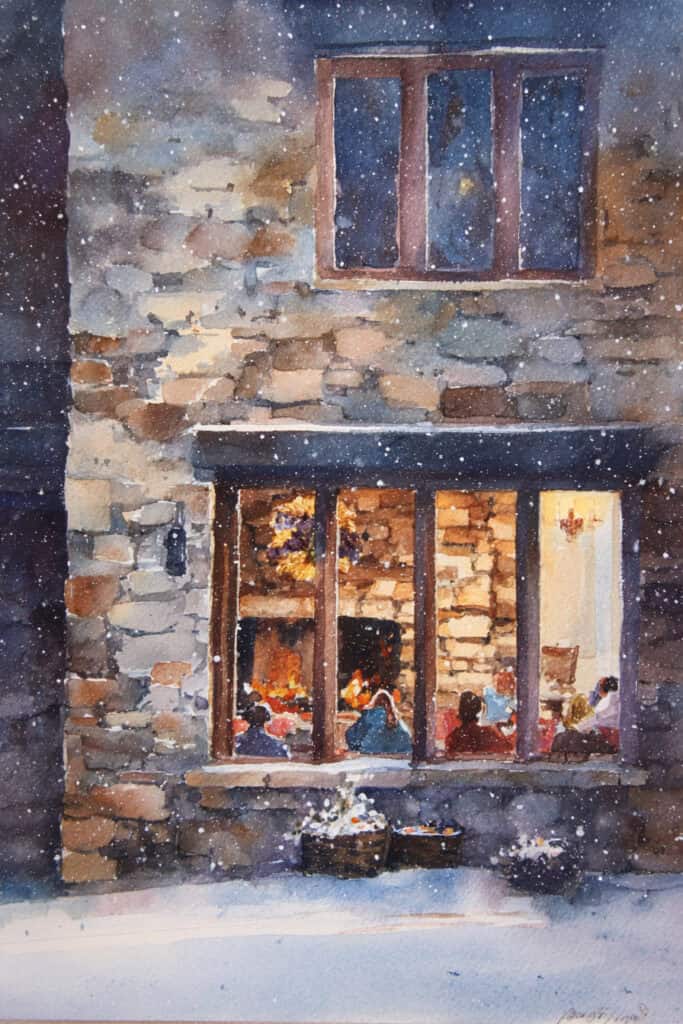
Cozy inn with fireplace visible through large windows, guests gathered around, snow falling heavily outside. The fireplace presented a new challenge – flickering, moving light that’s warmer than regular indoor lighting. I used more orange and less yellow for the fireplace glow to differentiate it from regular lamplight.
Frozen Canal Ice Skating
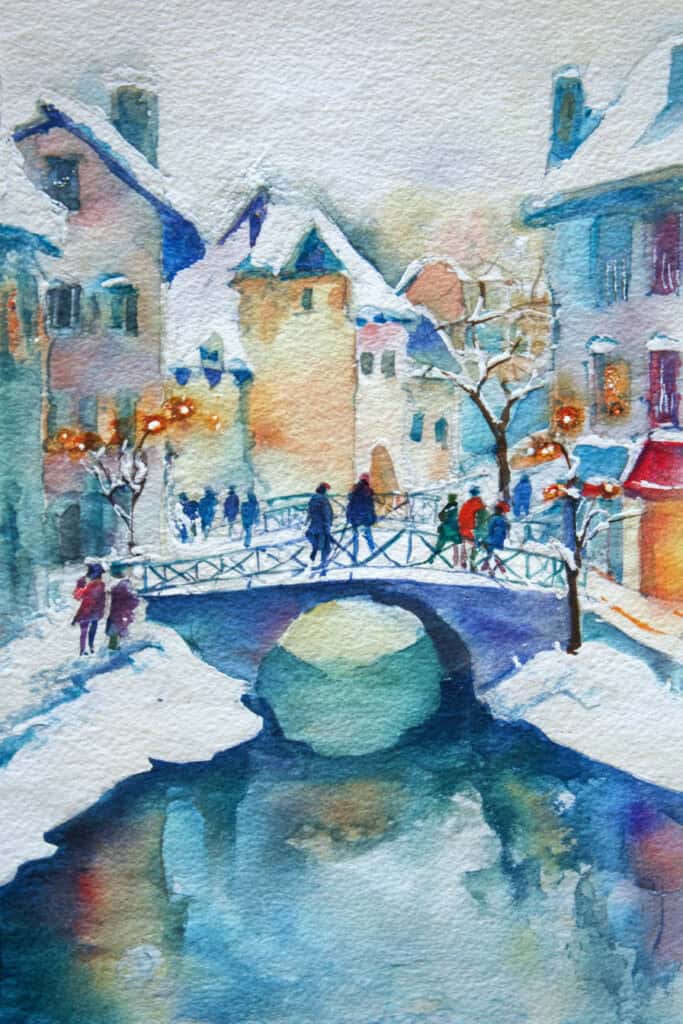
Village canal frozen solid, villagers skating beneath twinkling bridge lights, colorful scarves flowing. The perspective of a canal stretching into the distance while showing multiple figures at different depths – this one stretched my skills. Figures farther away needed to be less detailed and cooler in tone. The bridge lights reflecting on ice? That required understanding how light behaves on reflective surfaces.
Christmas Market Square
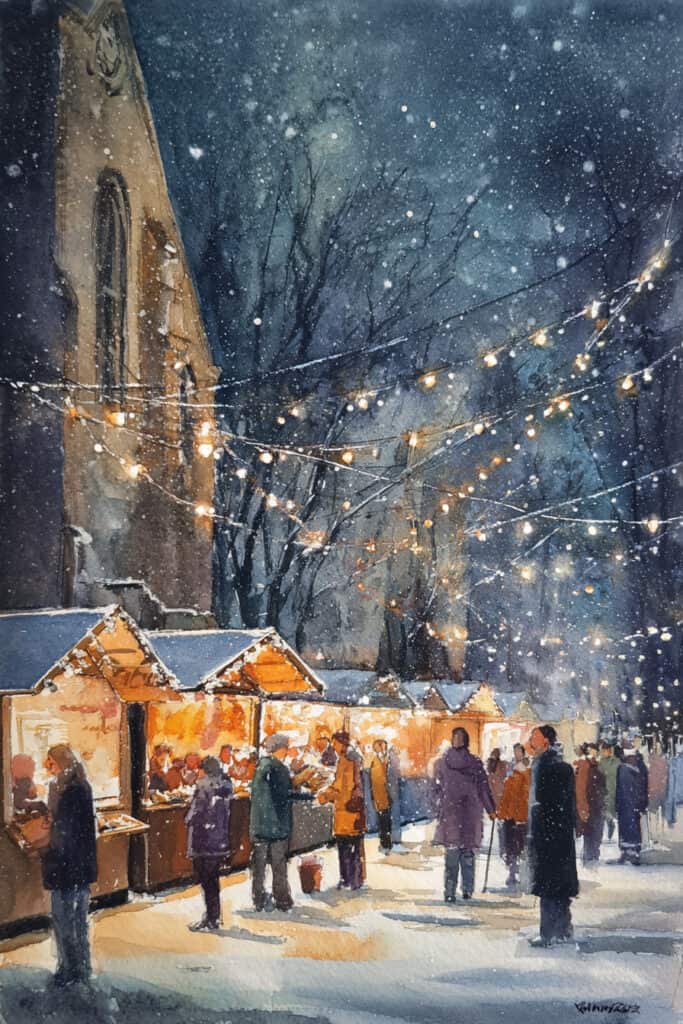
Bustling village square with wooden market stalls, fairy lights everywhere, vendors serving warm cider. Market scenes are chaos – so many people, stalls, lights, activity. The lesson here was learning when to suggest rather than detail. You can’t paint every person in a crowd scene. Some are just impressions of color and movement.
Horse Sleigh Village
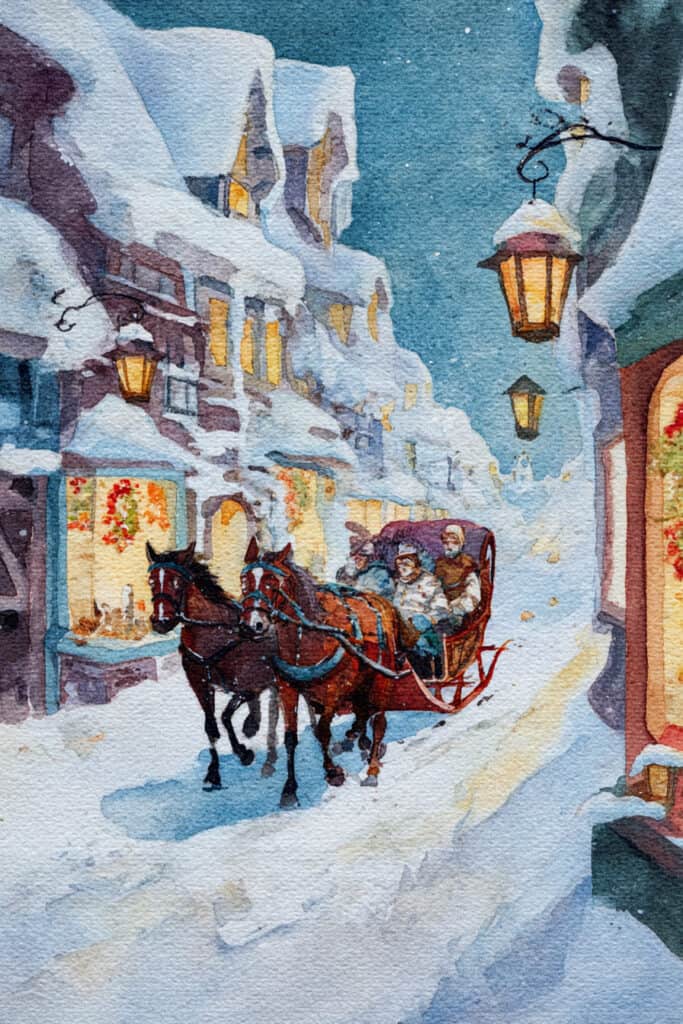
Horse-drawn sleigh gliding through snowy village street, bells jingling, passing decorated shopfronts. The movement of a sleigh through falling snow creates these wonderful diagonal lines that lead the eye through the composition. The horse was intimidating until I realized you could mostly suggest it with a few dark shapes and let the viewer’s brain fill in “horse.”
Village Bridge Romance
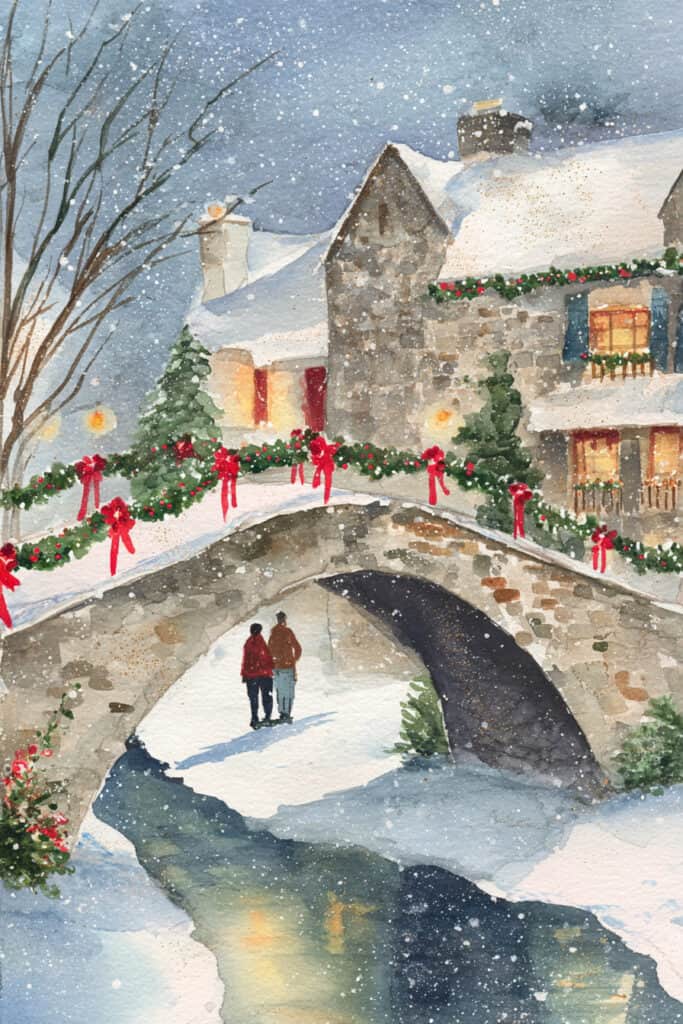
Arched stone bridge decorated with evergreen garlands and red ribbons, couple walking hand-in-hand, snow falling softly. The arch creates natural framing that draws attention to the couple. The green garlands and red ribbons were my excuse to add color to an otherwise muted scene – sometimes you need those pops of color to keep things interesting.
Train Station Village Arrival

Vintage train station with steam locomotive arriving, snow falling on platform, travelers disembarking. Steam locomotives are basically smoke machines, which means lots of practice with that lifting technique. The warm station house contrasted with the cold platform created natural zones of warm and cool that helped organize the composition.
Bookshop Lane Snowfall
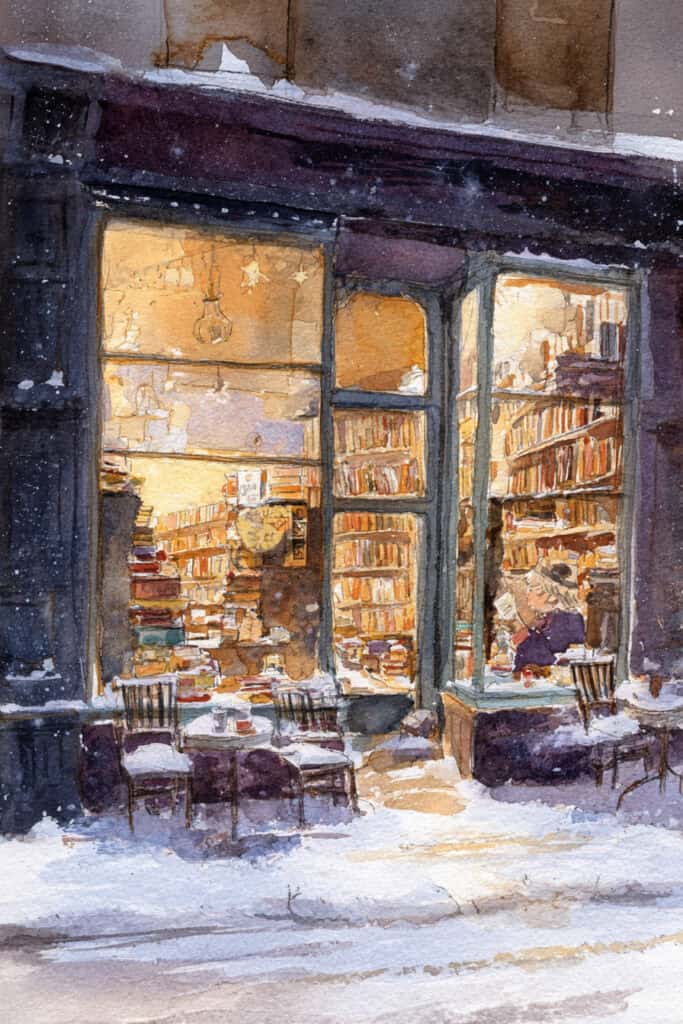
Cozy bookshop street with books displayed in frosted windows, warm golden light inside, snow accumulating on window ledges. Bookshops have different architectural character than other buildings – larger display windows, often slightly cluttered in a charming way. Getting frost on windows while still showing what’s inside required strategic masking fluid use.
Antique Shop Snow Window
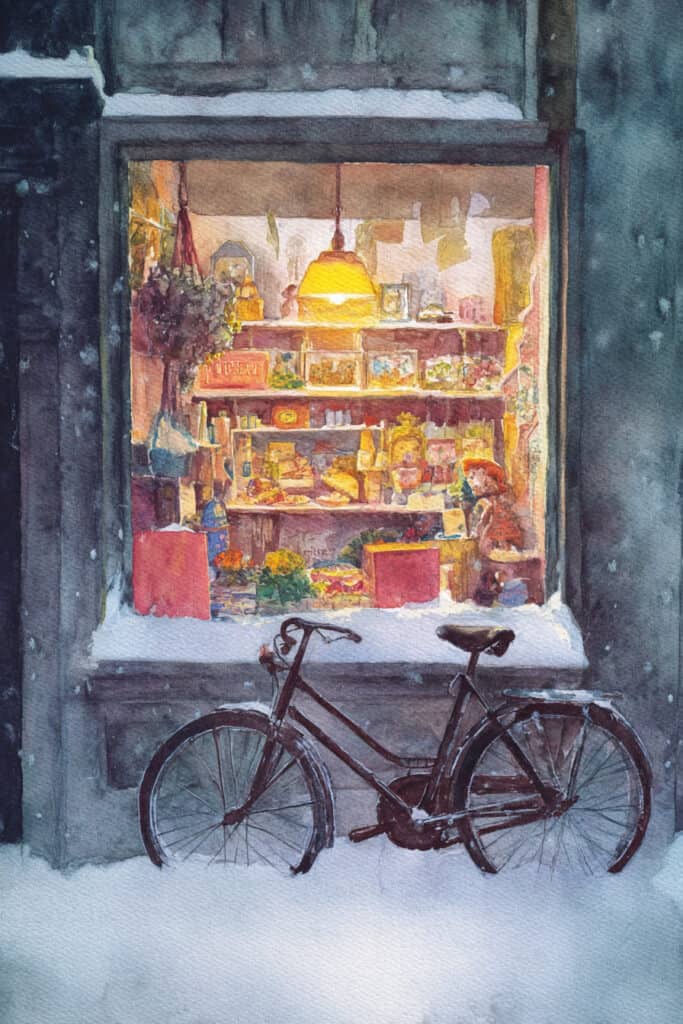
Vintage antique shop with treasures visible through windows, warm interior glow, old bicycle leaning against wall outside. Antique shops are compositional gold mines – all those interesting shapes and objects in the window give you so much to work with. The challenge is suggesting enough detail to read as “antique shop” without painting every single item.
Toy Shop Window Wonder
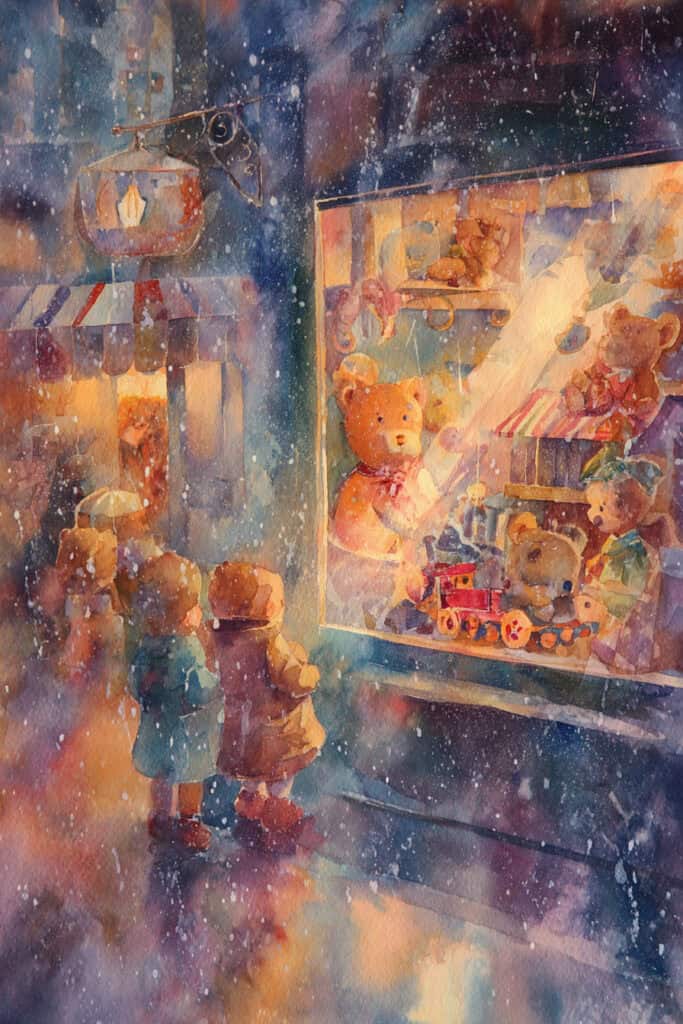
Magical toy shop with window display full of teddy bears, trains, and dolls, children pressed against glass. This scene is pure nostalgia, which means it needs to be handled carefully to avoid being saccharine. The key was focusing on the quality of light and keeping the children as silhouettes or suggestions rather than detailed portraits.
Candlemaker Workshop Street
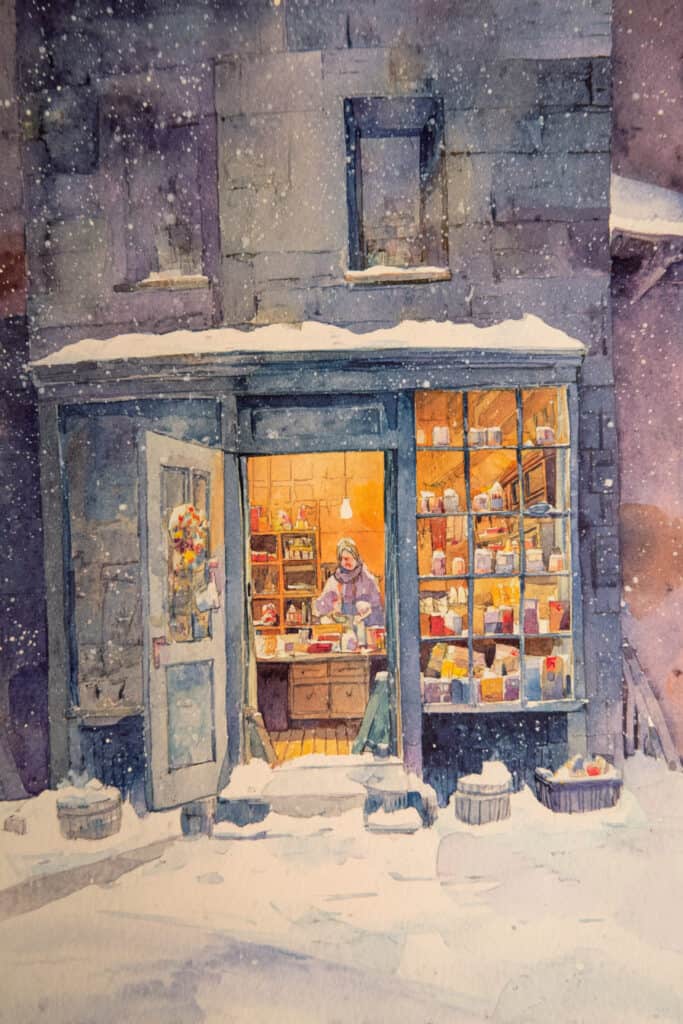
Village candlemaker shop with warm glow of candles visible through windows, door open, artisan working inside. The multiple candle flames create this beautiful, complex warm light effect. Each flame is a tiny light source, and collectively they create this golden glow that’s different from lamp light or firelight.
Cozy Library Village Evening

Village library with tall windows showing bookshelves, readers inside among warm lamps. Heavy snow falling outside, people seeking refuge inside. Libraries have a particular quality – quieter, more contemplative than other public spaces. The challenge was conveying that peaceful atmosphere while still having enough visual interest.
Village Greenhouse Winter
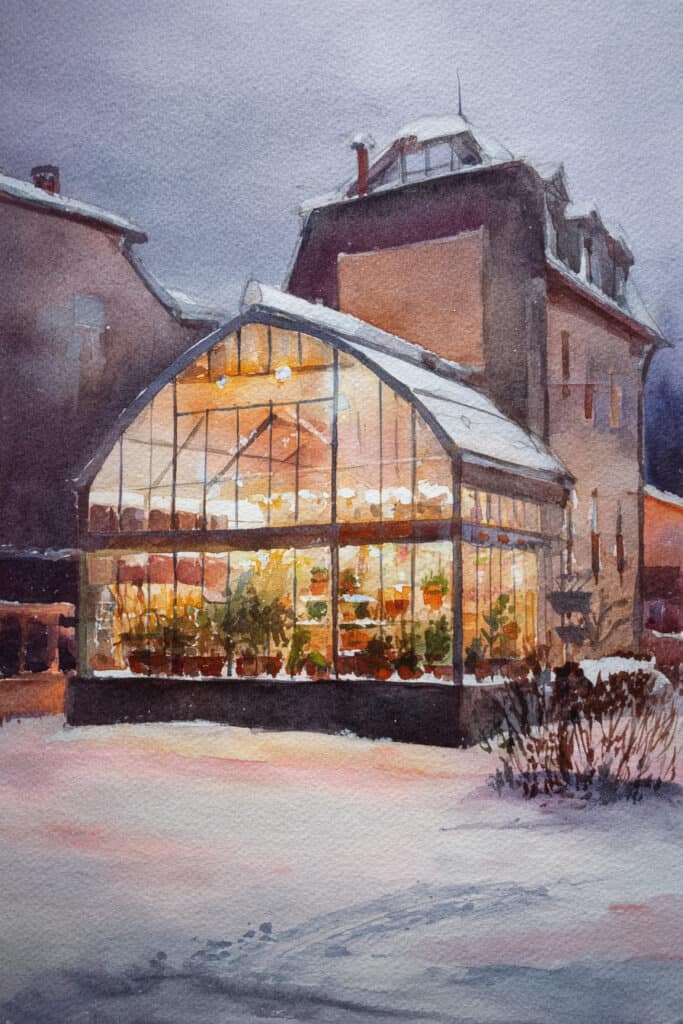
Glass greenhouse glowing warmly in village center, surrounded by snow-covered buildings, plants visible inside. Painting glass is basically painting what’s behind and inside the glass, plus a few strategic highlights. This scene taught me that sometimes the hardest-looking effects are just about careful planning of what to mask and what to paint.
Cottage Garden Winter Lights
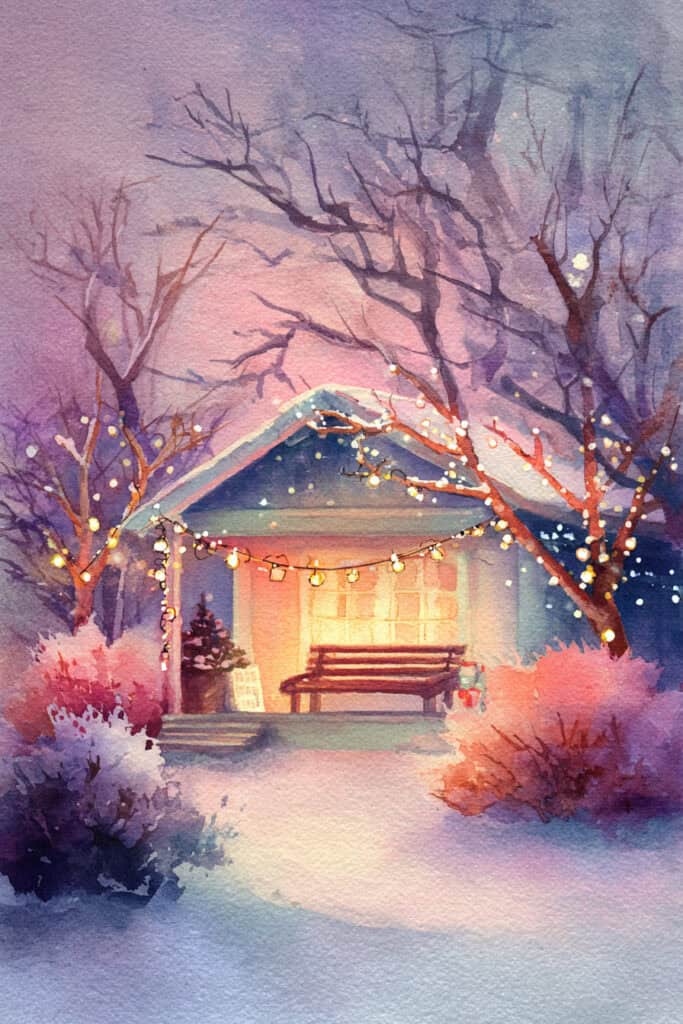
Snow-covered cottage garden with fairy lights wrapped around bare trees and shrubs. Fairy lights seemed impossible – how do you paint dozens of tiny glowing lights? Masking fluid. Lots and lots of tiny dots of masking fluid. Then wash over everything with your snow and sky colors, remove the masking fluid, and carefully add tiny warm glows around each light.
Village Fountain Frozen
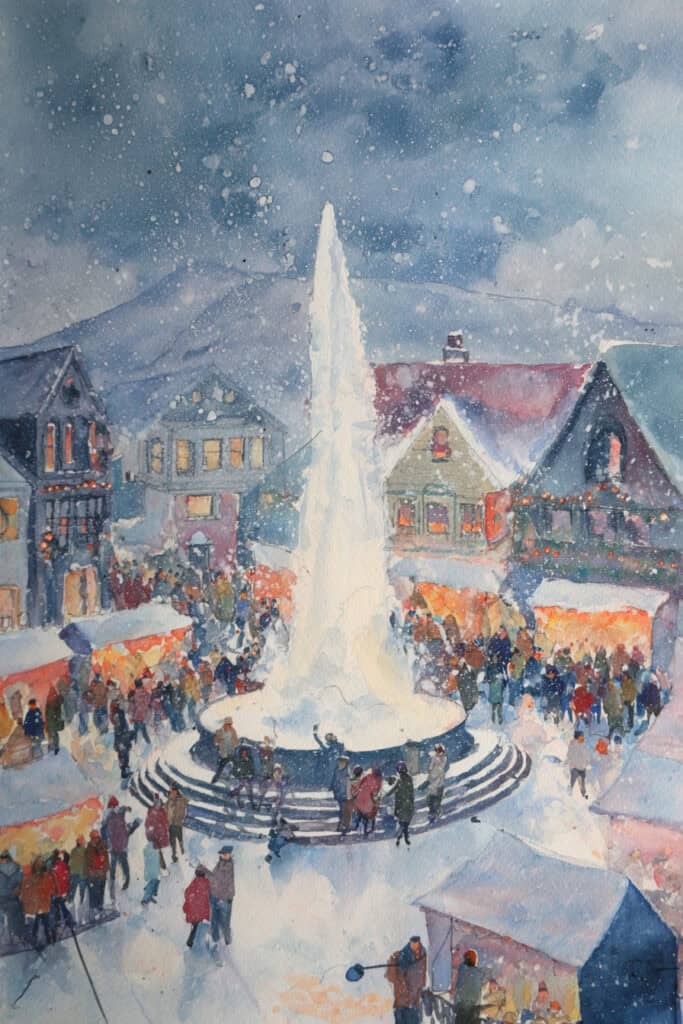
Central fountain frozen mid-spray, creating an ice sculpture, market stalls surrounding it. Frozen water presents a fascinating challenge – it’s solid but transparent, it catches light differently than regular ice or snow. I used very pale blues and lots of white paper showing through to suggest that crystalline quality.
Lamppost Village Evening

Victorian lampposts lining village street, each creating pools of golden light on snow. The repeating element of multiple lampposts taught me about rhythm and pattern in composition. Each lamppost is similar but not identical – slight variations in how much they glow, how the light hits the snow below.
Village Windmill Snow
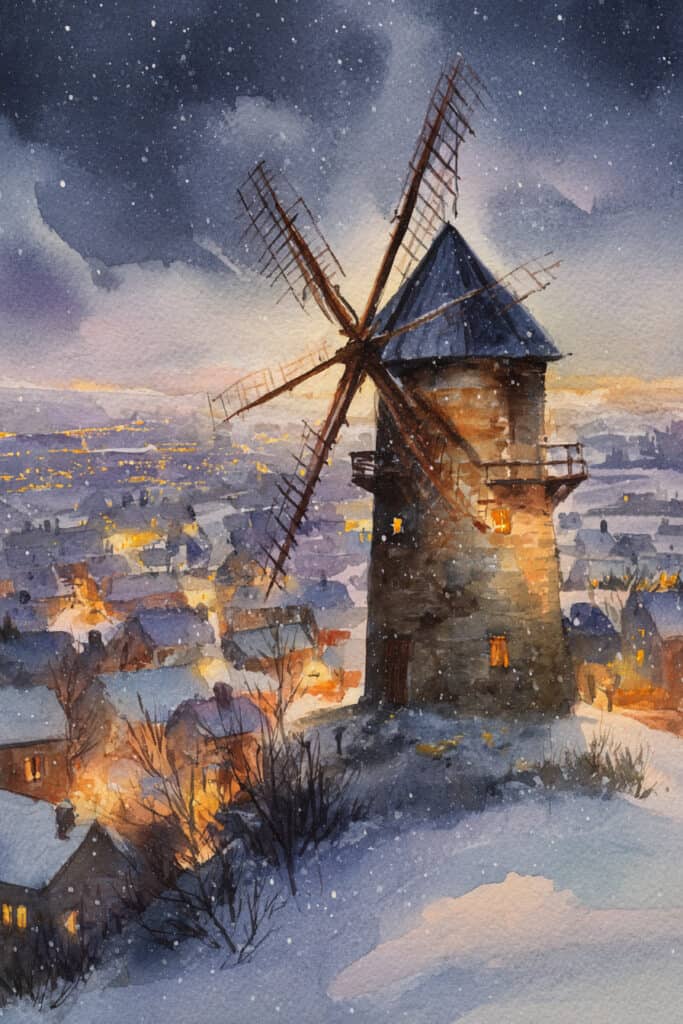
Old stone windmill with snow-dusted blades overlooking cozy village below. The windmill as a dominant vertical element against horizontal village sprawl creates strong composition. The real challenge was suggesting the village in the distance with just hints of warm lights and building shapes, keeping all detail on the windmill itself.
Village Well Square
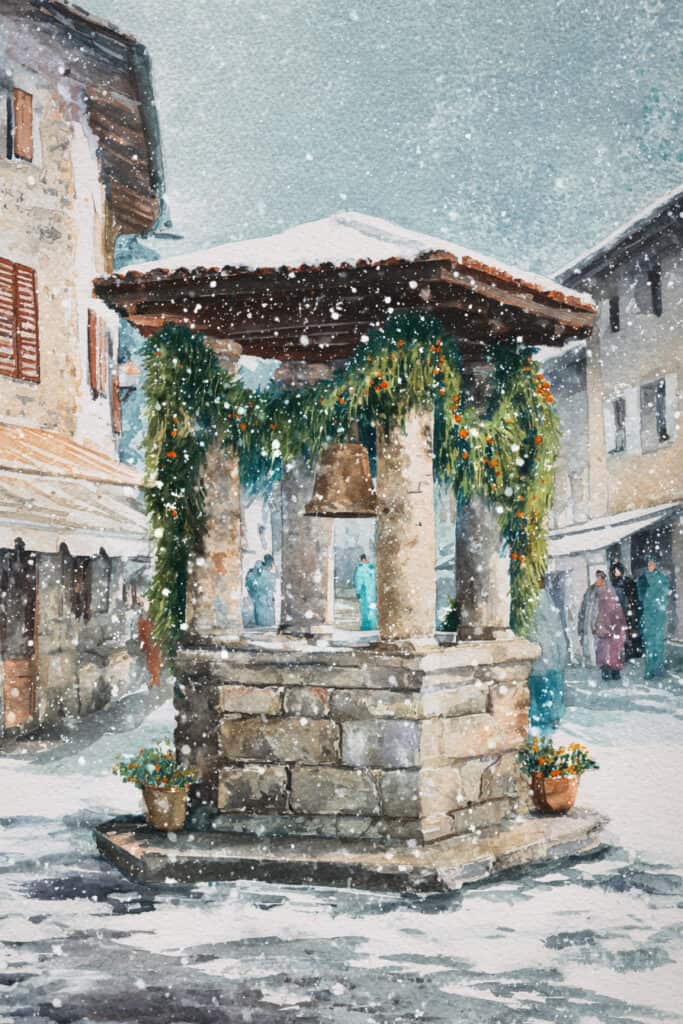
Central village square with ancient stone well decorated with evergreen garlands, villagers gathering to draw water. The well as a community gathering point tells a story. The challenge was suggesting multiple figures without them becoming the focus – they’re supporting characters to the well and village atmosphere.
Cottage Row Tea Time

Row of cottages with afternoon tea visible through windows, guests chatting, warm golden interiors. Being able to see into multiple cottages at once creates these little vignettes of life. Some windows show people clearly, others just suggest movement and warmth. It’s like getting glimpses into multiple stories happening simultaneously.
Village Covered Bridge

Red covered bridge dusted with snow, warm lights visible through the opening, footprints leading through. Covered bridges have this wonderful sheltered quality – they’re outside but also inside. The view through the bridge opening creates natural framing and leads the eye through the composition.
Village Lane First Snowfall
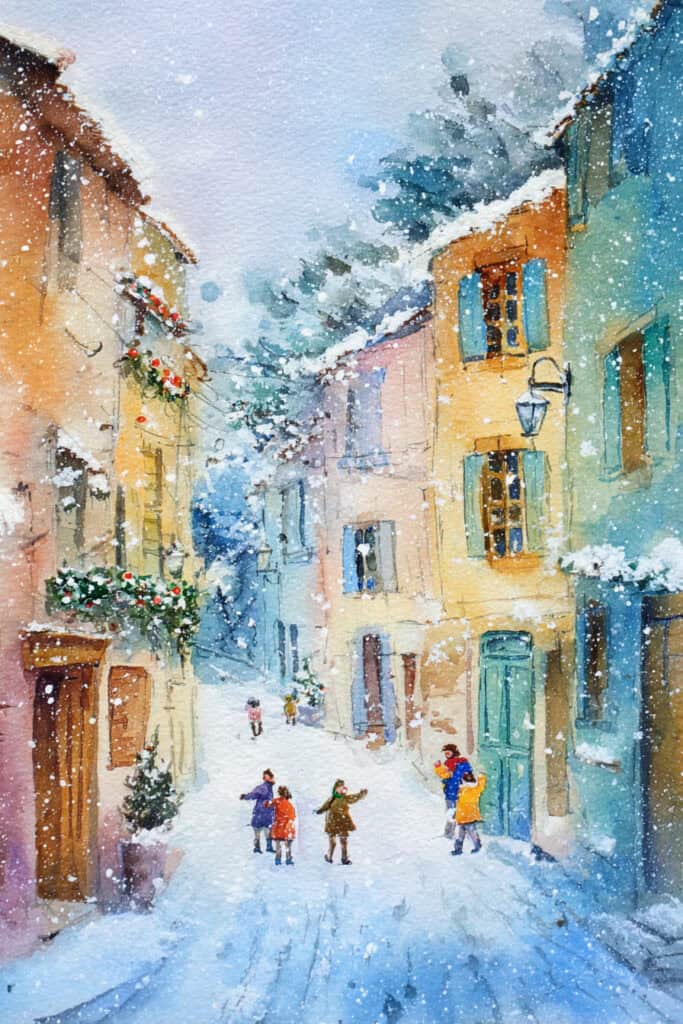
Quiet village lane experiencing first snowfall of the season, residents stepping outside delighted. The emotion of first snowfall – that wonder and excitement – needed to show in body language and the overall atmosphere. Less about technical perfection and more about capturing a feeling.
Village Church Bells Evening
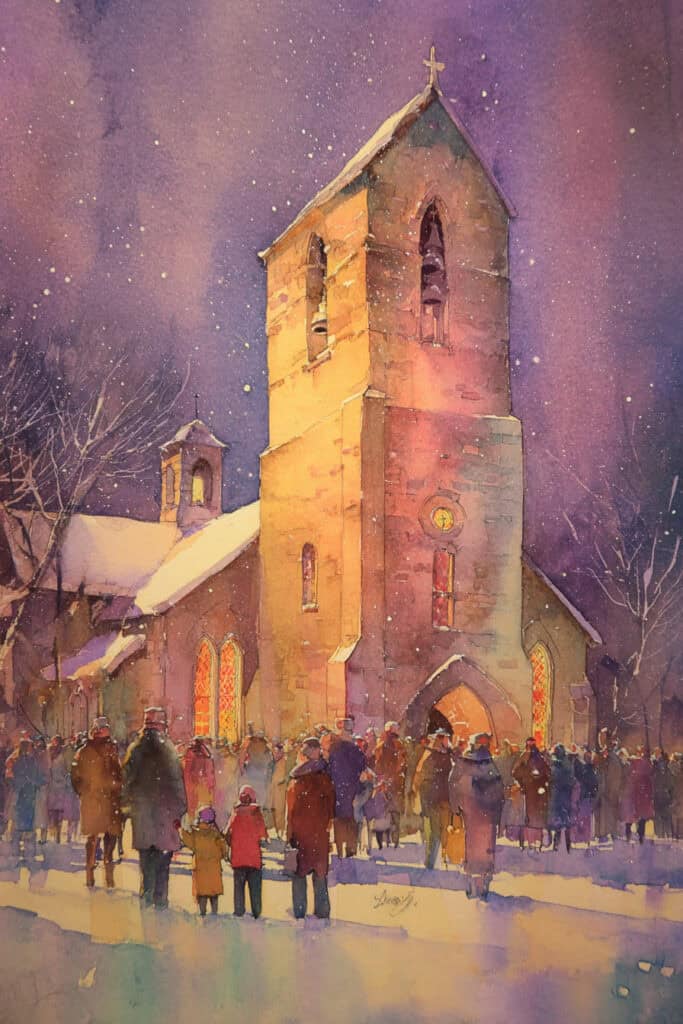
Stone church tower illuminated, bells ringing, village gathering below, congregation entering. Church scenes have built-in drama and gathering energy. The warm light streaming through stained glass onto snow creates beautiful color opportunities in an otherwise neutral scene.
What Actually Makes Winter Villages Work
After painting probably fifty or sixty winter village scenes (lost count somewhere around the holidays last year), I’ve figured out what separates the charming ones from the stiff, lifeless ones:
Imperfection creates character. The buildings shouldn’t be perfectly symmetrical. Snow accumulates unevenly. Footprints in snow meander rather than march in straight lines. Windows glow at different intensities. These “imperfections” are what make painted villages feel like places people actually live rather than architectural diagrams.
Value contrast sells the scene. Your darkest darks (usually window frames, doors, trees) need to be really dark for the lights and snow to glow properly. I see a lot of village paintings that are all mid-tones, and they just look flat and grey. Don’t be afraid to go dark in your shadows.
Less detail in distant areas. Everything in the foreground doesn’t need equal focus to everything in the background. Far-away buildings can be suggested with simple shapes and minimal detail. This creates depth and keeps the viewer’s eye moving through the painting rather than getting stuck trying to process too much detail.
Warm and cool dance together. The interplay between warm light (golden, orange, yellow) and cool shadows (blue, purple, grey) is what creates that cozy-but-cold winter feeling. All warm looks artificial. All cool looks depressing. The contrast is where the magic happens.
Why I Keep Coming Back to Village Scenes
I’m not going to pretend winter villages are the most innovative or groundbreaking subject matter. They’re not. They’ve been painted a million times. Every holiday season, you see them everywhere. But you know what? There’s something deeply satisfying about creating a scene that makes people say “I want to be there.”
Plus, these paintings taught me more about light, atmosphere, and composition than any number of abstract exercises or technical studies. Every village scene presents new challenges – different weather conditions, times of day, architectural styles, atmospheric effects. I could paint winter villages for years and never run out of new things to learn.
So yeah, they might be a bit whimsical. Maybe even a little cheesy. But if painting something that makes people feel warm and cozy is cheesy, then pass me the fondue pot because I’m all in.