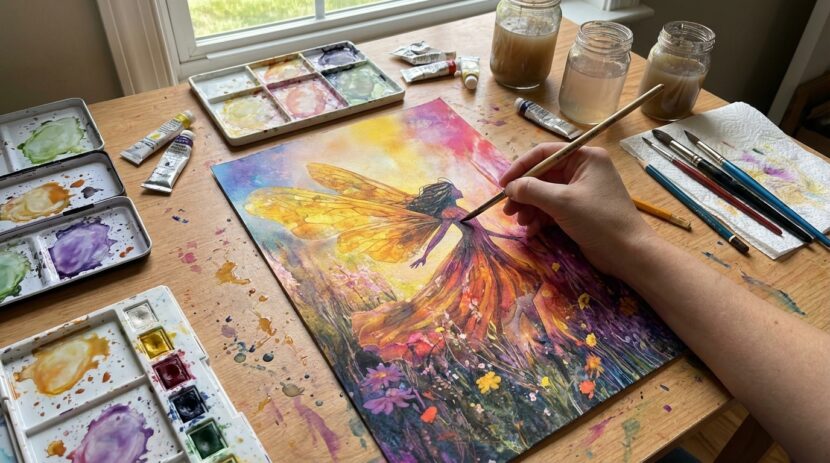
Some paintings stop you mid-scroll. These are those paintings.
This collection of fairy watercolor art ideas goes far beyond the soft, pastel sprites you have seen a hundred times before. These 25 scenes are elemental. Fire, ice, storms, starlight, shadow, and everything in between. Each one is painted in that beautiful amateur hand-painted style that feels raw, honest, and alive on the paper.
Whether you are hunting for your next watercolor fairy painting idea or just need a serious shot of inspiration, you will want to save every single one of these.
All artwork provided is original and can be used as reference for your own paintings.
Table of Contents
What Makes Fairy Watercolor Art So Captivating?
There is something about watercolor that suits fairies perfectly. The medium bleeds, blooms, and glows in ways that feel genuinely magical. When you pair that with fantasy fairy watercolor subjects like living fire wings or aurora-lit skies, the results look like they came straight out of a dream.
Watercolor is also one of the most forgiving painting mediums for new artists. The unpredictability is a feature, not a flaw. Happy accidents become shimmering wing textures. Blooms become storm clouds. If you have been sitting on a set of watercolors and wondering where to start, whimsical fairy art for beginners is one of the most rewarding entry points you will find.
If you want to build your fairy figure and wing drawing skills before picking up a brush, the 30 Enchanting Fairy Doodle Ideas guide on Brighter Craft is an excellent place to start. Strong linework will give your painted fairies far more confidence and character.
What You Need Before You Start
You do not need an expensive set-up to paint fairy watercolor art well. Here is what genuinely matters.
Paper
Use cold-press (not pressed) 300gsm watercolor paper at minimum. The paper is the foundation of every technique in this collection, and thin, smooth paper will buckle, bleed unpredictably, and limit your wet-on-wet work significantly. Rough paper adds beautiful texture to stone and earth wing compositions.
Paints
A set of quality watercolors with a strong range of warm and cool tones covers every composition in this collection. You need a true primary set: warm and cool reds, warm and cool blues, warm and cool yellows, plus Payne’s grey, burnt sienna, and raw amber.If you want to explore granulating watercolors for texture work, Jackson’s Art guide to granulation in watercolours is an outstanding free resource for understanding exactly which pigments granulate and which do not.
Brushes
A large round wash brush (size 12 or 14), a medium round detail brush (size 6 or 8), and a fine liner brush (size 1 or 0) will handle every scene in this collection. A fan brush is useful for the tidal and wind compositions.
Masking Fluid
Multiple compositions in this collection depend on masking fluid for preserved white lines, moon shapes, lightning, and fracture lines. Old or dried-out masking fluid is frustrating to work with. Buy a fresh bottle and use it with a cheap brush or a ruling pen, not your good watercolor brushes.
25 Fairy Watercolor Art Ideas
1. Wings of Living Fire
[
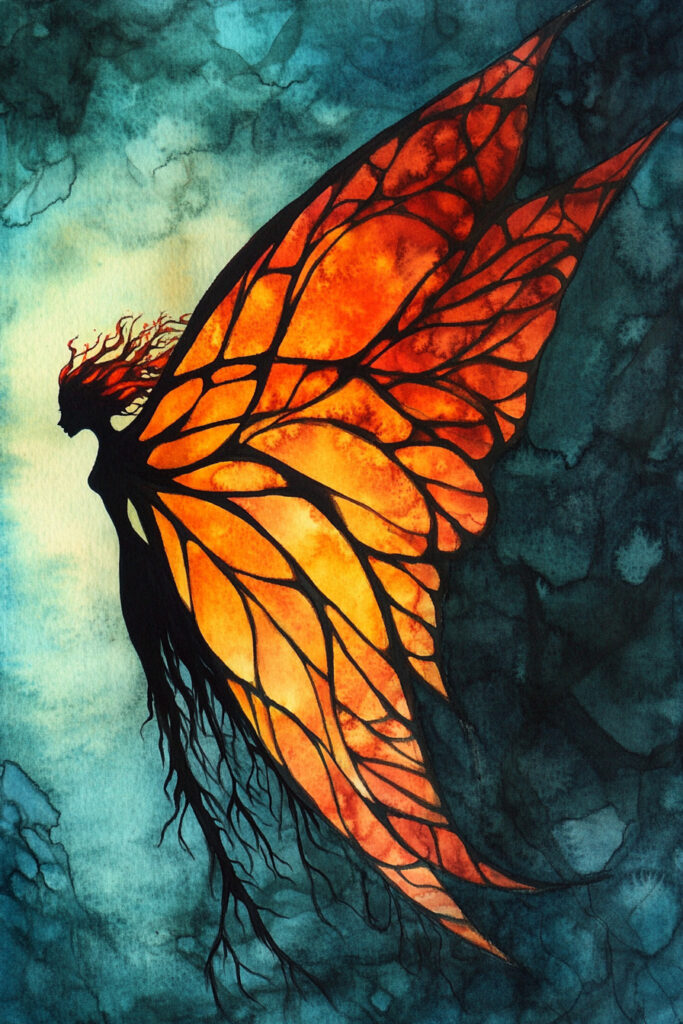
Fire and fairies feel made for each other, and this painting is proof of exactly that. Vermillion and burnt sienna wing membranes glow with orange-red veins, and the fairy hovers in total silhouette against the light she herself generates. The cool teal and midnight blue of the background makes those warm wing tones absolutely sing.
This is one of the most striking watercolor fairy painting ideas in this collection. The trick is to let the warm pigment bloom freely at the wing edges. Do not fight the bleed. Let it go where it wants to go.
2. Wings of the Frozen North
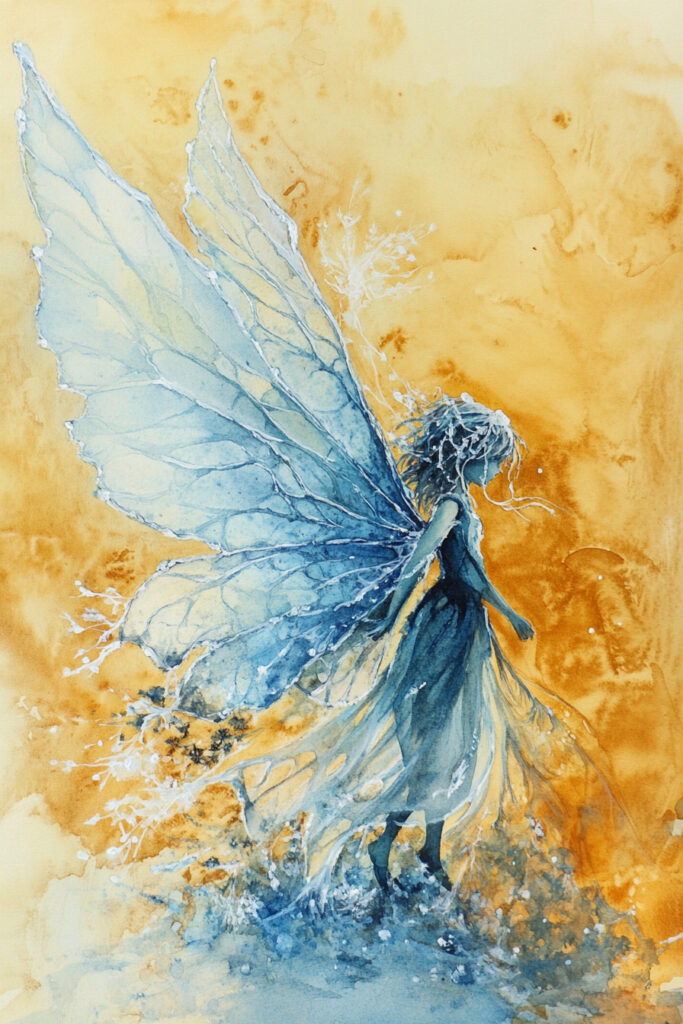
Everything about this painting is crisp and cold, right up until you look at the background. That warm amber and ochre ground is what makes those icy white-blue wings feel three-dimensional and alive. Frost crystals grow from the wing membrane edges, and the veins are just visible beneath the ice, like a glacier lit from within.
This is a beautiful magical fairy illustration watercolor idea for anyone drawn to cool, delicate palettes.
3. Wings of the Deep Storm
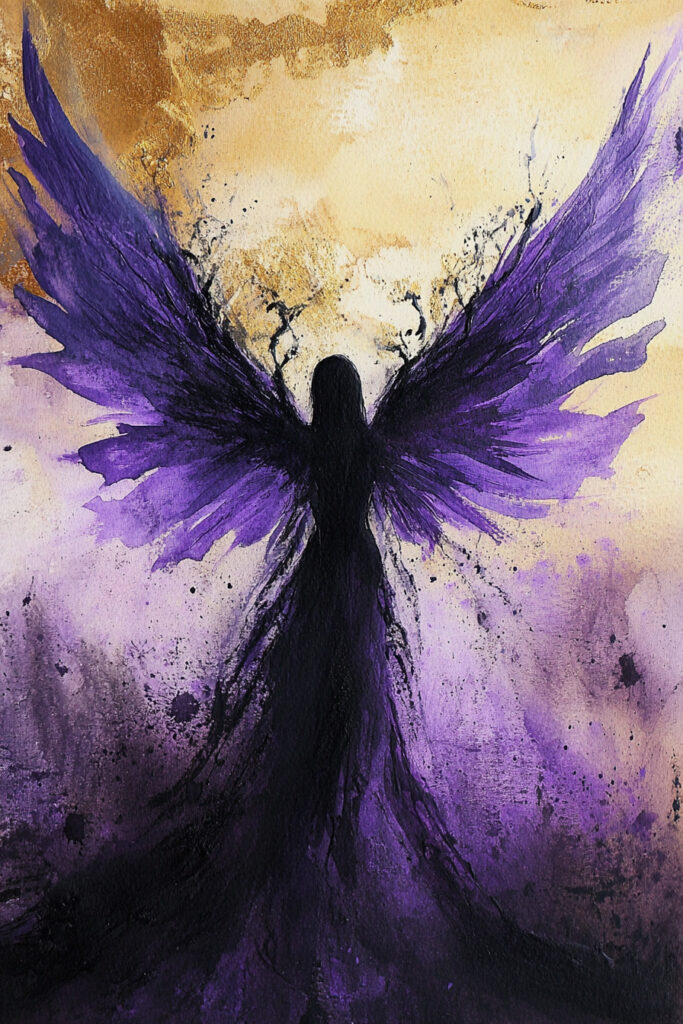
The wing surface here does not just look stormy. It churns. Charcoal and electric violet pigments move across the membranes like an actual storm system, and lightning cracks outward from both wings. The warm gold and ochre horizon below adds the classic contrast that makes every dark watercolor scene pop.
If you enjoy painting moody, dramatic skies, this fantasy fairy watercolor scene will feel like a natural extension of that practice.
4. Wings of the Ancient Forest
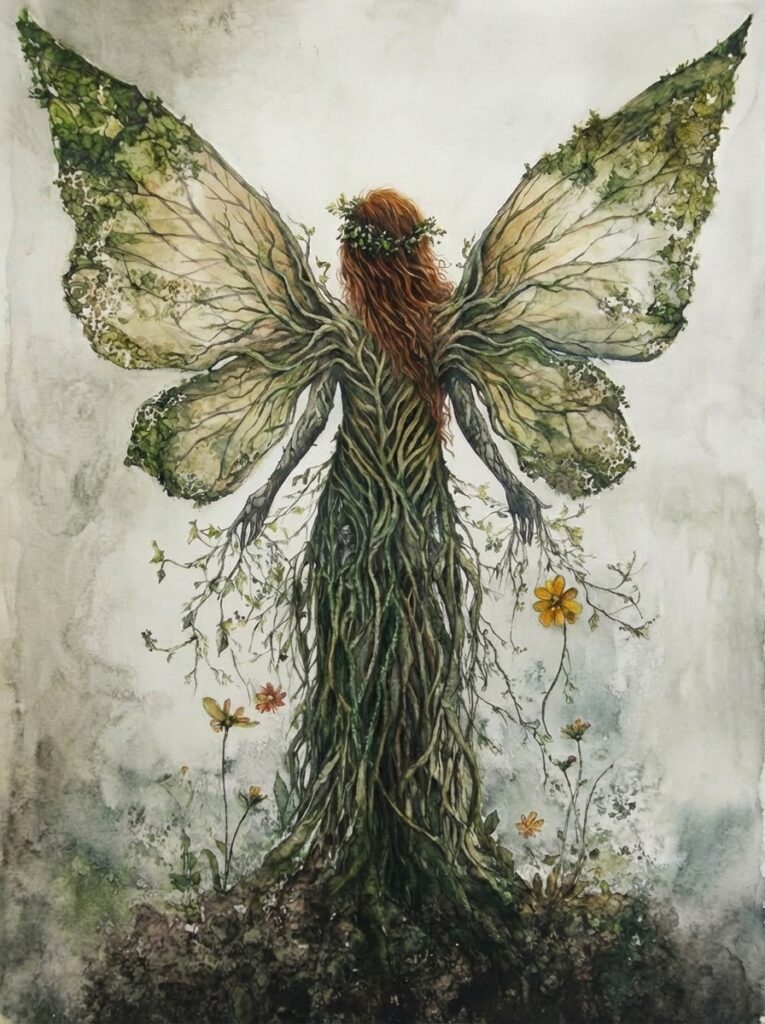
This is the most grounded scene in the collection, literally. Roots and vines pour from the wing membranes directly into the earth, and new trees sprout below wherever the wings touch. Moss and wildflowers dot the wing surface itself, as if the forest has been growing there for centuries.
Deep forest green and warm brown make this painting feel ancient. If you love nature-forward enchanted forest fairy watercolor art, this one belongs at the top of your must-paint list.
5. Wings of the Open Ocean
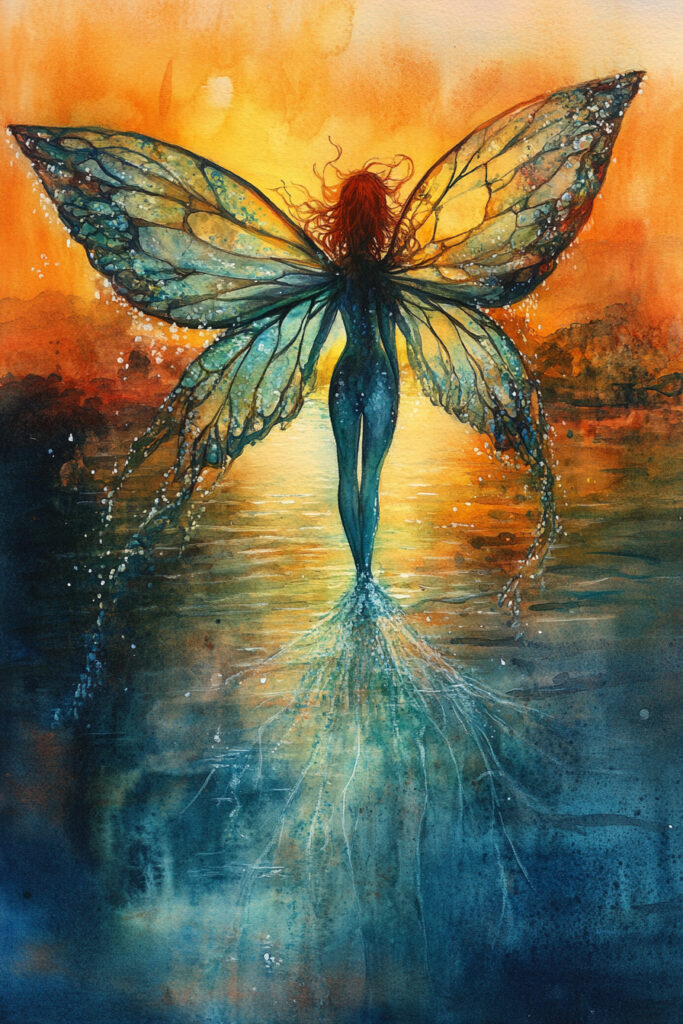
Fish swim inside the wings. Let that sink in. The deep sapphire and aquamarine tones of the wing membranes are translucent enough to show sea creatures moving within, while ocean water streams downward from the lower edges. Against that warm coral and amber sunset background, this painting glows with color.
6. Wings of Falling Stars
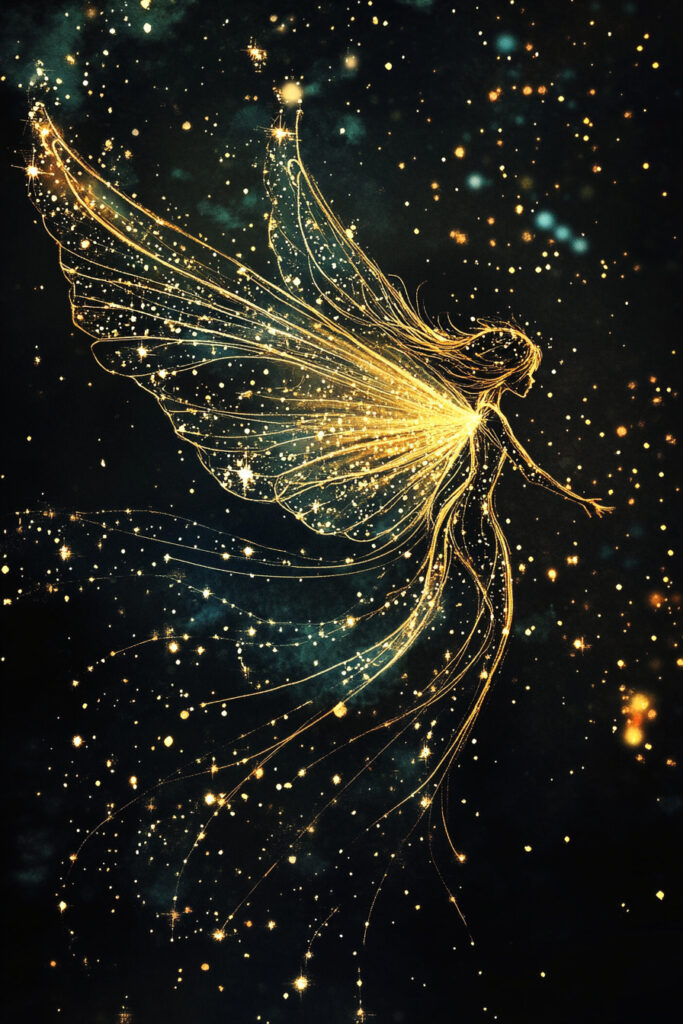
This is what enchanted forest fairy watercolor art looks like when it reaches into deep space. The wing veins glow like mapped constellations, and shooting stars stream from the membrane surfaces outward into the darkness. Warm gold and white against midnight indigo and black create one of the most dramatic palettes in the entire collection.
7. Wings of the Living Shadow
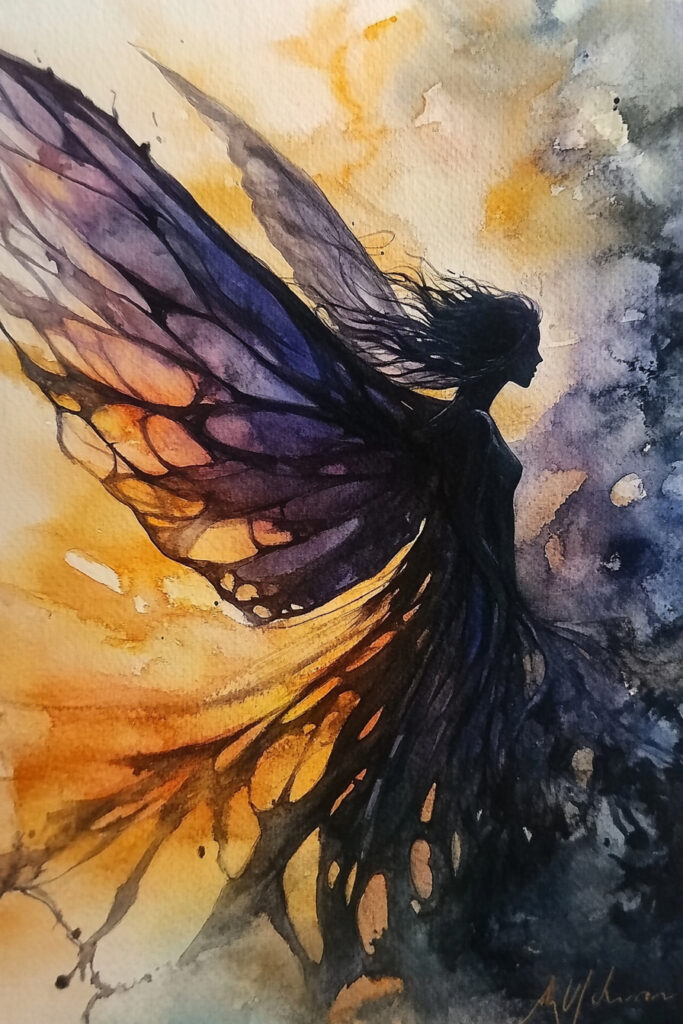
The shadow does not just fall here. It spreads. Pure darkness pours from the wing membranes and consumes the warm gold light surrounding it. The wing edges literally dissolve into the growing shadow.
This is one of those rare fairy watercolor art ideas where the negative space does as much work as the pigment itself. Plan your white areas before you touch the paper.
8. Wings of the Healing Earth
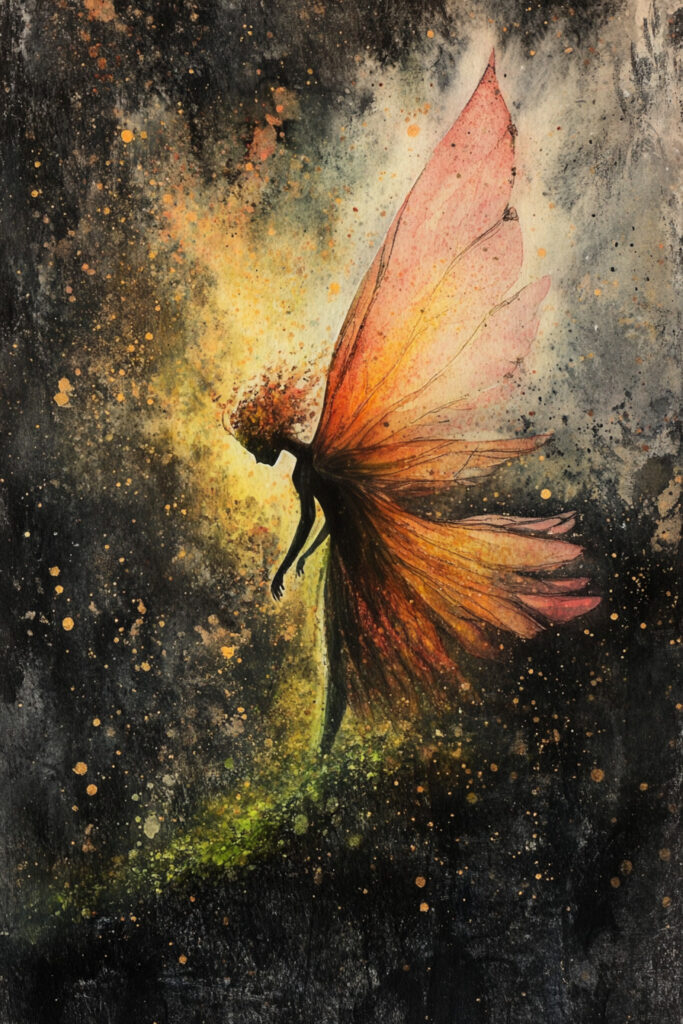
After the intensity of shadow and storm, this scene breathes. Warm gold and soft rose pink light pours from the wing membranes, and the earth directly below, charcoal and ash grey from some past burning, begins to green again.
It is one of the gentlest paintings in this collection and one of the most emotionally resonant. A wonderful starting point for beginners who want approachable watercolor fairy painting ideas.
9. Wings of the Aurora
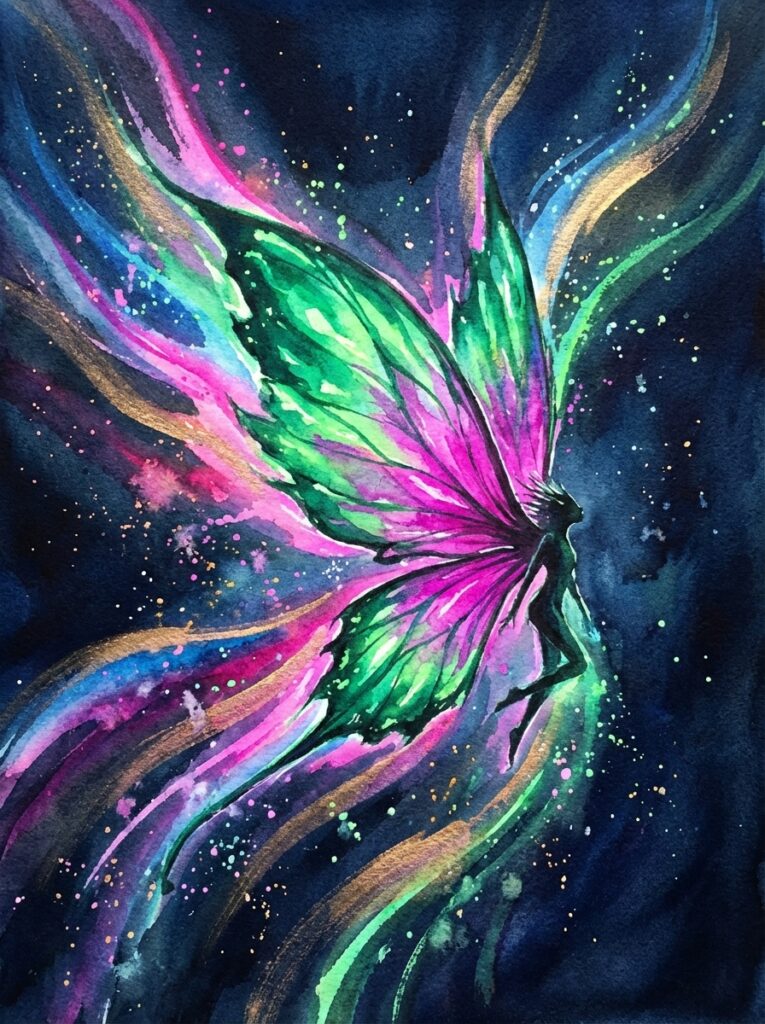
Aurora borealis captured in watercolor is a challenge for any artist. This painting meets that challenge head-on. Vivid emerald and electric magenta stream from the wing surfaces and paint the arctic sky, with each wingbeat leaving full color trails behind.
On a midnight navy and black ground, this scene is genuinely luminous. This is the kind of magical fairy illustration watercolor that works beautifully framed and hung.
10. Wings of the Desert Wind
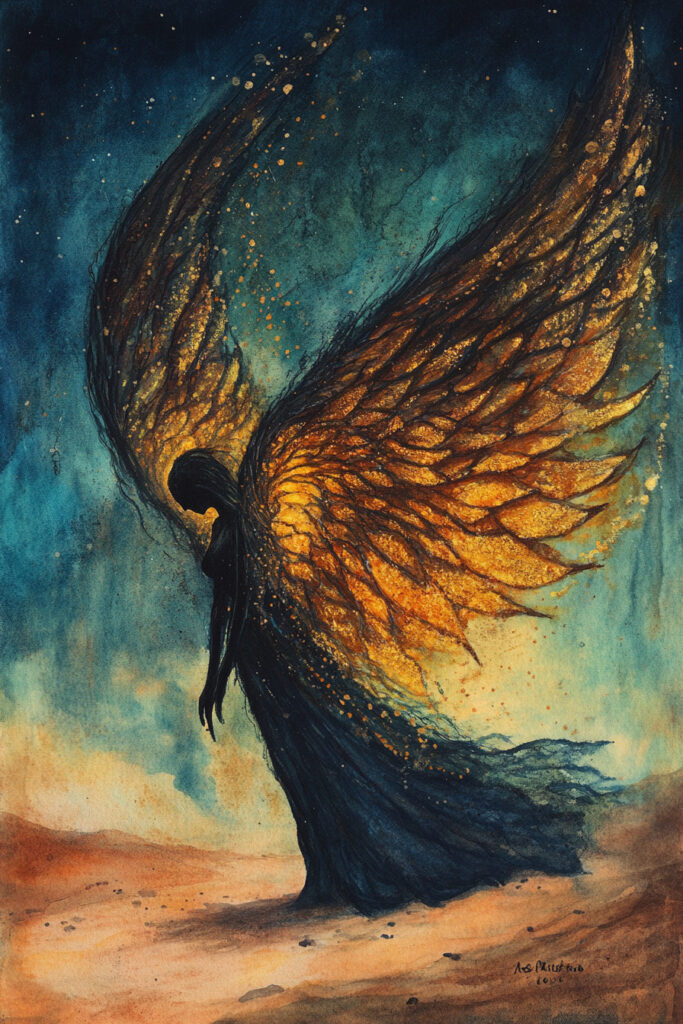
The desert comes alive here. Terracotta and burnt gold wing membranes release golden sand in spiraling plumes, and the amber veins beneath the wing surface glow against the deep teal and cobalt sky background.
This is one of the warmest and most textured scenes in the collection. Dry brushing works particularly well for suggesting windswept sand texture on the wing membranes.
11. Wings of the Blood Moon
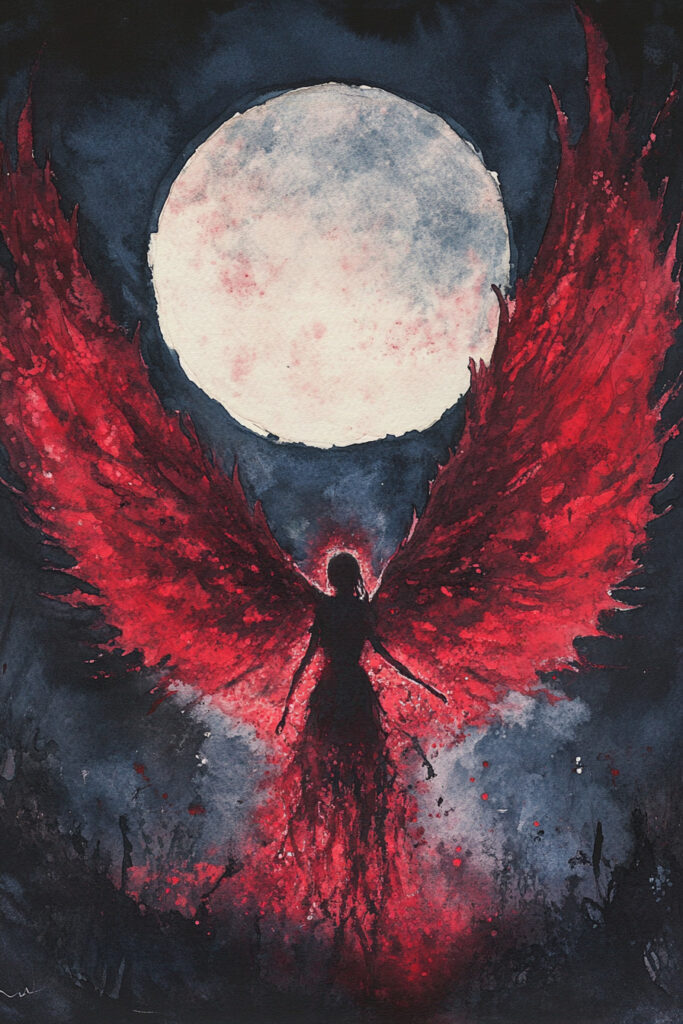
The full moon sits perfectly framed between both wings, bathed in the deep crimson glow radiating from the wing membranes. Dark burgundy and midnight blue-black make this one of the most dramatic fairy watercolor art ideas in the entire collection.
Gothic, intense, and breathtaking in a vertical 2:3 format. Save this one for an evening painting session when the mood is right.
12. Wings of Living Ink
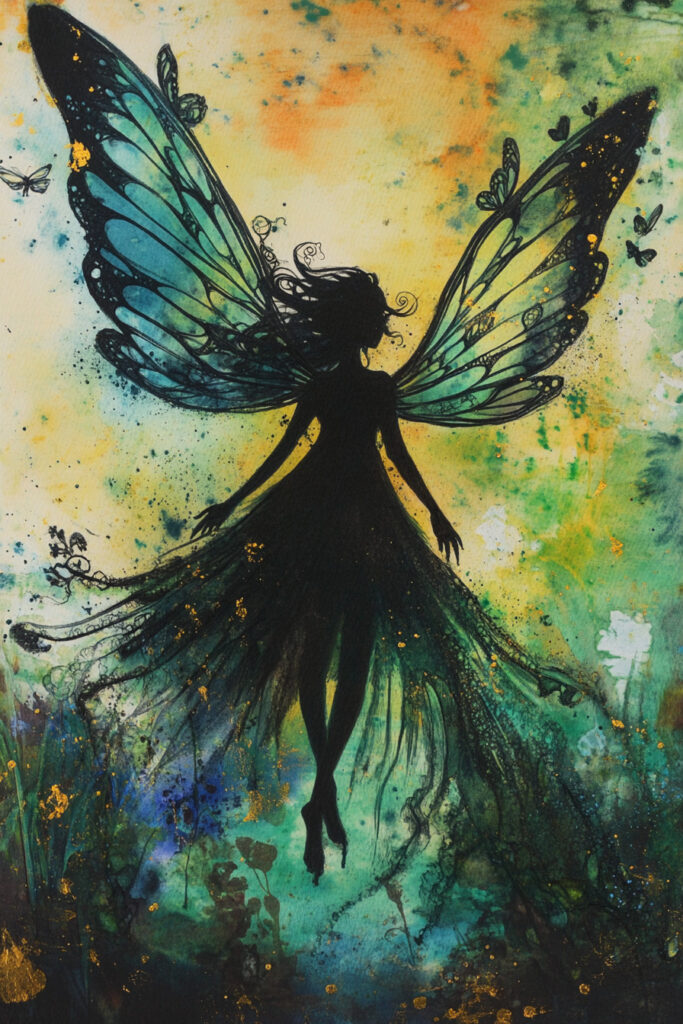
This is the most meta scene in the collection. A fairy whose wings literally paint the world. Dark indigo and charcoal ink pours from the wing membranes onto a blank world below, and vivid emerald and gold bloom wherever it lands.
The wing surface swirls with unwritten stories. Every watercolor artist is going to feel this one on a personal level.
13. Wings of the Silk Road
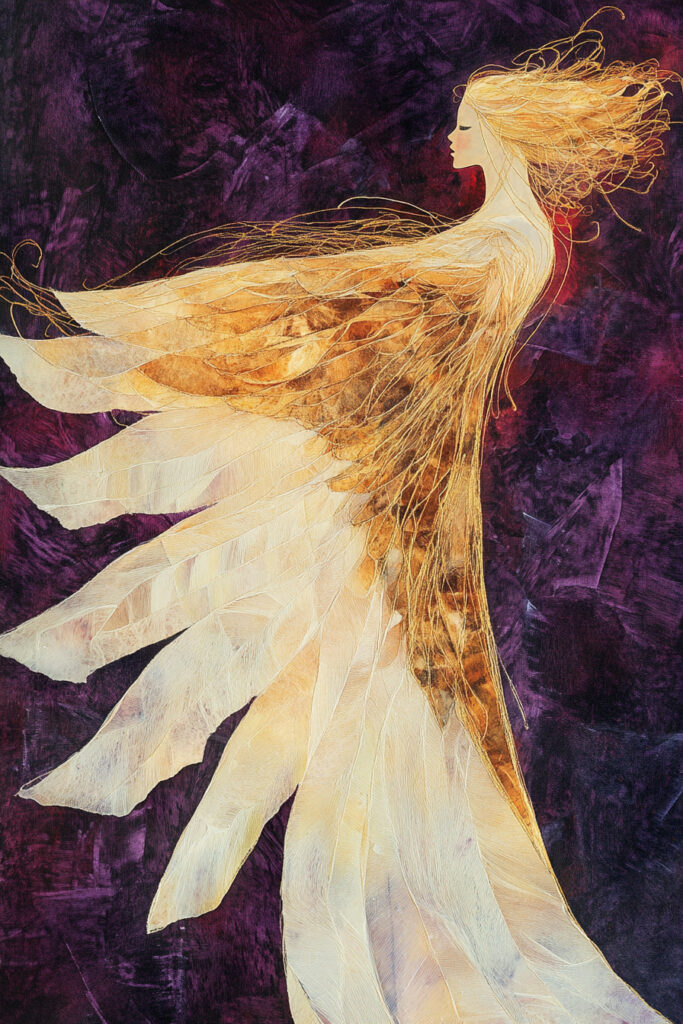
Warm pearl, ivory, and gold threads unravel from the wing membranes in mid-spin, wrapping the surrounding air in a luminous silk cocoon. Each wing vein is a separate glowing thread.
Against the deep violet and plum background, this scene has an opulence that is rare in watercolor. Wet-on-wet layering is the key technique for achieving that soft thread-like glow.
14. Wings of the Obsidian Void
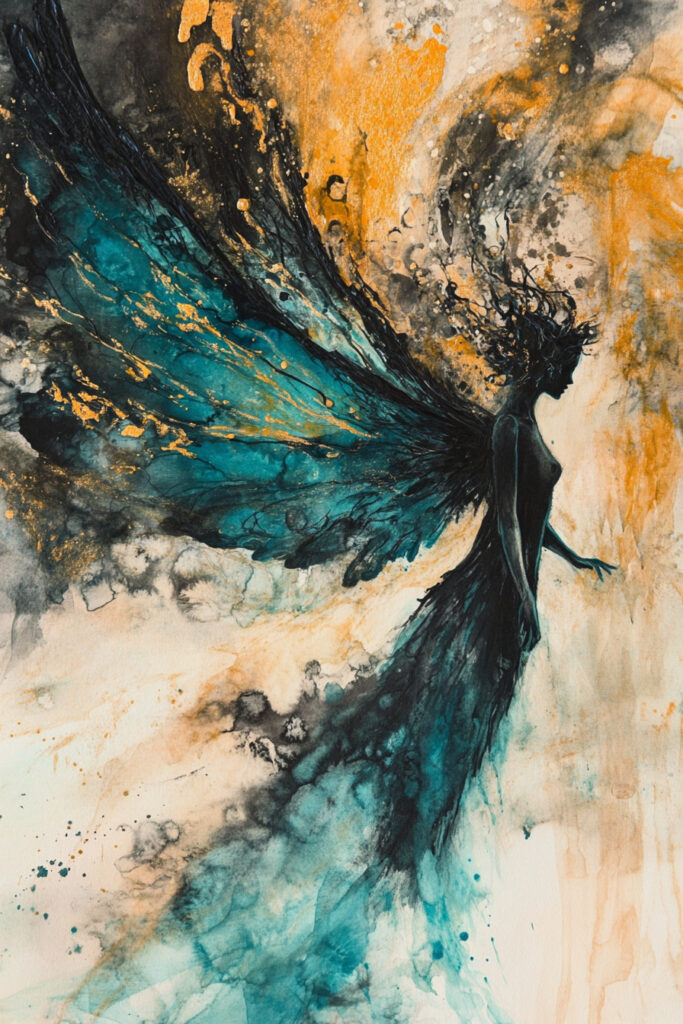
Light goes in. Nothing comes out. The jet black and deep charcoal wing membranes actively consume all surrounding color, and the world near the wings loses its vibrancy entirely.
The only exceptions are the vivid warm gold and electric teal energy crackling at the very edges. This is a masterclass in using restraint to create drama in your fairy watercolor art.
15. Wings of the First Rain
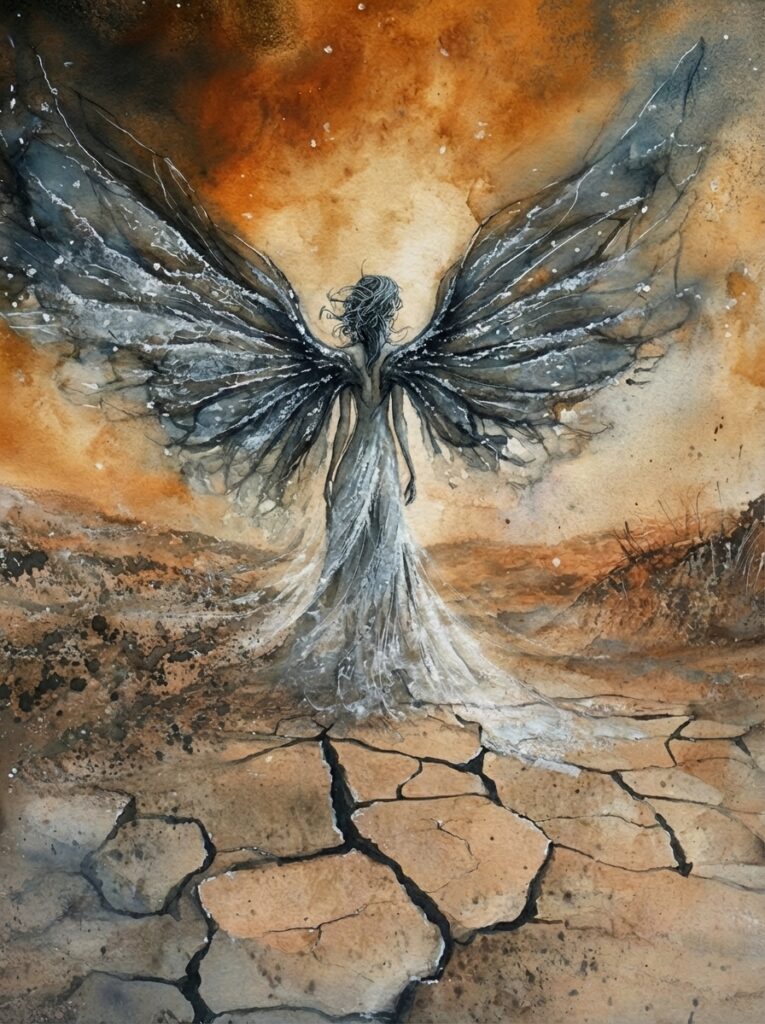
Cool silver and deep slate blue wings hang heavy with gathered moisture, and the first rain pours from them onto cracked terracotta and burnt sienna earth.
The contrast between the cool, saturated wing tones and the warm, parched ground is everything in this composition. One of the most emotionally satisfying fantasy fairy watercolor scenes in the collection.
16. Wings of Wild Pollen
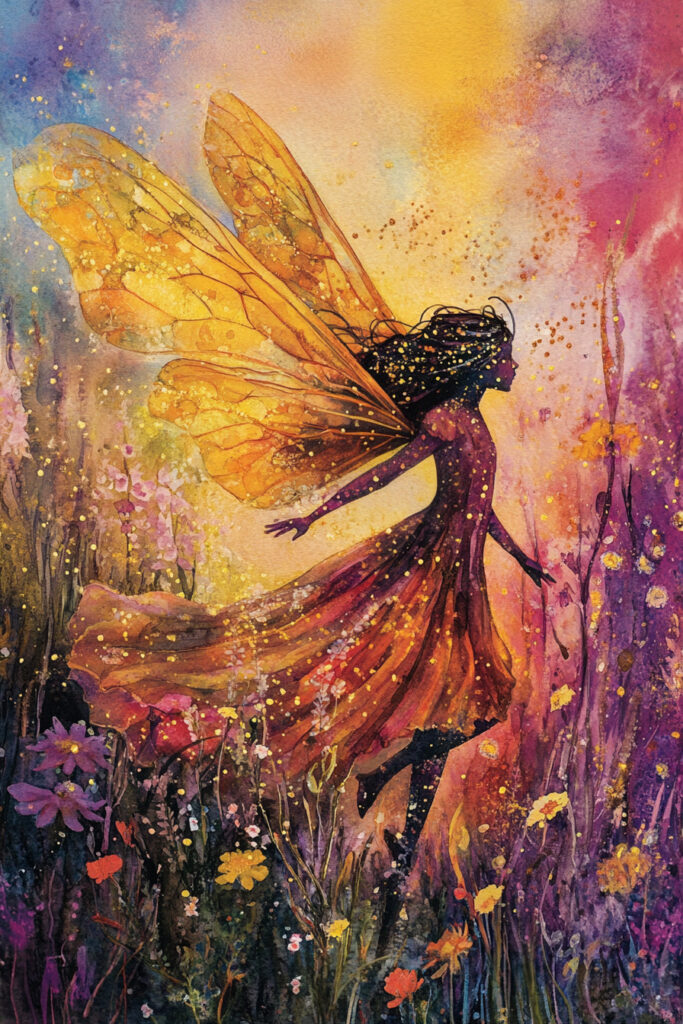
Golden pollen erupts from warm yellow and gold wing membranes and drifts outward into a deep violet and indigo twilight meadow. Wherever pollen lands, flowers bloom instantly.
This is one of the most joyful scenes in the entire collection. It is also one of the most accessible for whimsical fairy art for beginners who want to practice wet-on-dry blooming effects for the first time.
If you are just getting started with fairy art and want to build your drawing foundations before picking up a brush, our 25 Charming Fairy Drawing Ideas is a wonderful resource for understanding wing shapes and fairy figure proportions.
17. Wings of the Fracture
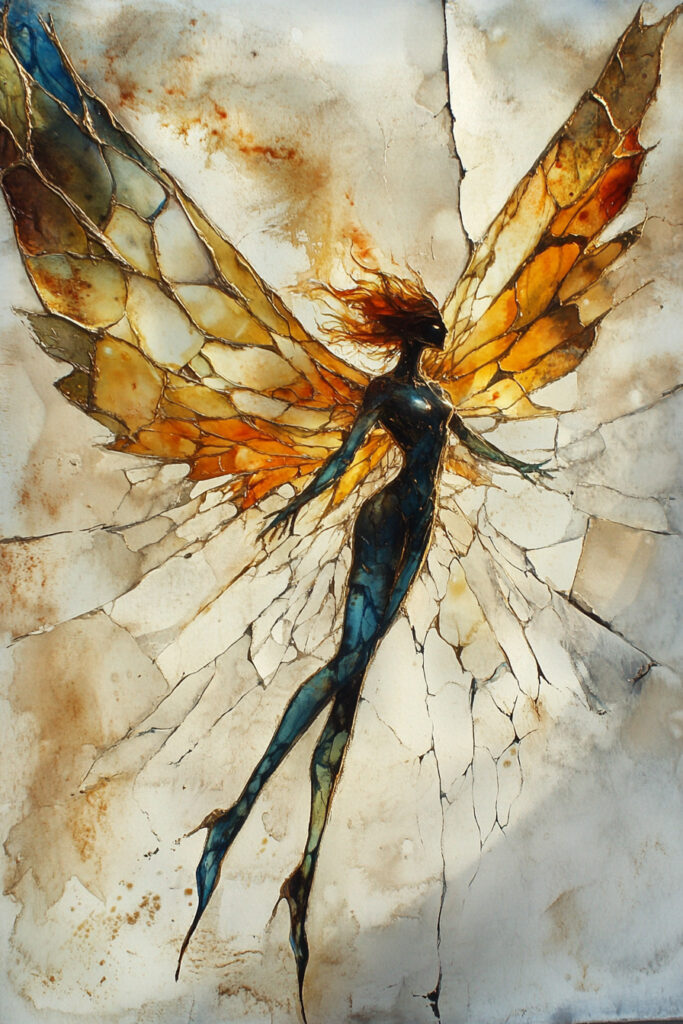
The sky itself cracks here. Fracture lines run across the wing membranes like shattered glass, and white-hot energy pours through every break. Electric white and deep cobalt make the wings feel simultaneously beautiful and dangerous.
Warm amber and gold crackle at the horizon where reality is coming apart. This is advanced-level fairy watercolor art, and every difficult minute you spend on it will show in the final result.
18. Wings of the Tide
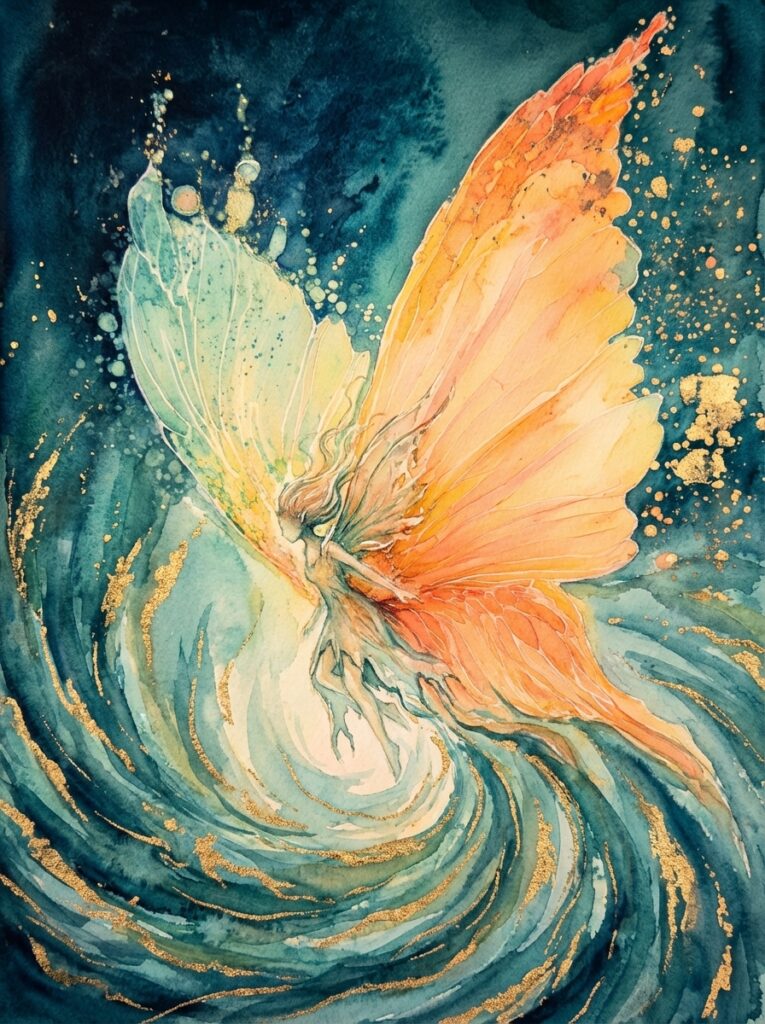
The ocean does not just frame this fairy. It answers her. The entire tide rises toward the deep aqua and warm coral wing membranes like a magnet, while pale gold and soft amber glow at the low tide below.
This is a study in the push and pull of warm and cool tones. The result is quietly spectacular and one of the most technically interesting compositions in the collection.
19. Wings of the Dying Sun
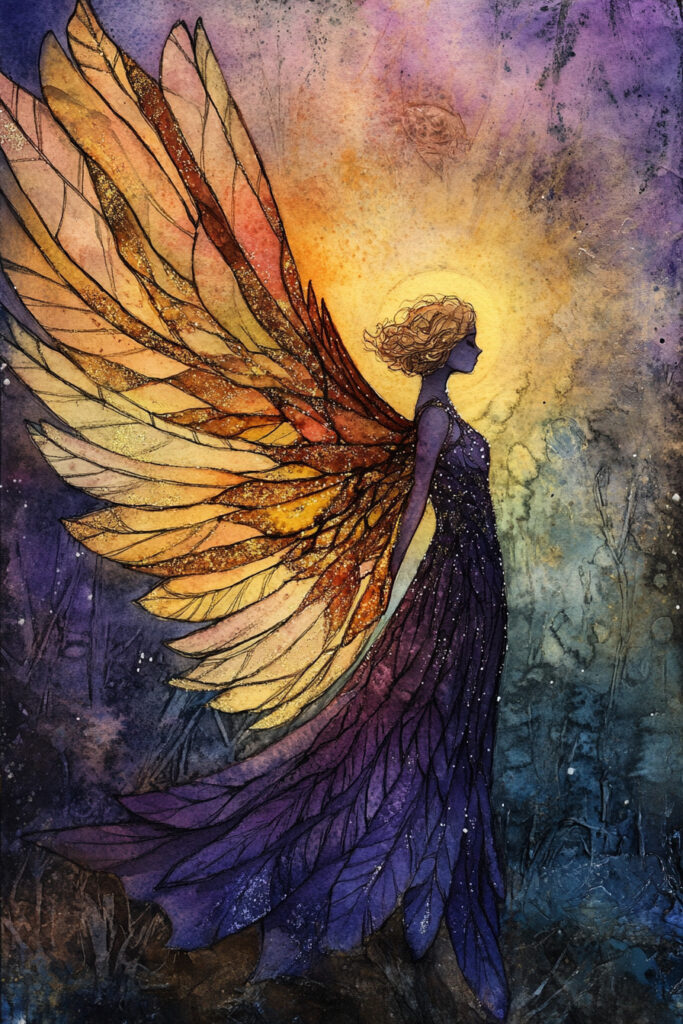
Golden hour, captured in wing membranes. Rich amber and burnt gold wings filter the last sunlight and cast the world below in that irreplaceable late-afternoon warmth. Behind her, cool violet and deep indigo rise to claim the sky.
One of the most painterly scenes in this collection. Timeless in a way that very few watercolor fairy painting ideas manage to achieve.
20. Wings of the Earthquake
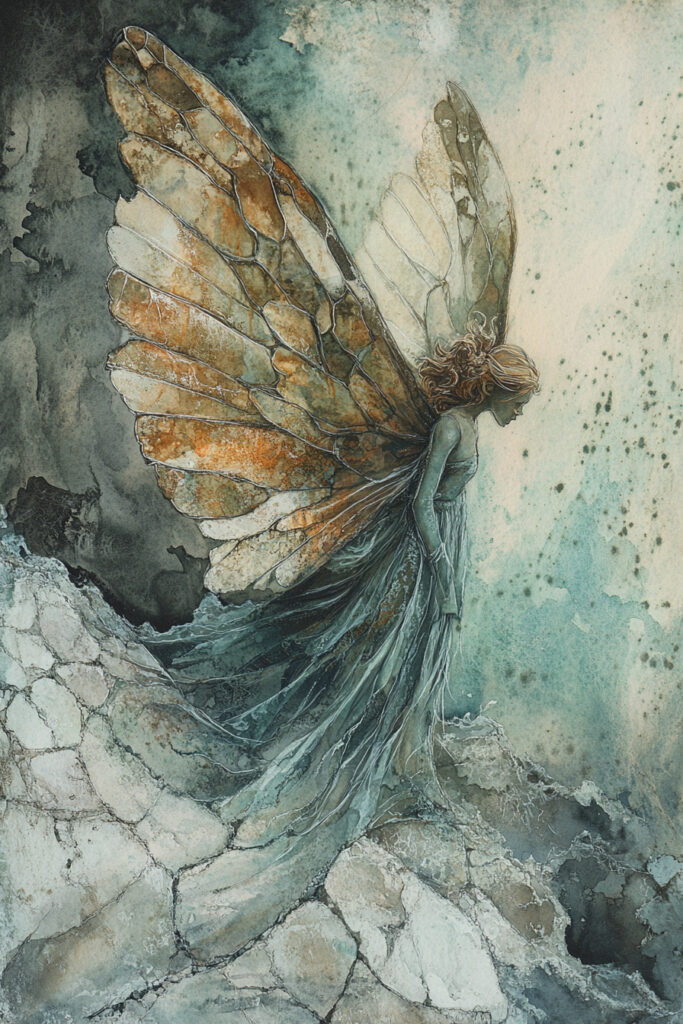
Deep grey and rust brown stone wings slam open, and the ground answers. Fault lines radiate outward from the point of impact across a cool teal and sage green cracking landscape.
The violence here is entirely geological, and entirely beautiful in watercolor, where the pigment naturally suggests fractured rock texture without any forced detail work.
21. Wings of the Midnight Garden
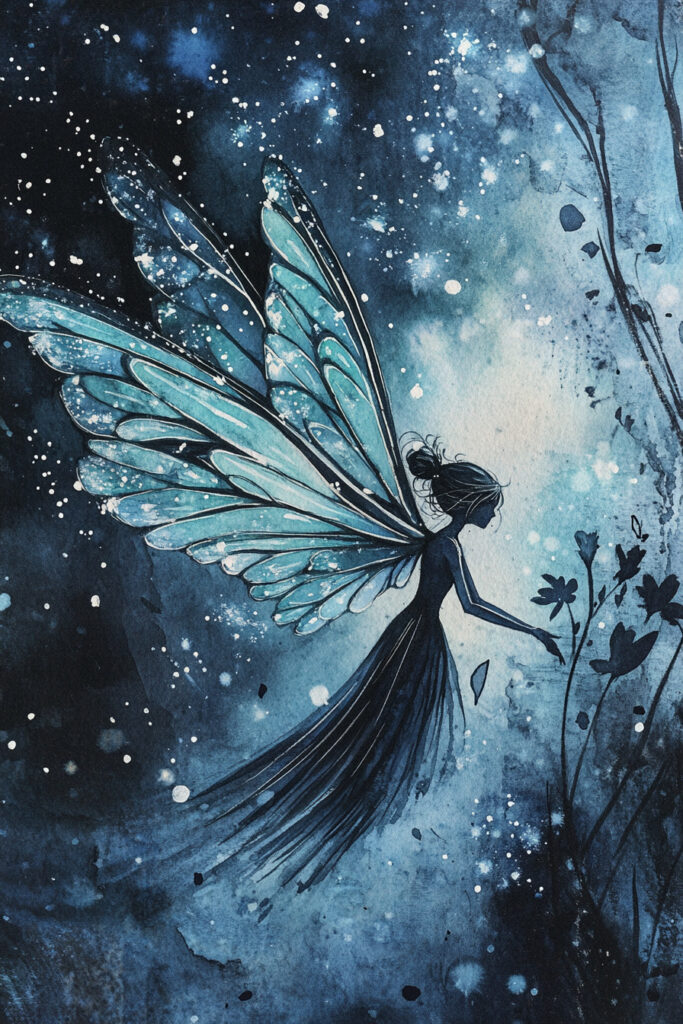
Night-blooming flowers open across the wing membranes themselves, and silver bioluminescent pollen floats into the surrounding darkness. Deep black and midnight violet wings anchor the scene, while soft silver and pale aqua provide just enough luminescence to see by.
One of the most atmospheric fairy watercolor painting ideas in the collection. Reserve your lightest areas early, because recovering white in dark watercolor compositions is nearly impossible.
22. Wings of Pure Electricity
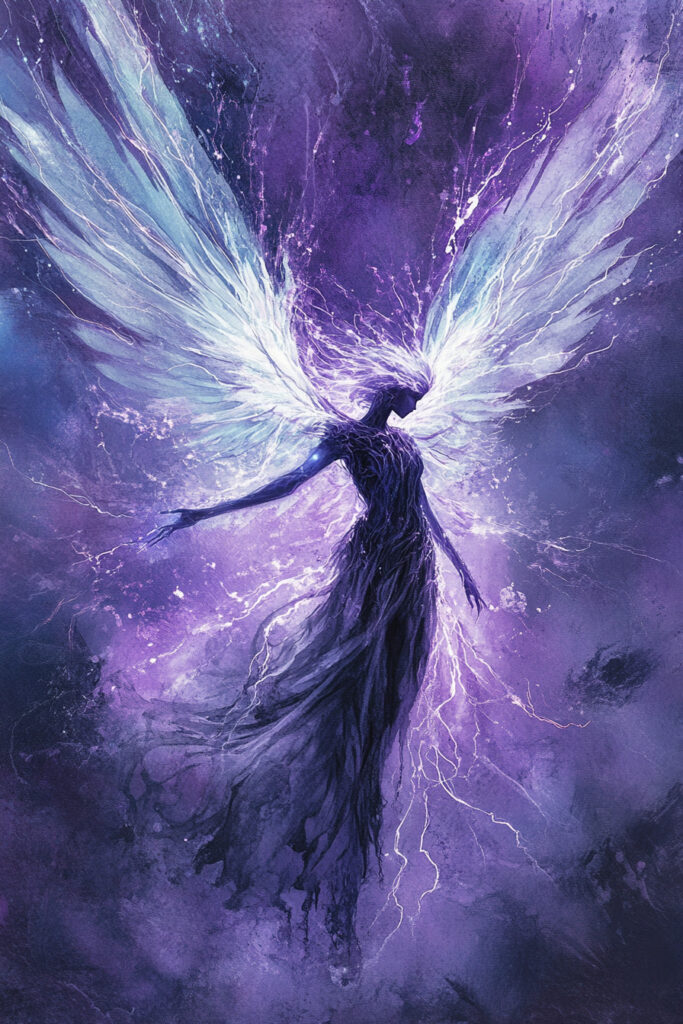
The air around her is ionized and glowing. Electric white and deep cobalt plasma wings arc electricity outward in every direction, and the charcoal and stormy violet background makes those hot white arcs blaze with intensity.
This scene rewards anyone brave enough to leave plenty of white paper showing. Resist the urge to fill every inch. The unpainted paper is the electricity.
23. Wings of the Waking Spring
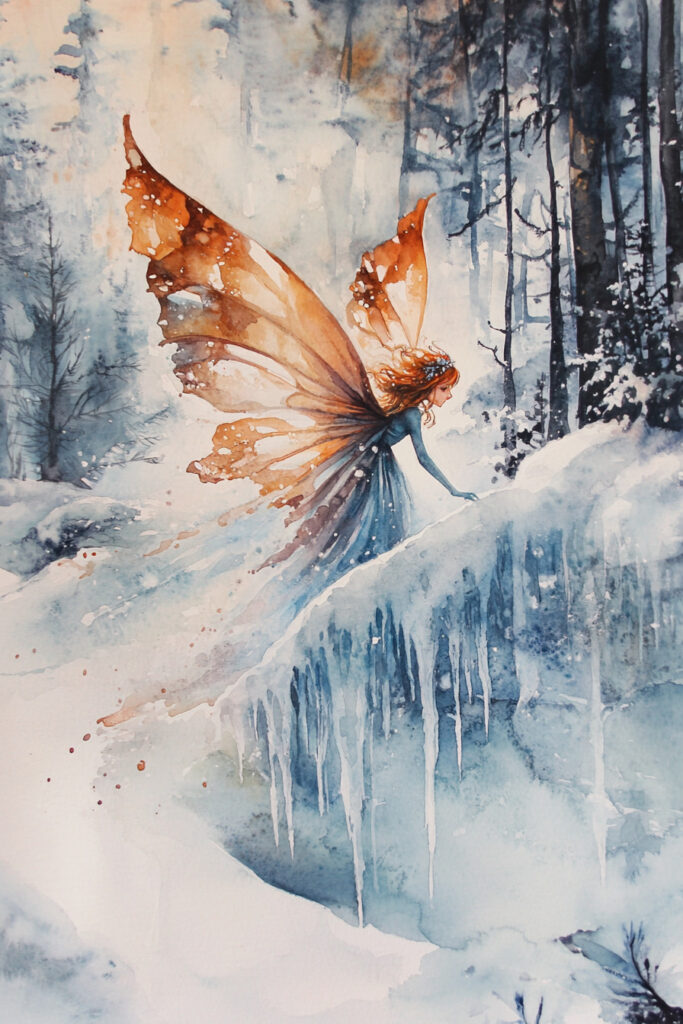
Soft rose and warm gold wings pour warmth downward, and the snow below answers. Rivers rush where moments ago there was only frozen ground. Arctic white and pale silver-blue dominate the landscape, making the soft rose of the wings feel like the first genuinely warm day of the year.
Tender, quiet, and absolutely lovely. One of the best entry-point paintings for anyone trying whimsical fairy art for beginners.
24. Wings of the Swarm
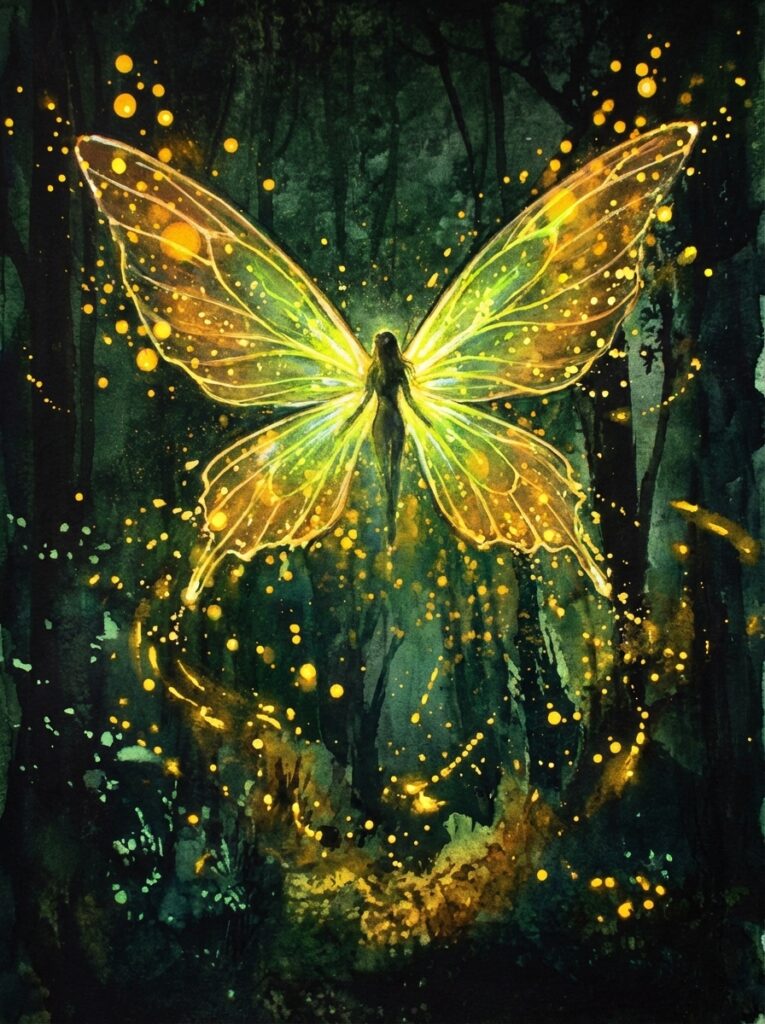
Thousands of fireflies pour from the wing membranes into a deep forest and midnight black woodland. Vivid warm gold and electric chartreuse fill what should be total darkness with living, breathing light.
This is one of the most joyful and kinetic scenes in the collection. Spatter technique works beautifully here for suggesting the scattered glow of firefly light across the dark forest floor.
25. Wings of Everything
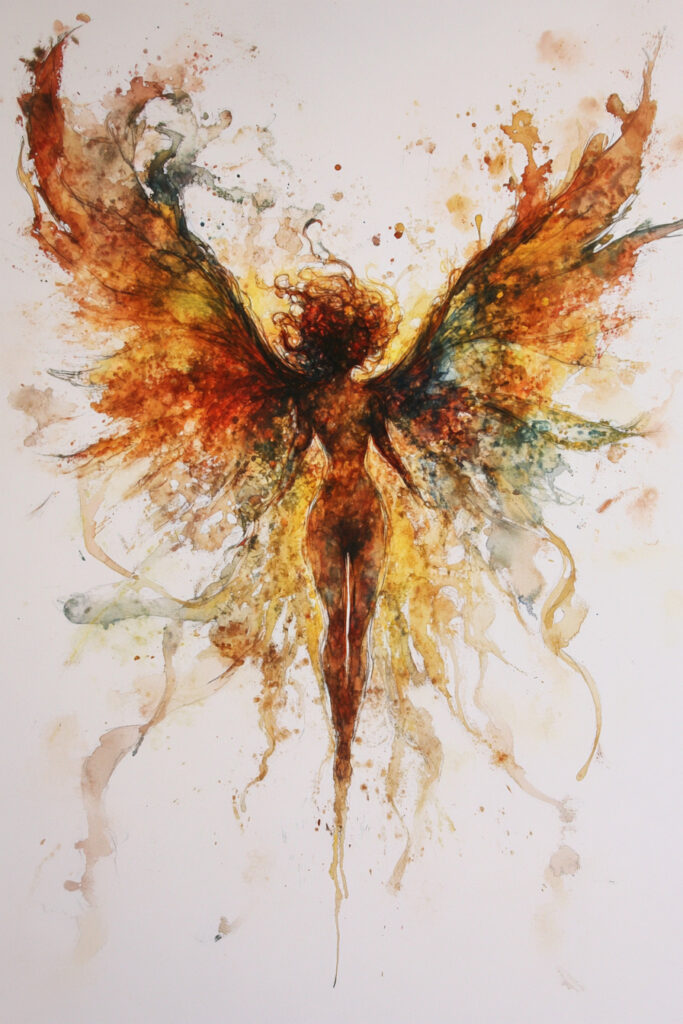
This is the final scene, and it earns that position. Every element from the 24 paintings before it arrives here simultaneously. Fire, ocean, wind, starlight, shadow, and stardust pour from wing membranes that extend beyond the edges of the composition itself. The figure at the center dissolves into pure white unpainted paper.
Every warm and cool tone in your palette collides freely. This is not just the last painting. It is all of them at once. There is no single tutorial for this one. You bring everything you learned from the scenes before it, and you let go.
How to Use These Ideas in Your Own Practice
The best part about this collection is how modular it is. You do not have to paint all 25. Pick two or three scenes that pull at you and start there. Trust that instinct. Your eye is drawn to the paintings that match where your skills and your taste currently live.
Here is a practical starting framework if you are new to fairy watercolor art:
Begin with a scene that uses a simple two-tone contrast. Wings of the Healing Earth and Wings of the Waking Spring are the two most accessible entry points in this collection. Practice wet-on-wet on scrap paper first. Load your largest round brush with the darker tone and let it bloom into wet lighter pigment without fighting the spread. That bloom is your friend. Then add detail on a dry second layer once the first wash is completely set.
For more advanced painters, the fracture scenes (Wings of the Fracture, Wings of the Obsidian Void, Wings of the Deep Storm) reward careful planning of your lightest areas before you apply any paint. Reserve your whites. Work from light to dark. And accept that some of the most striking passages will come from happy accidents you did not plan for.
Frequently Asked Questions
What watercolor paper is best for fairy paintings?
Cold press 140 lb (300 gsm) paper is the standard starting point for most artists. It handles wet-on-wet techniques well and is forgiving enough for beginners making corrections. If you are working large or using heavy wet washes, 300 lb paper eliminates buckling entirely and makes the whole process smoother.
Can beginners try these fairy watercolor art ideas?
Absolutely. Scenes like Wings of the Healing Earth, Wings of the Waking Spring, and Wings of Wild Pollen use soft, blending-friendly palettes that are genuinely approachable for new artists. The key is to start loose and let the watercolor do a portion of the work for you rather than trying to control every edge.
Do I need to sketch the fairy figure before painting?
A light pencil sketch helps enormously, especially for placing the fairy figure and establishing the wing shape and span. Use a light H or 2H pencil so the lines stay faint and do not show through the paint. Keep the sketch minimal, just enough to guide your placement and give you a roadmap before the first wash goes down.
What is the best way to handle the contrast in these paintings?
Every scene in this collection uses deliberate warm-versus-cool contrast as its primary tool. Before you mix a single color, identify the warm zone and the cool zone in your chosen painting. Let those two temperature families do most of the visual work. Overblending them will reduce the drama, so keep your warm and cool passages relatively separate until they meet at a single soft edge.
What makes fairy watercolor different from other watercolor subjects?
The fantasy element gives you total creative freedom. There are no reference photos to match, no wrong wing shape, no incorrect color for light that does not exist in nature. That freedom is especially liberating for beginners who tend to feel anxious about realism. In fairy watercolor art, beautiful and believable are the same thing.
Ready to Pick Your Scene?
You have seen all 25. Which one kept pulling your eye back?
Whether it was the volcanic intensity of Wings of Living Fire, the quiet tenderness of Wings of the Waking Spring, or the all-consuming scale of Wings of Everything, your instinct toward a particular scene is telling you something real. Trust it. Start there.
Grab your brushes. Set up your palette with the two or three dominant tones from the scene you chose. Then see what happens when you let watercolor do what it does best: surprise you in exactly the right ways.
If you paint any of these, we would genuinely love to see your work. Share it in the comments or tag us on Pinterest. Watching these scenes come to life in different hands is exactly what this community is here for.