DIY Halloween props do not have to involve complicated animatronics or specialty haunt supplies. Some of the most effective ghosts, spiders, witch props and creepy decorations can be built from ordinary craft, household or hardware-store materials. The ideas below range from compact indoor projects to larger statement pieces, with beginner-friendly options throughout.
Choose the project that fits your space, materials and time rather than the one that looks most elaborate. A simple prop with a strong silhouette, a little texture and thoughtful placement can do more for a Halloween setup than a complicated build you never finish.
All photos provided are original and can be used as a reference for your own art crafts.
Table of Contents
Basic Tools and Materials for DIY Halloween Props
You can make most of these projects with a small craft kit rather than a workshop full of tools. Keep the basics nearby, then add project-specific materials as needed.
- Scissors and a craft knife with a cutting mat
- Craft glue, hot glue or strong tape that is appropriate for the materials you are joining
- Black, white, grey, brown and muted green craft paint or paint markers
- Cardstock, felt, gauze, cheesecloth, twine and clear hanging line
- Clean jars, bottles and plastic jugs you already have
- Battery-operated lights or candles for glow effects
For outdoor lighting, use electrical decorations and extension cords that are specifically marked for outdoor use and keep cords clear of standing water. The Electrical Safety Foundation International outdoor decorating guidance also recommends GFCI-protected circuits for outdoor electrical decorations. For candle effects, the NFPA Halloween safety guidance recommends battery-operated candles or glow sticks and keeping decorations away from open flames and heat sources.
Craft Paper Witch Hat
Difficulty: Very easy
Best for: Indoor tables, shelves or a sheltered entryway
Storage: Small; hats can be nested
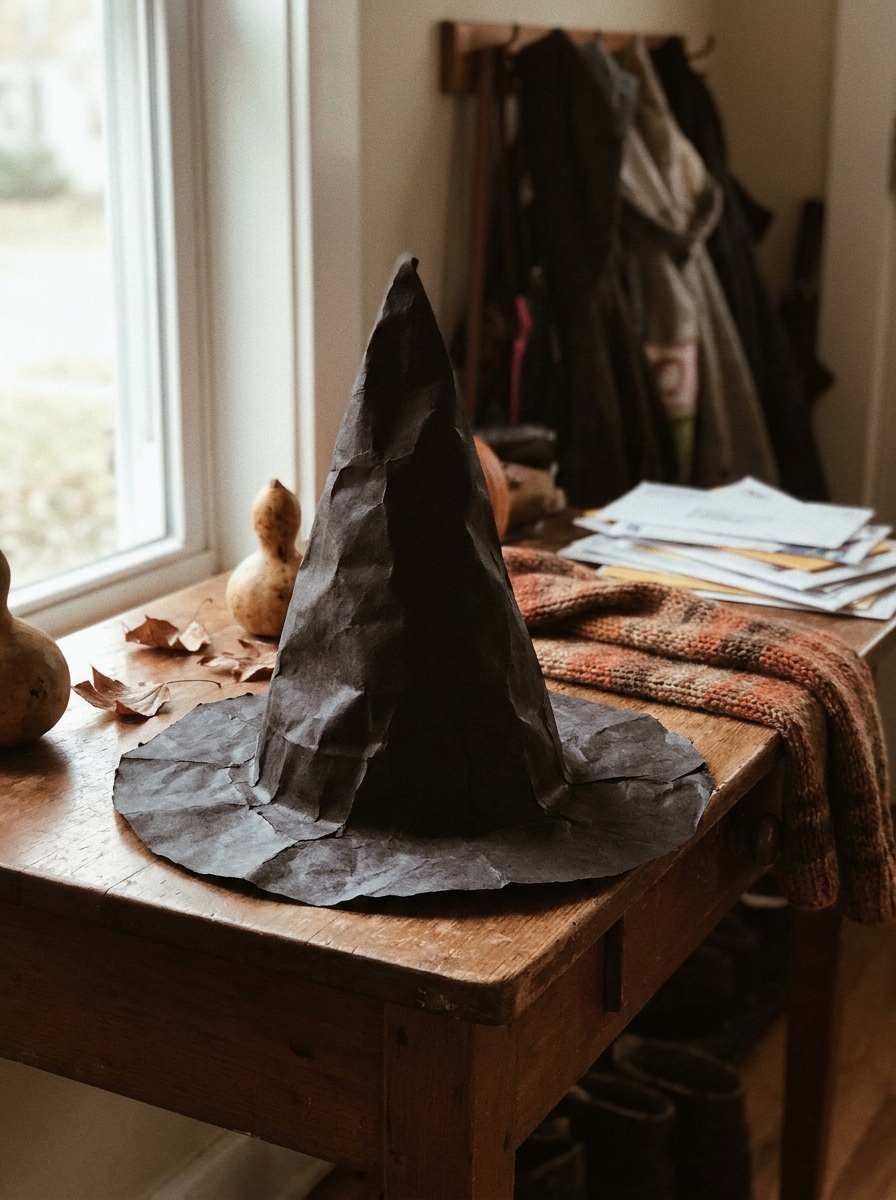
Main materials: Black cardstock, scissors, tape or glue, ribbon or twine, optional tissue paper
- Roll black cardstock into a cone and secure the overlapping edge. Bend the tip slightly instead of trying to make it perfectly straight.
- Cut a wide ring of cardstock for the brim, make a small opening in the center and slide the cone through it. Secure the cone to the brim from underneath.
- Wrap ribbon or twine around the base. Add a torn strip of tissue paper, a paper buckle or a few irregular folds if you want a more worn-in witchy look.
Make it better: Make several hats in slightly different heights and angles. Repetition creates more impact than adding lots of tiny embellishments.
Paper Plate Pumpkin
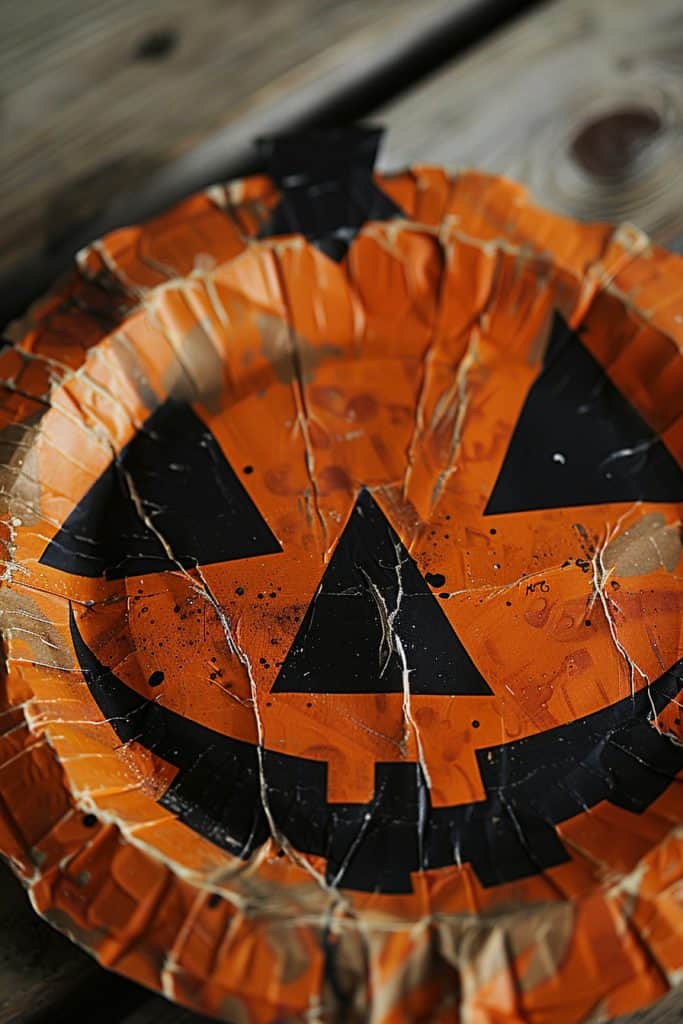
Honestly, this jack-o’-lantern paper plate could be way simplified for a beginner to draw. I’d start with just a basic orange circle – no need to fuss with the plate ridges. Then sketch out those big triangle eyes and the zigzag mouth. Honestly though, the nose is kinda tricky. Is that supposed to be a triangle or more of a diamond shape? I can’t quite tell. Maybe just go with a simple triangle nose to keep it easy.
For materials, looks like they used orange and black construction paper here. But y’know what? I tried something similar last Halloween and ended up using markers instead. Way less messy, especially for kids. Plus you don’t have to deal with glue drying and paper curling up. Although come to think of it, the texture of torn paper edges can look pretty cool… Anyway, where was I? Oh right, simplifying it.
So yeah, stick to the basic shapes for a beginner version. Circle for the pumpkin, triangles for eyes and nose, jagged mouth. Skip all the little details like those cobweb-looking strings and paint splatters. Those are neat but definitely advanced level stuff. Focus on getting the main Jack-o’-lantern face recognizable first. Once you’ve got that down, then you can start playing around with adding extra spooky touches. Man, now I kinda want to go make one myself again. Maybe I’ll dig out my craft supplies this weekend and give it another go. You ever notice how making Halloween stuff always puts you in a festive mood?
Life-Size Scarecrow
Difficulty: Easy
Best for: Covered porch, chair display or indoor entryway
Storage: Bulky, but most parts can be reused
Main materials: Old shirt and trousers, pillowcase or paper bag for the head, crumpled paper or clean packing material, twine, hat
- Stuff the shirt and trousers loosely so the figure holds a human shape without becoming heavy. Tie or tape the openings from the inside where they will not show.
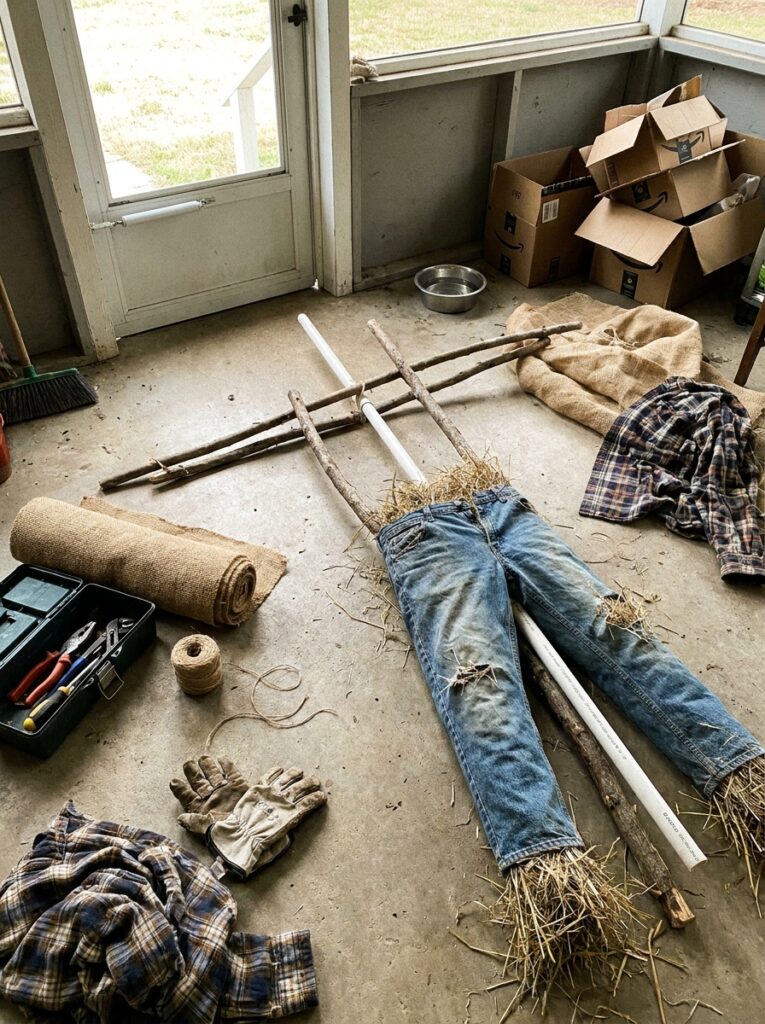
2. Stuff a pillowcase or sturdy paper bag for the head and add a simple face with paint or a marker. A rough expression usually looks more convincing than a highly detailed one.
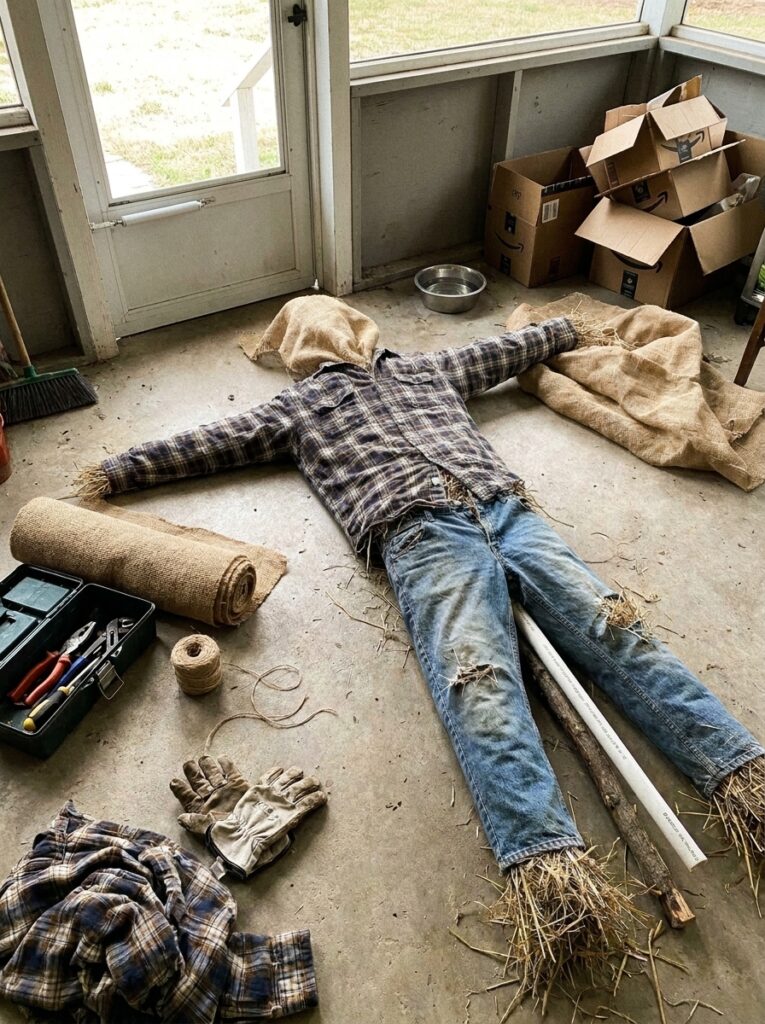
3. Sit the scarecrow securely on a chair or bench and arrange the sleeves and legs naturally. Add a hat, old gloves or a scrap of dark fabric around the neck.
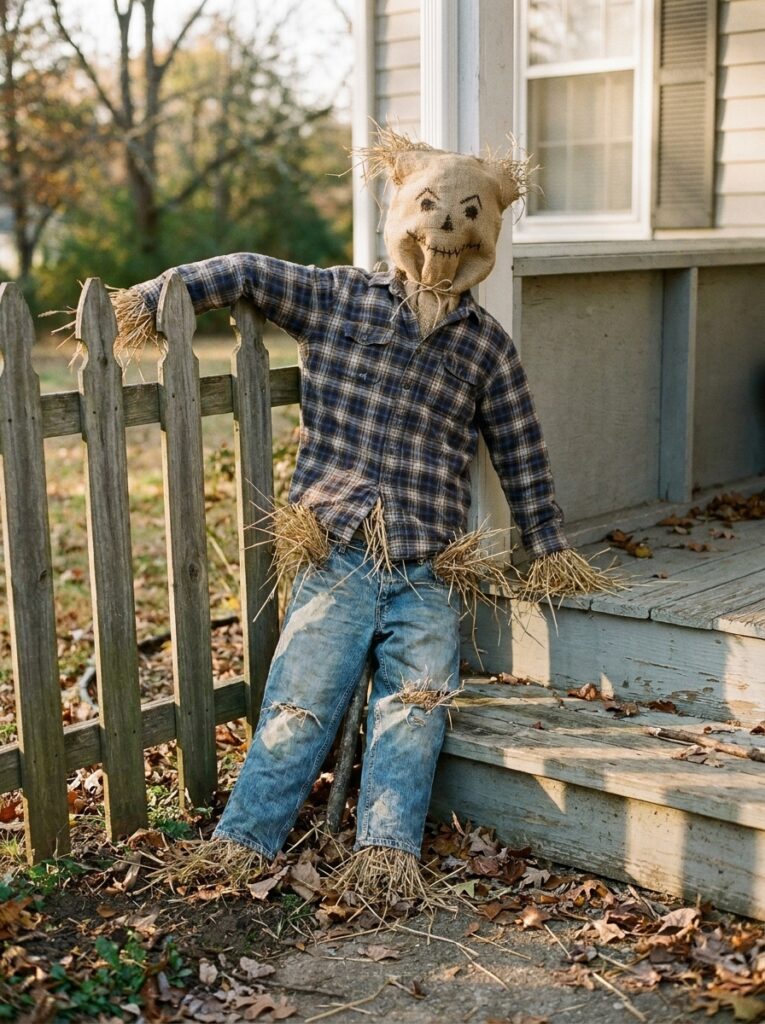
Make it better: This is a good answer to the “big prop” problem because scale comes from ordinary clothing rather than motors or specialty components. Keep walkways clear and position the figure where it cannot tip into foot traffic.
Bat Cut From Felt
Difficulty: Very easy
Best for: Walls, stair rails, mantels and windows
Storage: Flat and very easy to store
Main materials: Black felt or heavy black cardstock, paper template, scissors, removable adhesive or clear line
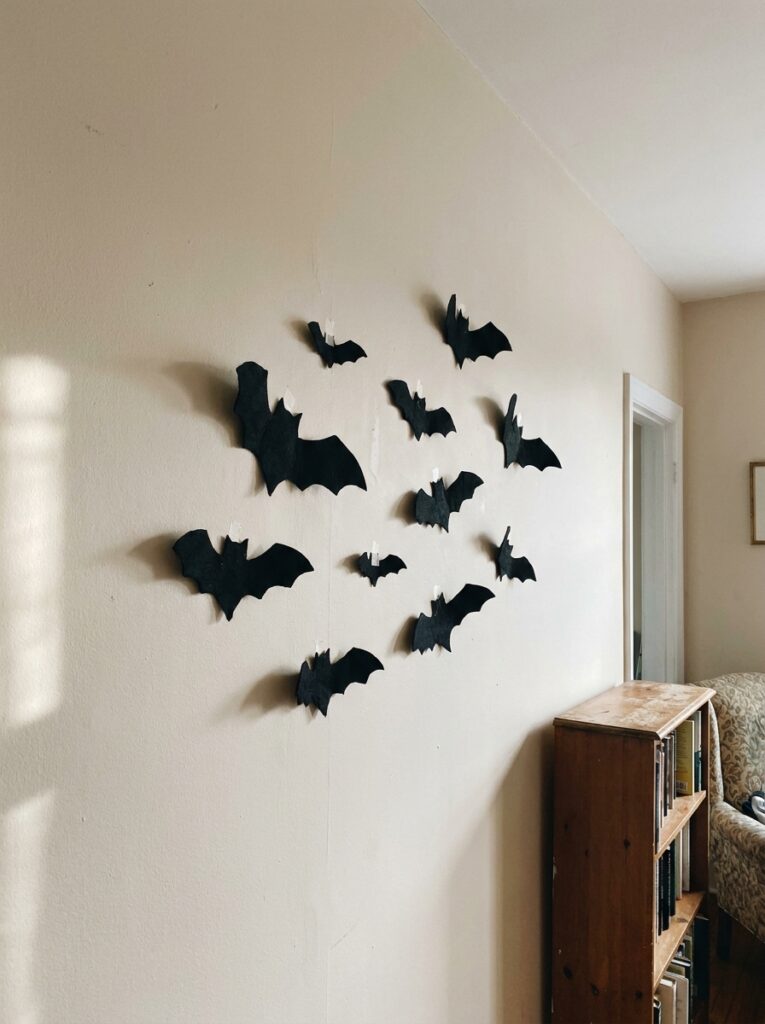
- Draw one simple bat shape on paper and cut it out as a template. Keep the wing outline bold so it is easy to recognize from across the room.
- Trace the template onto black felt in several sizes and cut out the bats.
- Place them in a loose upward sweep rather than an even row. Use removable adhesive on suitable surfaces or suspend a few with clear line for depth.
Make it better: Fold a few wings slightly along the body before hanging them. The shadows make flat cutouts feel more dimensional without adding extra materials.
Mummy Made From Mason Jar And Gauze
Difficulty: Very easy
Best for: Tabletops, shelves, party tables and window ledges
Storage: Small and reusable
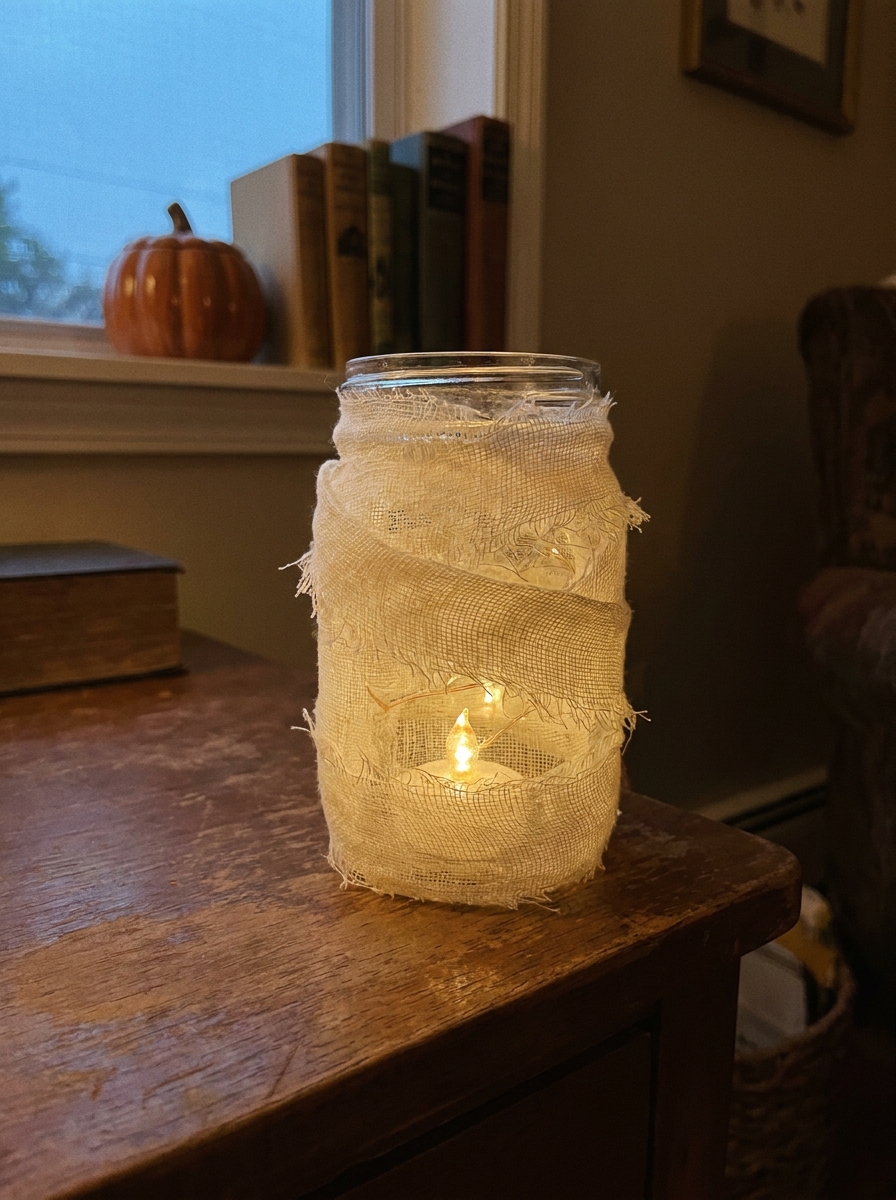
Main materials: Clean mason jar, gauze, craft glue, paper or adhesive eyes, battery-operated tea light
- Wrap the jar loosely with overlapping strips of gauze. Leave small gaps instead of covering the glass in one solid layer.
- Secure the ends with a small amount of glue and add two eyes near the upper third of the jar.
- Place a battery-operated tea light inside the jar so the glow comes through the uneven gauze.
Make it better: Let a few gauze edges stay ragged. A mummy looks better when the wrapping is irregular rather than perfectly parallel.
Last Minute Haunted Mirror

Difficulty: Easy
Best for: Hallway, mantel, entry table or party backdrop
Storage: Moderate; depends on frame size
Main materials: Old picture frame or mirror frame, removable translucent sheet or vellum, black cardstock silhouette, tape, optional battery light
- Use an old frame you already own or a thrifted frame. If you do not want to alter a real mirror, place a translucent sheet or vellum inside the frame instead.
- Cut a dark silhouette of a face, branches, hands or a figure and position it behind the translucent layer.
- Add a soft battery light behind the frame if you want the silhouette to appear gradually in a dim room. Keep the light source cool and follow its product instructions.
Make it better: Do not over-detail the silhouette. A partly hidden face or hand is usually more unsettling because the eye has to finish the image.
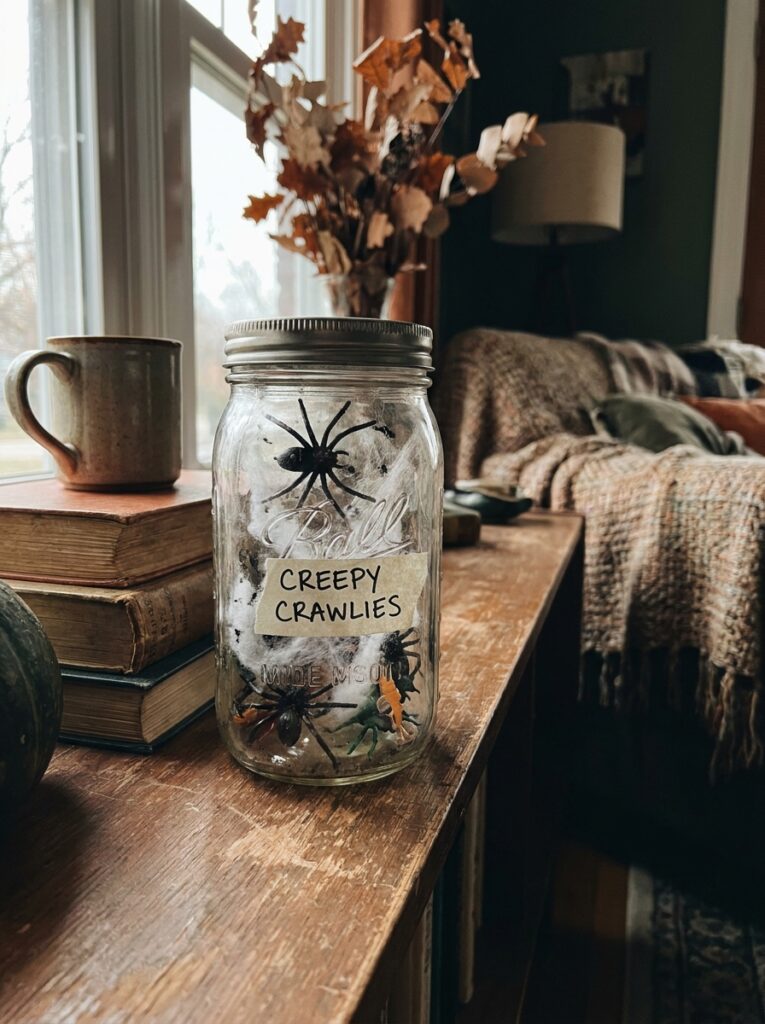
Creepy Crawly Jar
Difficulty: Very easy
Best for: Potion shelf, bathroom shelf, buffet or small-space display
Storage: Small and easy to box
Main materials: Clear jar, plastic insects, shredded paper or cotton webbing, printed or handwritten label, twine
- Add shredded paper, cotton webbing or another dry filler to the bottom of a clean clear jar.
- Layer in plastic spiders, beetles or snakes at different heights so the jar does not look flat.
- Finish with a simple label such as “Venomous Creatures” or “Specimen Jar” and wrap twine loosely around the lid.
Make it better: Use two or three sizes of insects and leave some empty space inside the jar. The gaps make the contents easier to see and create more believable depth.
DIY Candelabra
Difficulty: Easy
Best for: Dining table, fireplace mantel or haunted-house-style vignette
Storage: Moderate
Main materials: Mismatched candleholders, tray or narrow base, black or dark craft paint if needed, battery taper candles
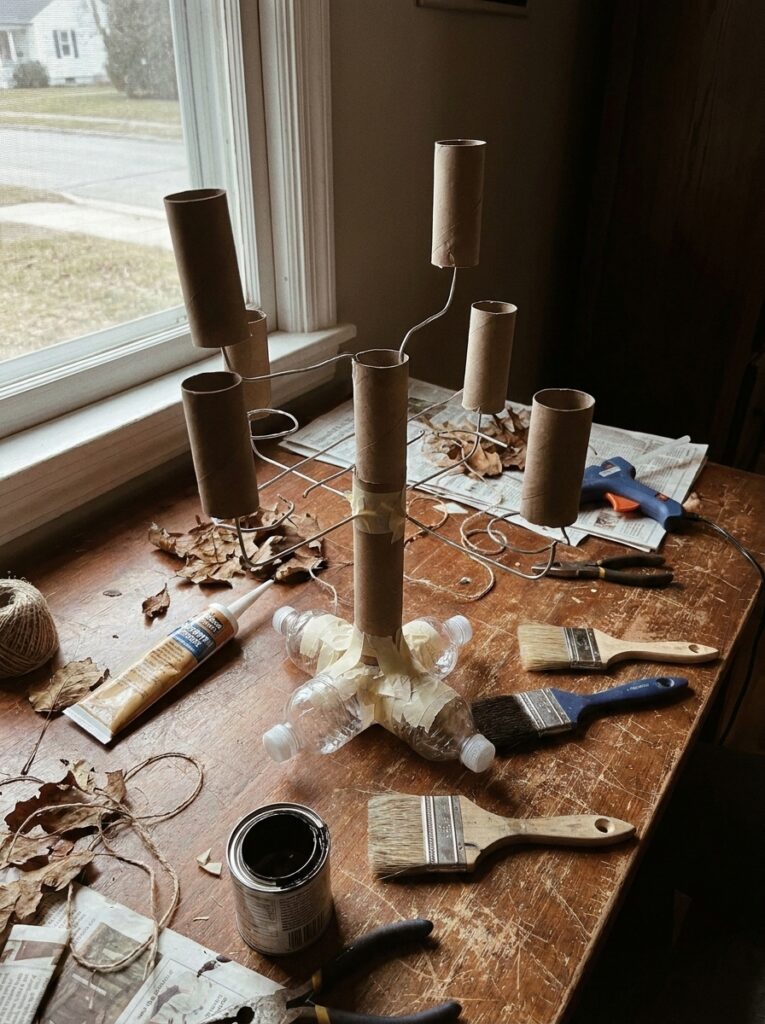
- Collect candleholders in different heights rather than trying to build one complicated frame. Arrange them close together on a narrow tray or base.
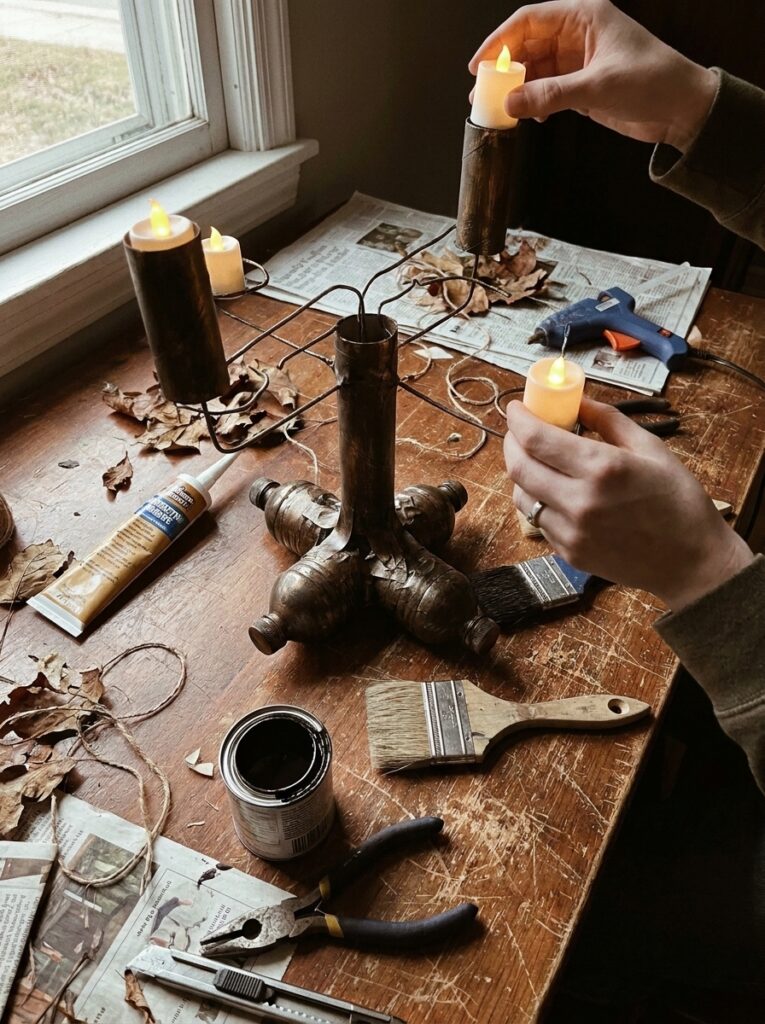
2. If the finishes clash, paint the holders in one dark color that is compatible with their surface and let them dry fully according to the paint instructions.
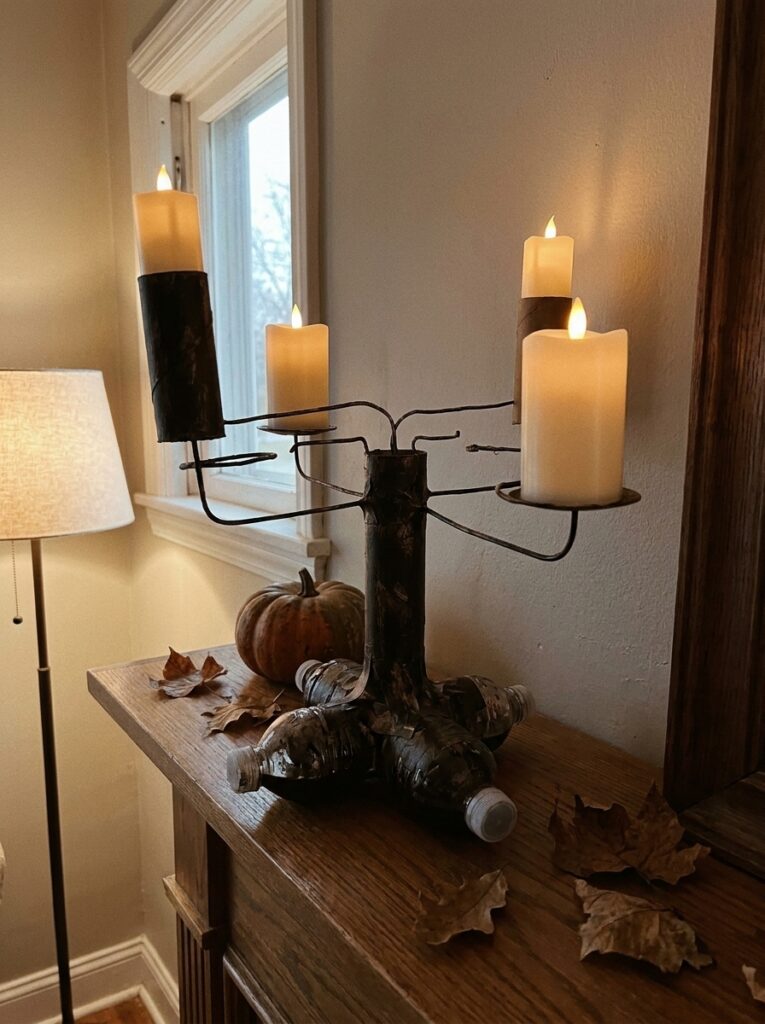
3. Add battery-operated taper candles, then stagger the heights and angles so the arrangement feels old and slightly imperfect.
Make it better: A tight group of mismatched holders often looks more convincing than a perfectly symmetrical candelabra. Add one taller candle at the back to break the outline.
Empty Milk Jug Ghost
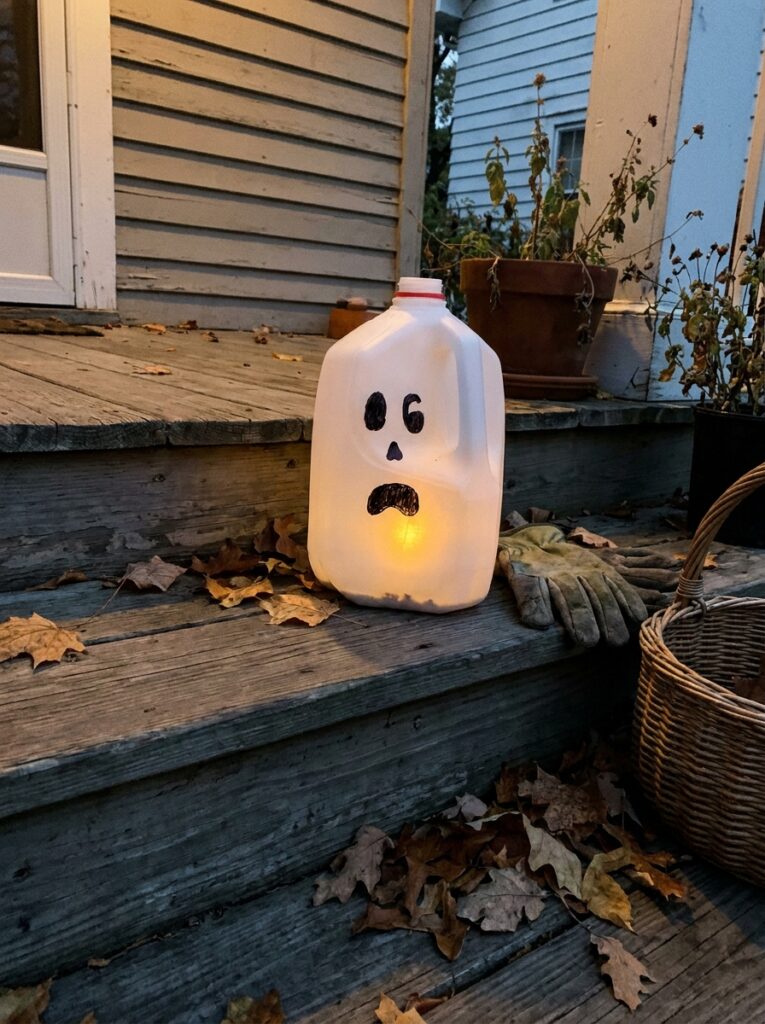
Difficulty: Very easy
Best for: Indoor floor display or sheltered porch
Storage: Small; lightweight
Main materials: Clean empty milk jug, black marker or black adhesive shapes, battery-operated light
- Wash and dry the jug completely, then draw or apply a simple ghost face on the side opposite the handle.
- Place a battery-operated light inside through the opening. Keep the opening accessible so you can turn the light on and off easily.
- Group two or three jugs at different heights for a stronger display instead of relying on one small ghost.
Make it better: Simple faces read best when the jug is glowing. Use large eyes and a mouth rather than tiny details that disappear from a distance.
Glowing Ghost
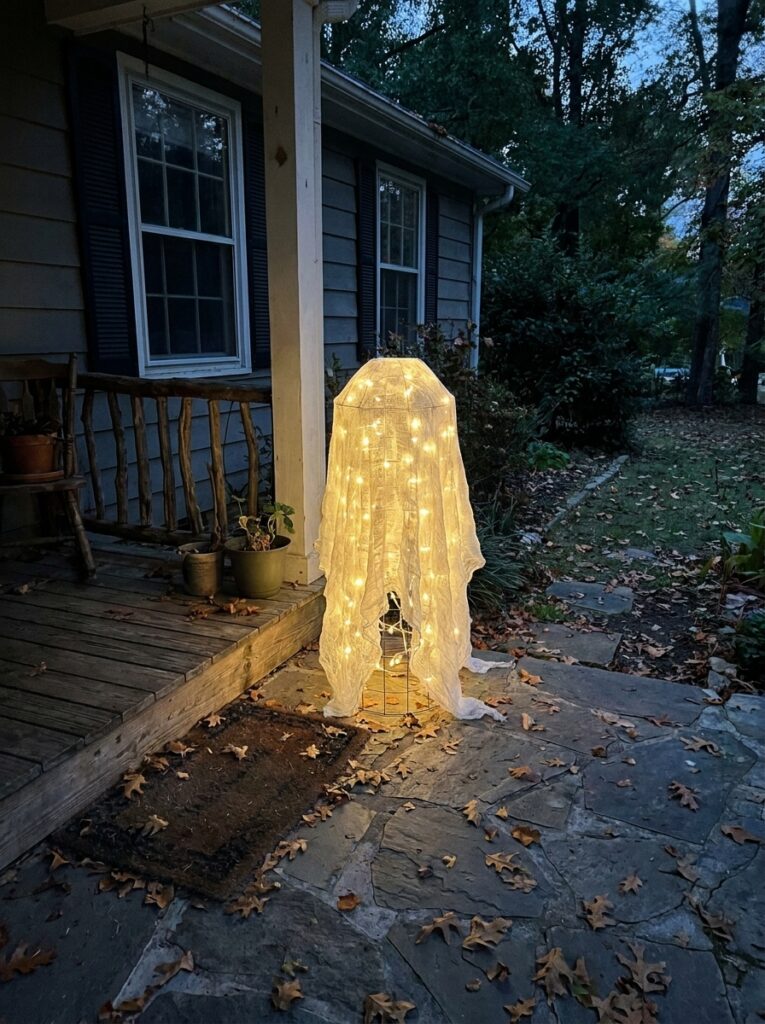
Difficulty: Easy
Best for: Indoor corner, covered porch or sheltered entryway
Storage: Moderate; support and fabric separate for storage
Main materials: White sheet or lightweight fabric, sturdy freestanding plant support or similar base, black fabric/paper for eyes, battery lights
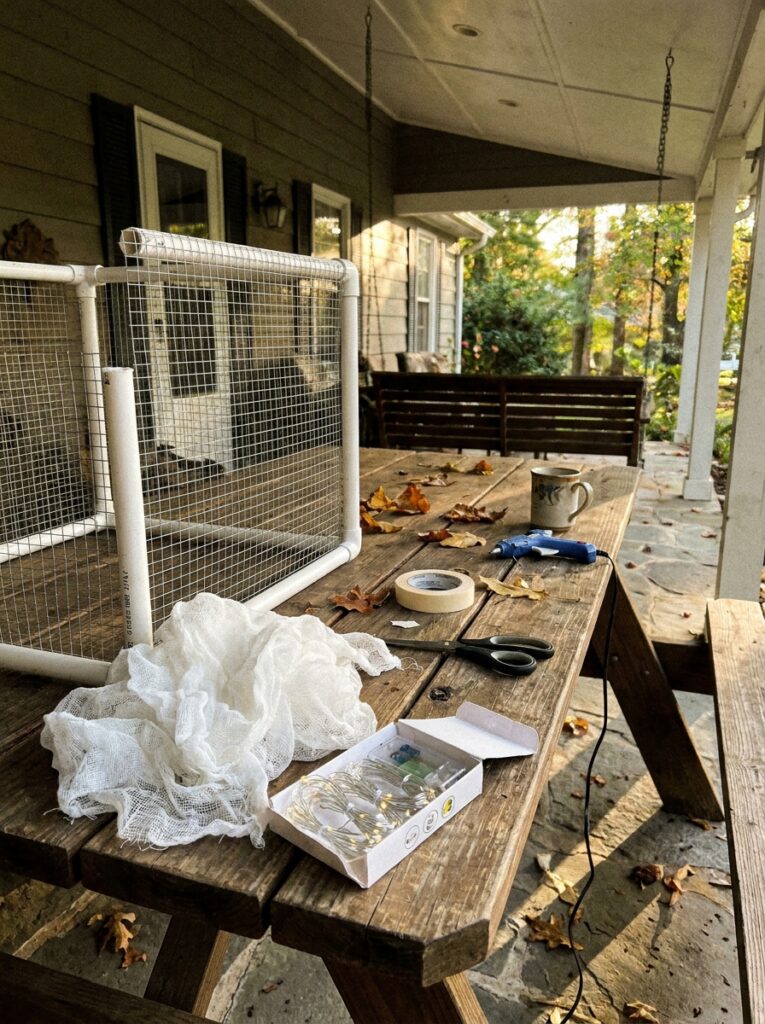
- Place a sturdy freestanding support where the ghost will be displayed. Make sure it is stable before adding fabric.
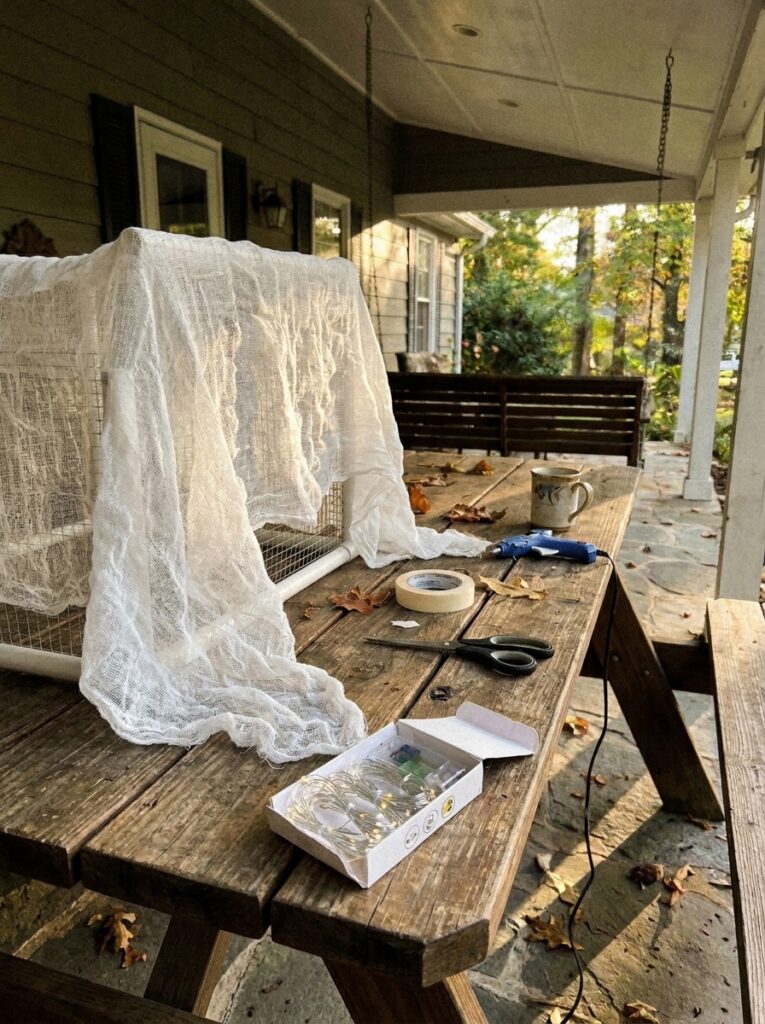
2. Drape the white fabric over the support and adjust the folds until the outline reads clearly as a figure.
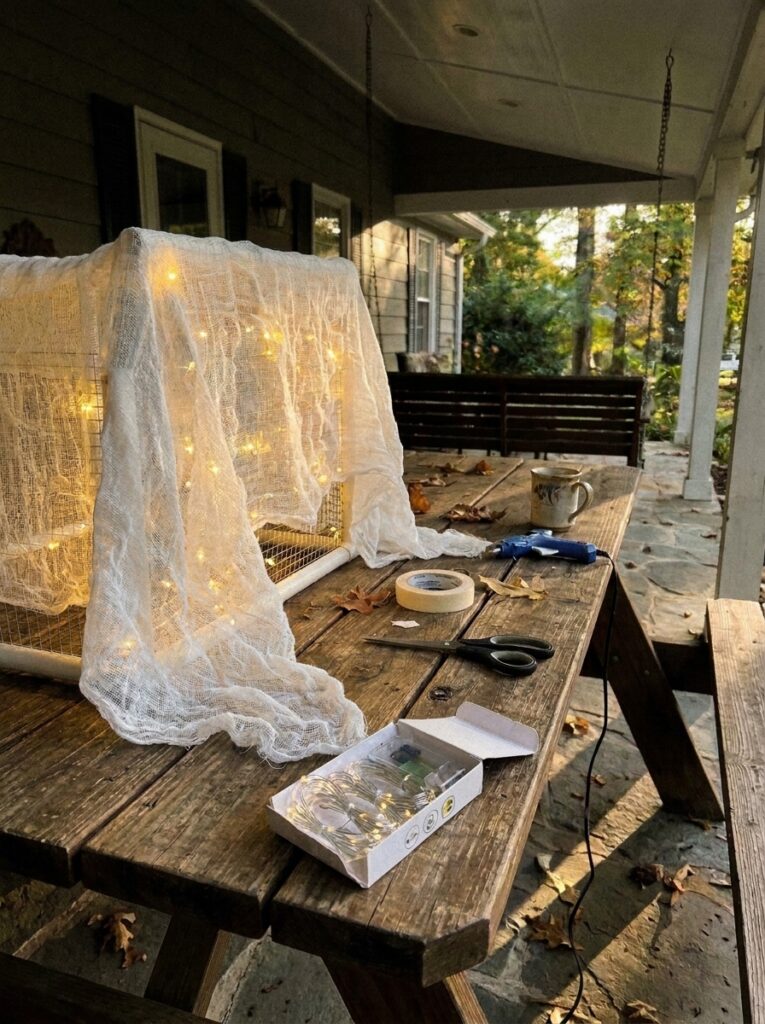
3. Add dark eyes and, if you want a glow, use battery lights that are appropriate for the location. Keep cords and lights away from damp conditions unless they are rated for them.
Make it better: Concentrate the light around the head and upper body rather than lighting every fold evenly. A little darkness around the edges makes the figure feel less like a sheet.
Giant DIY Spider
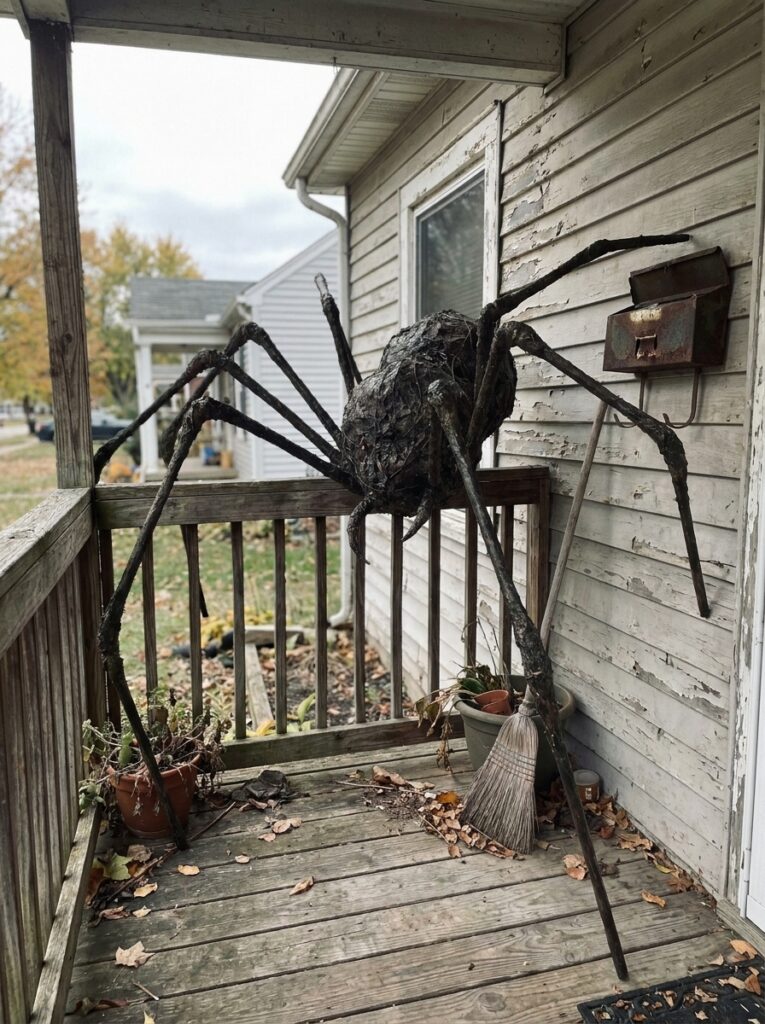
Difficulty: Easy to moderate
Best for: Large indoor display, garage opening or sheltered yard/porch setup
Storage: Bulky, but lightweight parts can be separated
Main materials: Black bags or dark fabric for body shapes, crumpled paper or lightweight packing material, foam pipe insulation for legs, strong tape or ties, paper/felt eyes
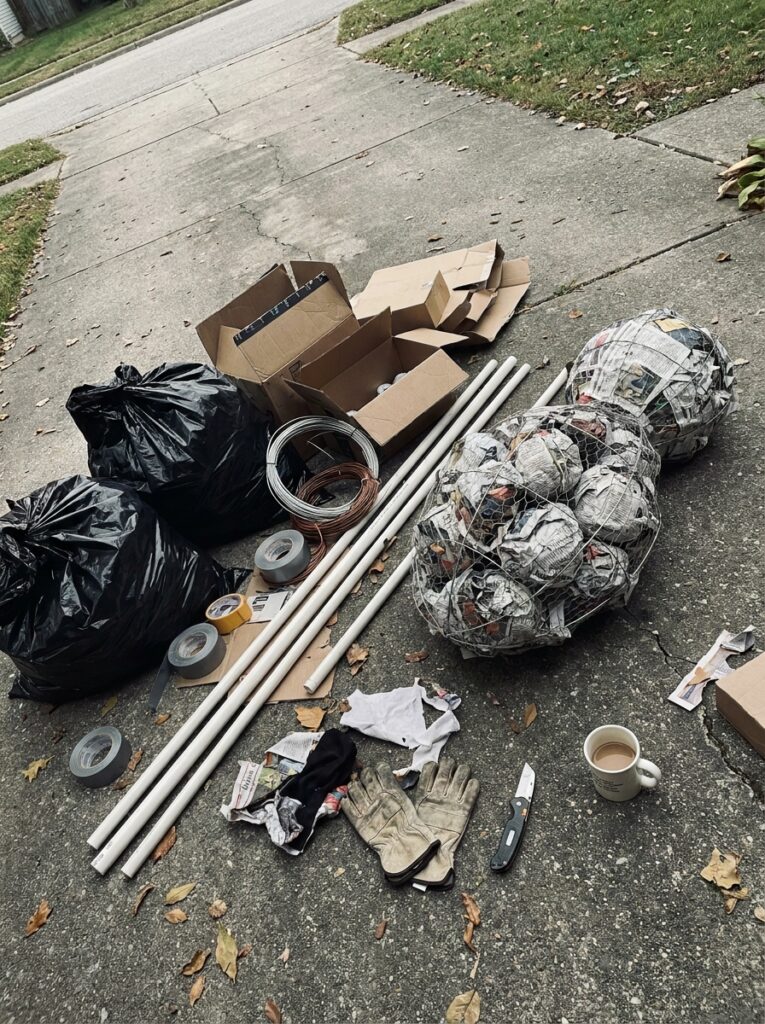
- Create two lightweight body shapes, one smaller for the head and one larger for the abdomen. Stuff only enough to hold the shape.
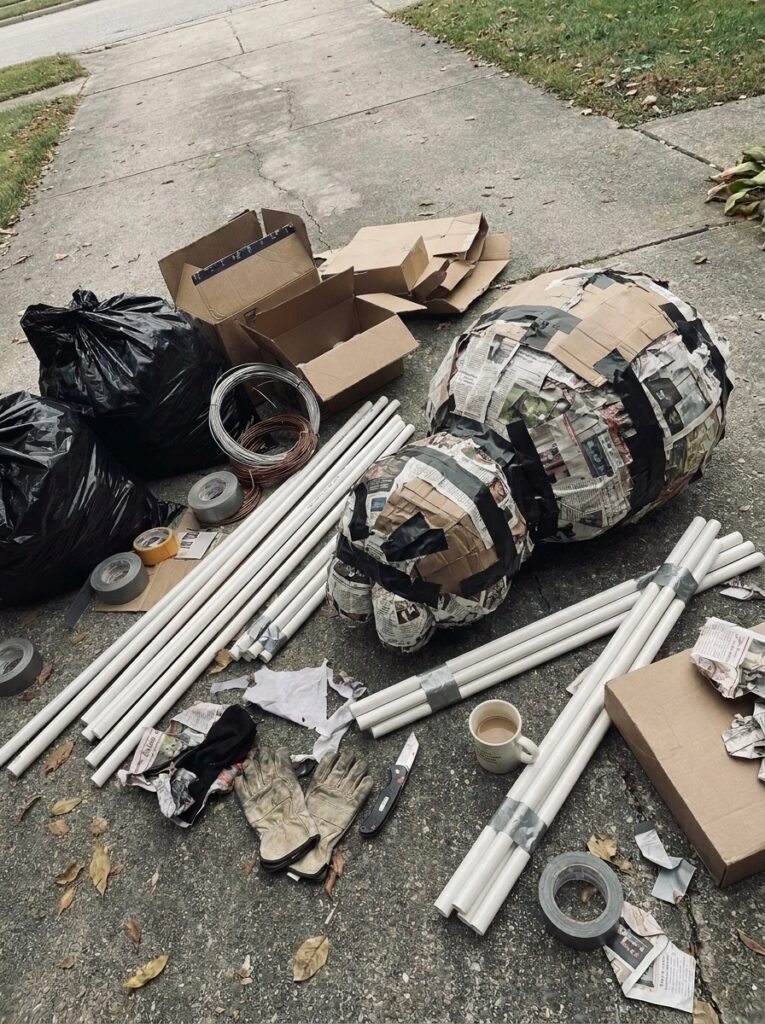
2. Attach lengths of foam pipe insulation around the body for legs. Bend each leg in two places so the spider sits low instead of looking like a starburst.
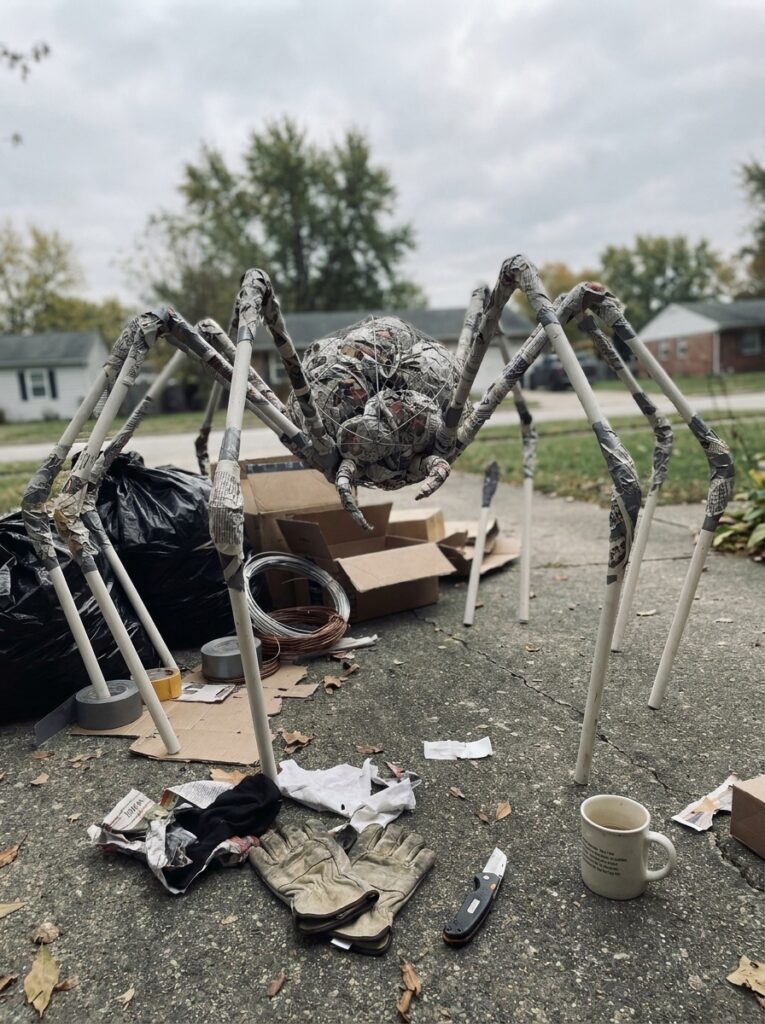
3. Add simple eyes, then place the spider where its full silhouette can be seen. For any outdoor placement, secure the lightweight parts against wind and use materials suitable for the expected exposure.
Make it better: Scale is the special effect here. Keep the body simple and spend your effort on the leg angles; a wide, low stance makes even inexpensive materials look much more dramatic.
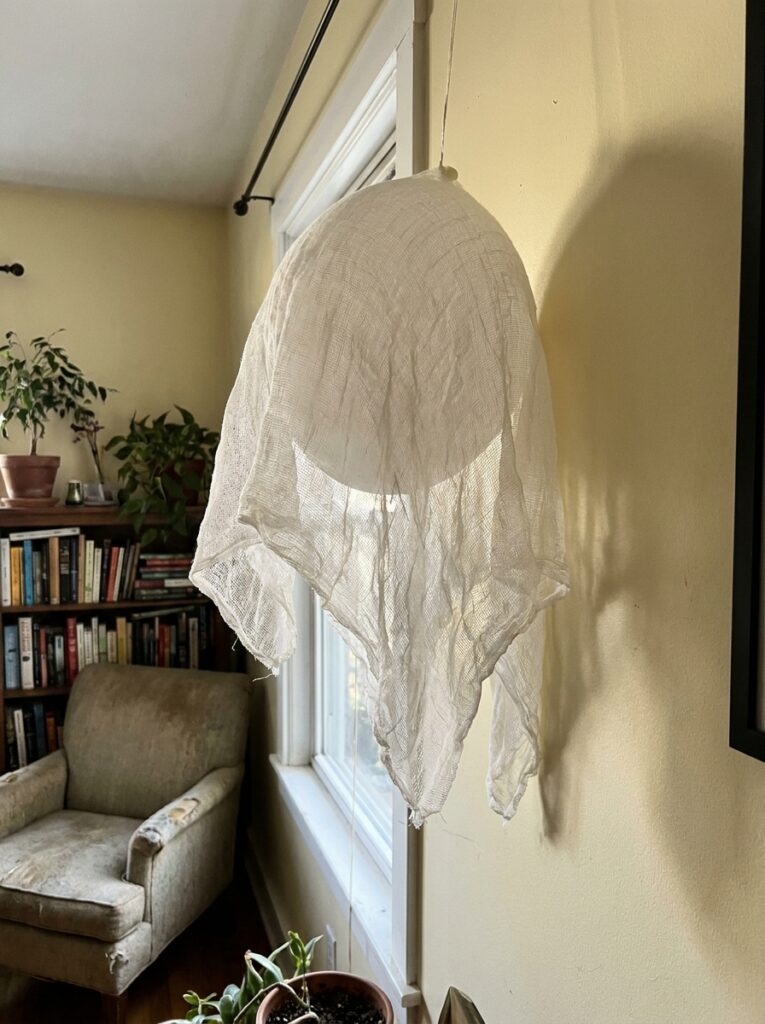
Floating Balloon Ghost
Difficulty: Very easy
Best for: Indoor hallway, party room or ceiling display
Storage: Very small after disassembly
Main materials: White balloon, lightweight white tissue or gauze, black paper or marker, clear line, suitable removable ceiling hook
- Inflate a white balloon and add a simple ghost face with a marker or black paper shapes.
- Tape or tie lightweight tissue or gauze around the lower half so it hangs in loose strips.
- Suspend the balloon with clear line from a suitable removable hook, keeping it well away from light fixtures, sprinklers and doorways.
Make it better: Hang several ghosts at slightly different heights. The uneven spacing gives the group movement even though every prop is completely sta
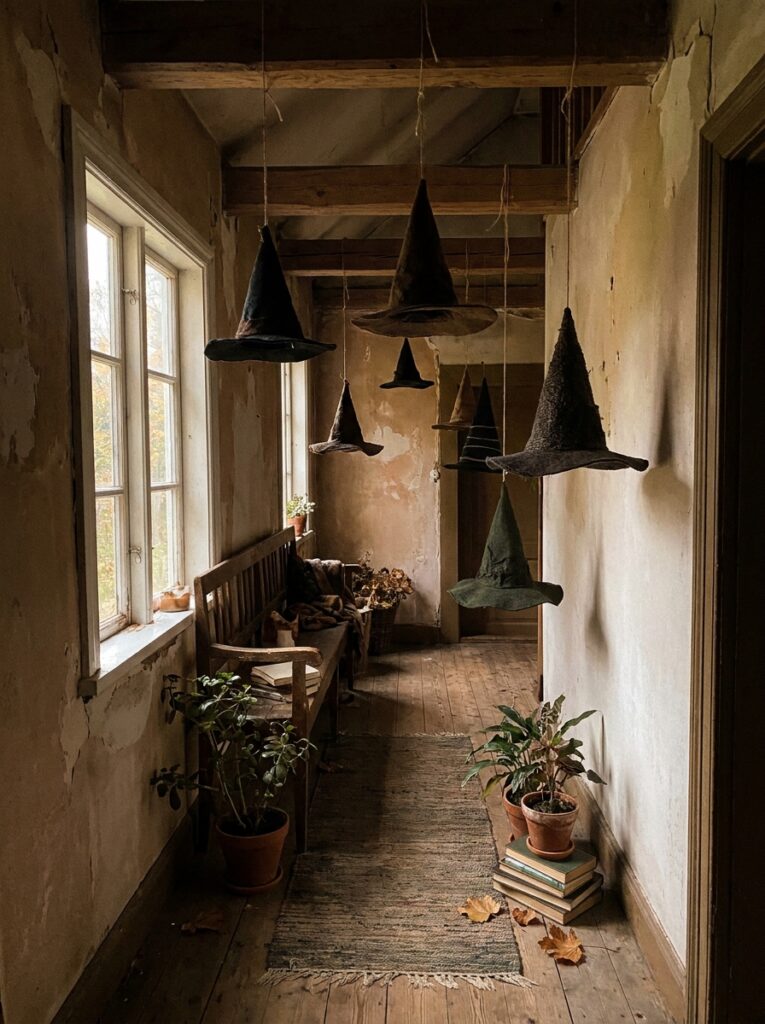
Hanging Witch Hat
Difficulty: Very easy
Best for: Indoor ceiling, stairwell or sheltered porch
Storage: Small; stackable
Main materials: Lightweight witch hats, clear line, removable hooks, optional battery lights
- Choose lightweight hats so they are easy to suspend and do not require heavy hardware.
- Tie clear line to each hat and hang them at different heights rather than in a straight row.
- For a glowing version, place only a lightweight battery light designed for the location inside the hat and keep all fabric or paper away from hot light sources.
Make it better: Use an odd number of hats and vary the height enough that the group feels like it is drifting rather than hanging from a grid.
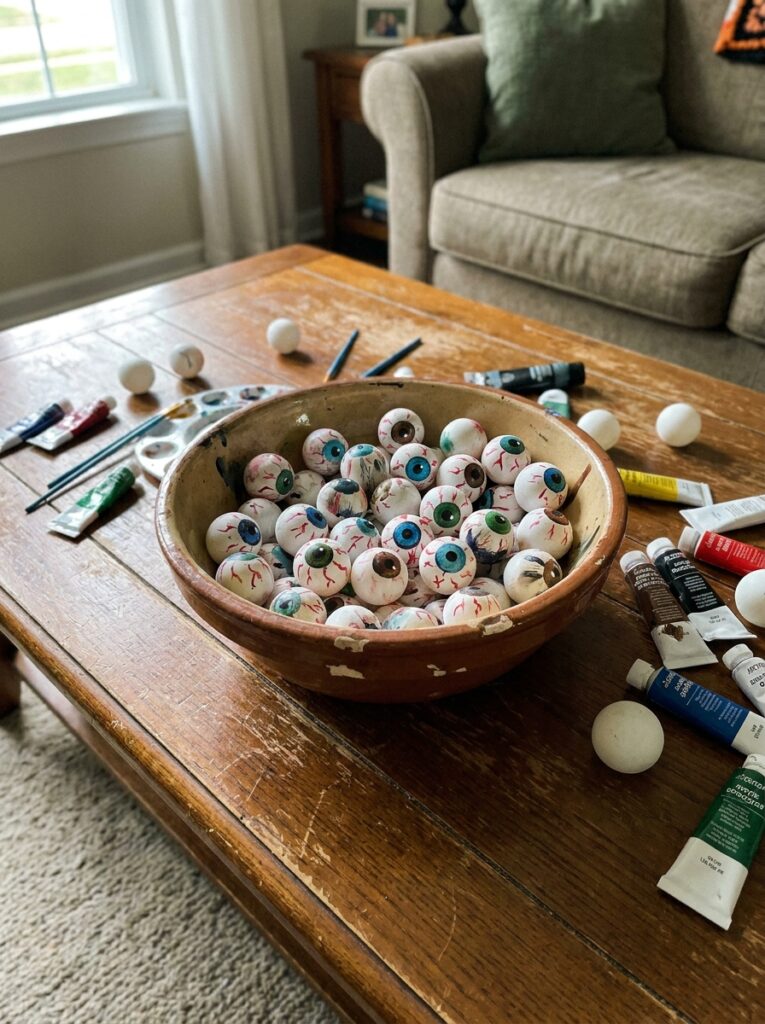
Eyeball Made From Ping Pong Balls
Difficulty: Very easy
Best for: Bowls, garlands, stair rails and tabletop displays
Storage: Tiny
Main materials: White ping-pong balls, paint markers or craft paint, black thread or clear line if hanging
- Draw a colored iris on each ping-pong ball, then add a black pupil. Leave some white showing so the eyeball still reads clearly.
- Add a few thin red lines around the iris if you want a creepier look, but keep the marks uneven.
- Display the eyeballs in a bowl, attach them to a wreath, or hang a few with clear line around a stair rail or shelf.
Make it better: Change the iris size and direction from ball to ball. When every eye looks in the same direction, the result feels too neat.
DIY Witch Broomstick
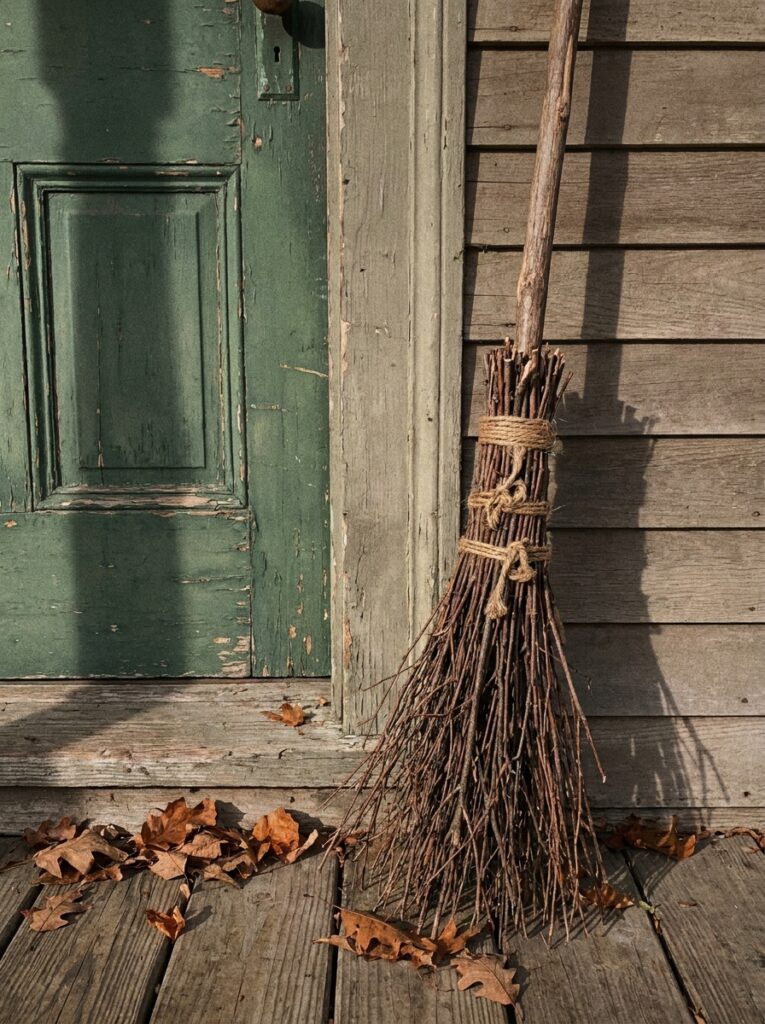
Difficulty: Easy
Best for: Doorway, corner vignette or covered porch
Storage: Tall but narrow
Main materials: Straight branch or wooden dowel, bundle of twigs or raffia, strong twine, optional dark ribbon
- Gather the twigs or raffia into a compact bundle and trim the ends only enough to remove very long pieces; a slightly uneven edge looks better.
- Place the branch or dowel into the center of the bundle and wrap the top tightly with twine several times.
- Lean the broom in a corner or hang it securely as decoration. Keep it out of walkways where the handle or bristles could become a trip hazard.
Make it better: A weathered branch usually looks more convincing than a perfectly smooth handle. Add one dark ribbon or tag rather than covering the broom in decorations.
DIY Witch Cauldron
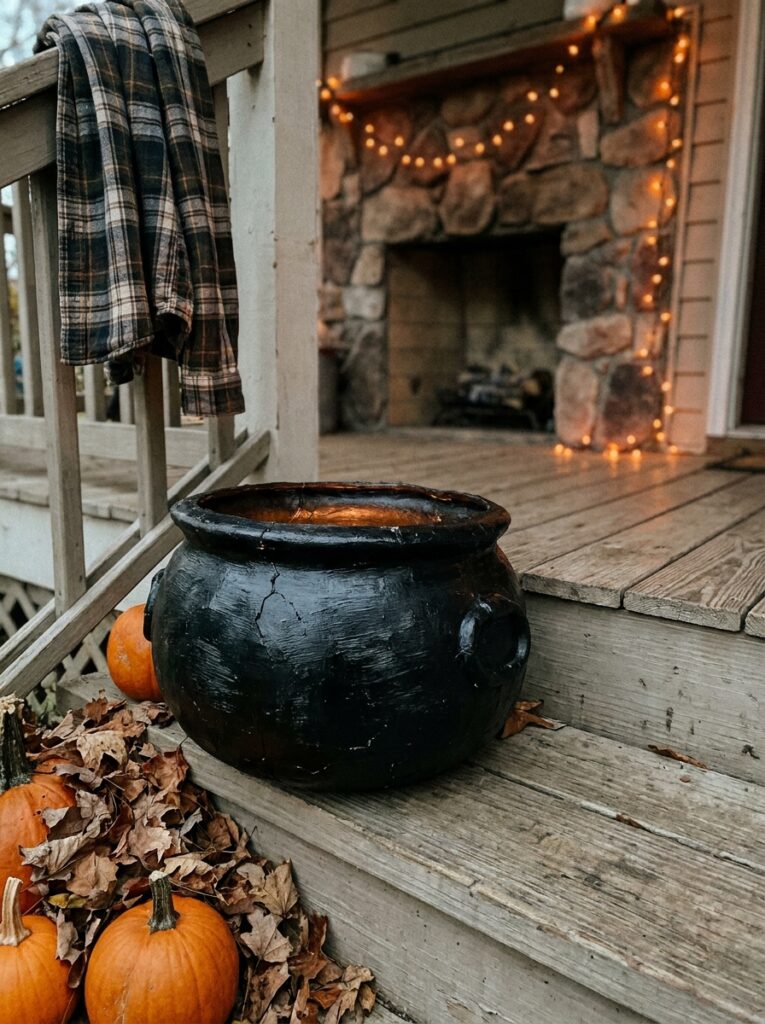
Difficulty: Easy
Best for: Entry table, fireplace, party buffet or covered porch
Storage: Moderate
Main materials: Black plastic bowl or planter, green tissue/cellophane or shredded paper, lightweight decorative balls or bubbles, battery lights, optional faux moss
- Start with a black bowl, planter or pot wide enough to create a strong cauldron silhouette.
- Fill the top with crumpled green tissue, cellophane or shredded paper so the “potion” rises above the rim instead of sitting flat inside.
- Tuck battery lights underneath the translucent material and add a few lightweight balls, faux moss or paper bubbles on top.
Make it better: Use two or three shades of green plus a little black or brown around the rim. The contrast makes a simple plastic container feel more like an old prop.
Ghost Made From Cheesecloth
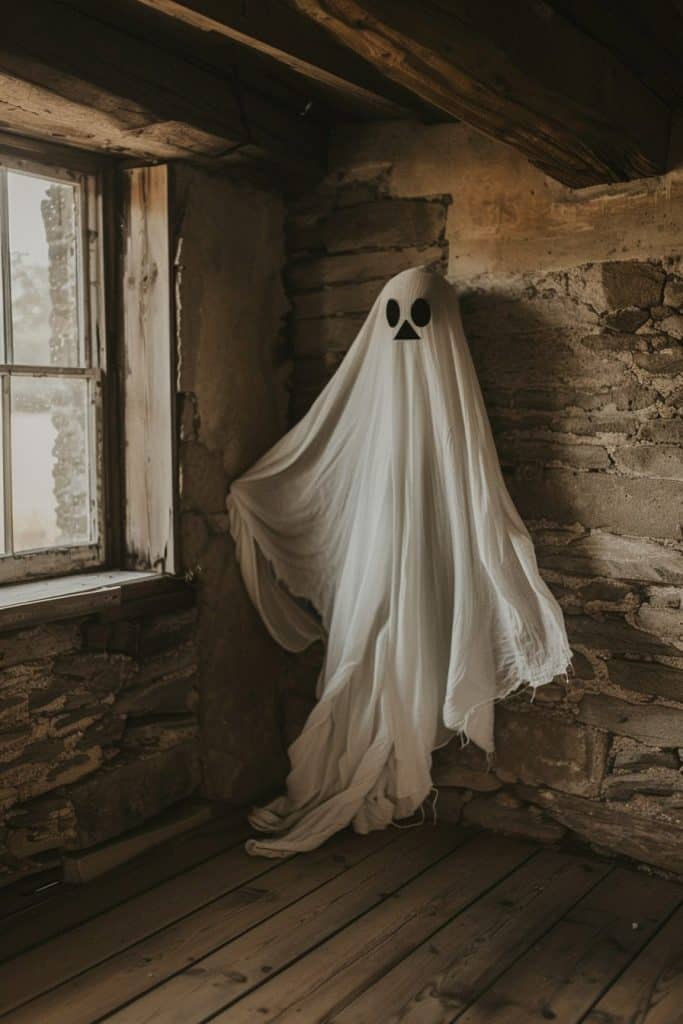
Difficulty: Easy
Best for: Tabletop, mantel, shelf or sheltered display
Storage: Small; very easy once dried
Main materials: Cheesecloth, balloon or rounded form, jar/cup for support, fabric stiffener used according to its label, black felt/paper eyes
- Set a balloon or rounded form on top of a jar or cup so you have a head and a little height for the body.
- Drape cheesecloth over the form and apply fabric stiffener according to the product directions. Shape a few folds so the cloth spreads at the bottom.
- Let it dry completely, remove the form and add simple dark eyes. Use only cool battery lighting around the finished ghost and keep it away from open flames.
Make it better: Let the lower edge stay irregular and slightly lifted in places. That uneven base is what makes a small tabletop ghost feel like it is floating.
Spider Web
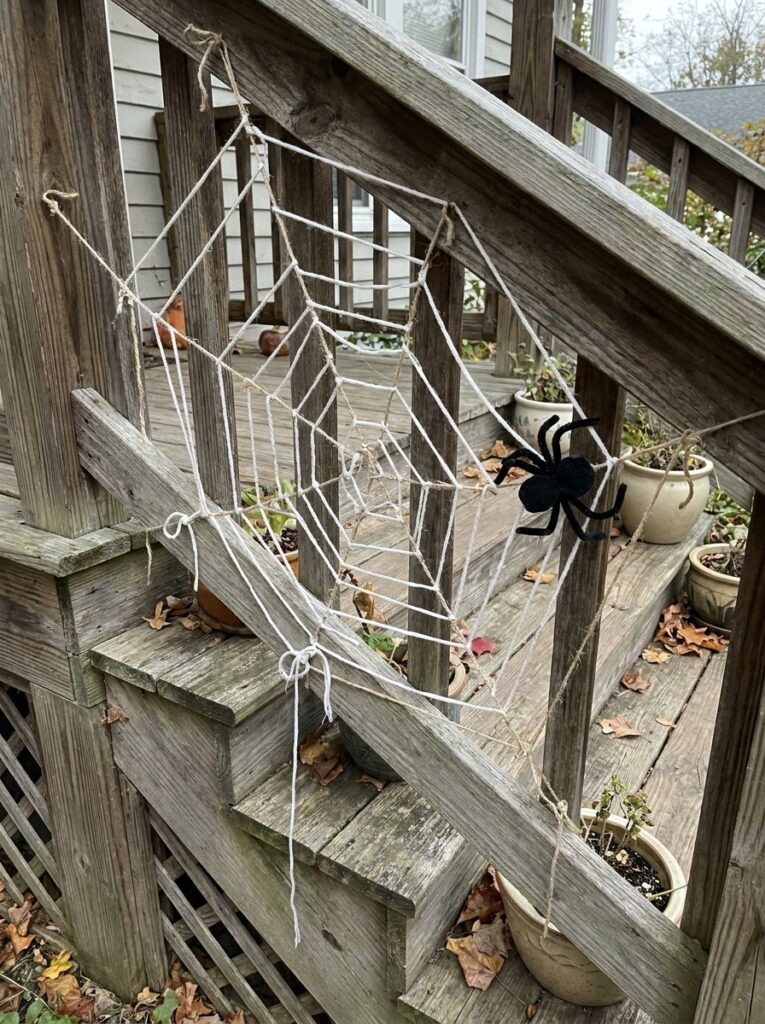
Difficulty: Very easy
Best for: Wall, window, large empty frame or covered porch
Storage: Flat; almost no storage space
Main materials: Yarn or cotton cord, tape/removable hooks appropriate for the surface, scissors
- Run several straight lengths of yarn from a central point outward like spokes on a wheel.
- Starting near the center, weave a long piece of yarn around the spokes in a loose spiral. Leave the spacing imperfect.
- Add one or two thicker sections, a hanging spider or a few broken-looking strands so the web feels less geometric.
Make it better: Put the web where there is negative space behind it. A plain wall, dark window or open frame lets the shape read much better than a busy background. Never block stairs, exits or doorways.
DIY Hanging Spider
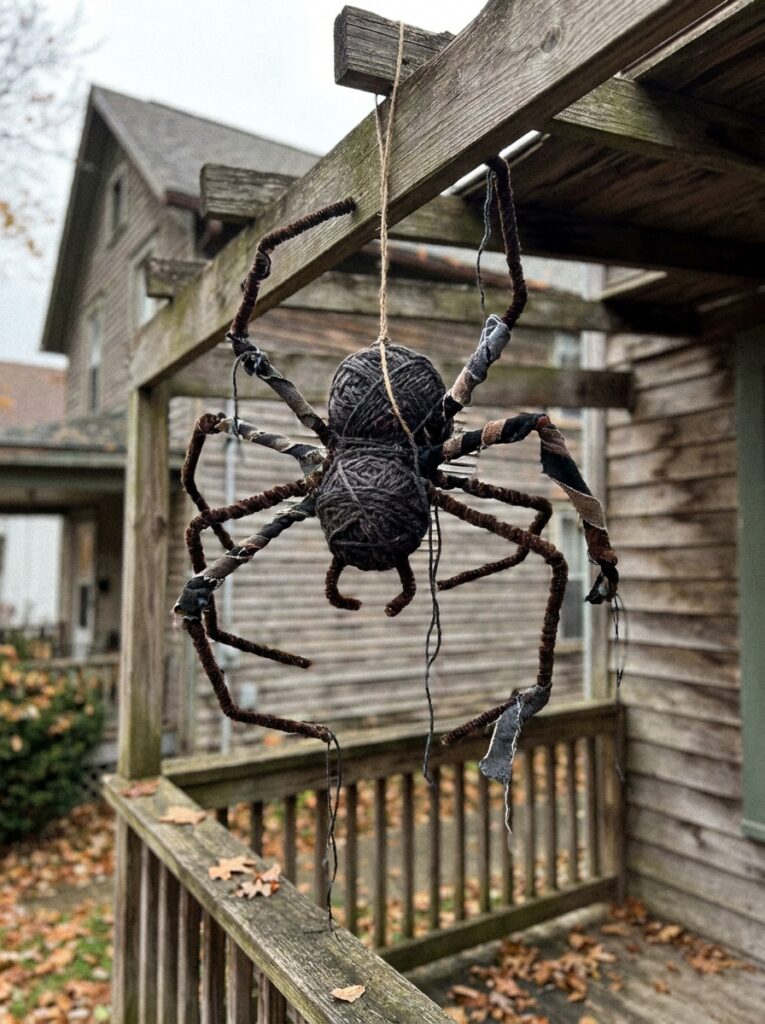
Difficulty: Very easy
Best for: Indoor ceiling, shelf edge, doorway corner or wreath
Storage: Tiny
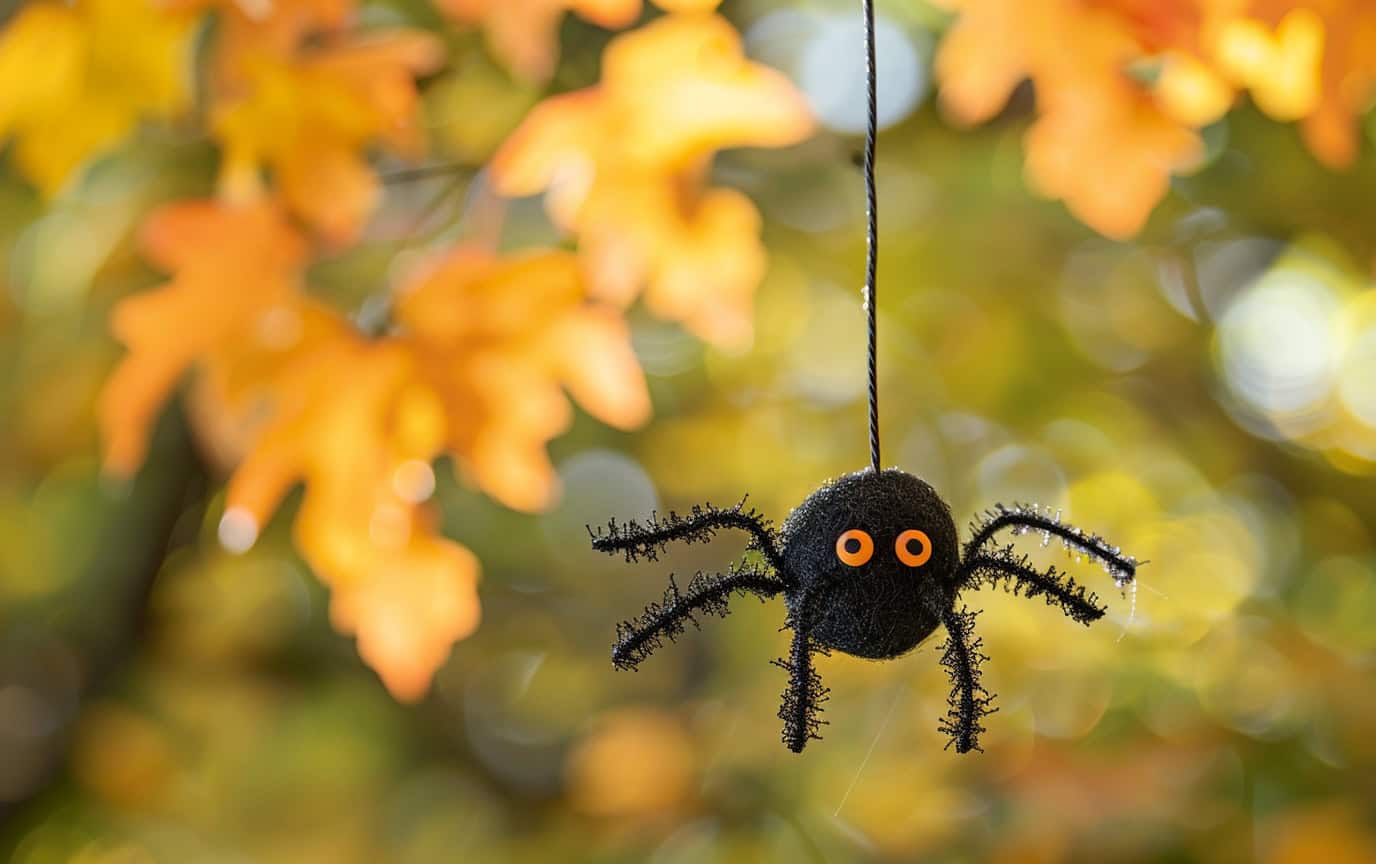
Main materials: Black pom-pom or felt ball, black chenille stems/pipe cleaners, googly eyes or paper eyes, clear line
- Use a black pom-pom or felt ball for the body and push or glue four leg pieces on each side.
- Bend each leg twice so the spider has a recognizable jointed shape.
- Add eyes, then suspend the spider with clear line from a suitable point. Keep it static; movement is not necessary to make the prop noticeable.
Make it better: Make two or three spiders at different sizes and hang them at different heights. A small cluster looks intentional without needing any motorized parts.
Eyeball Wreath
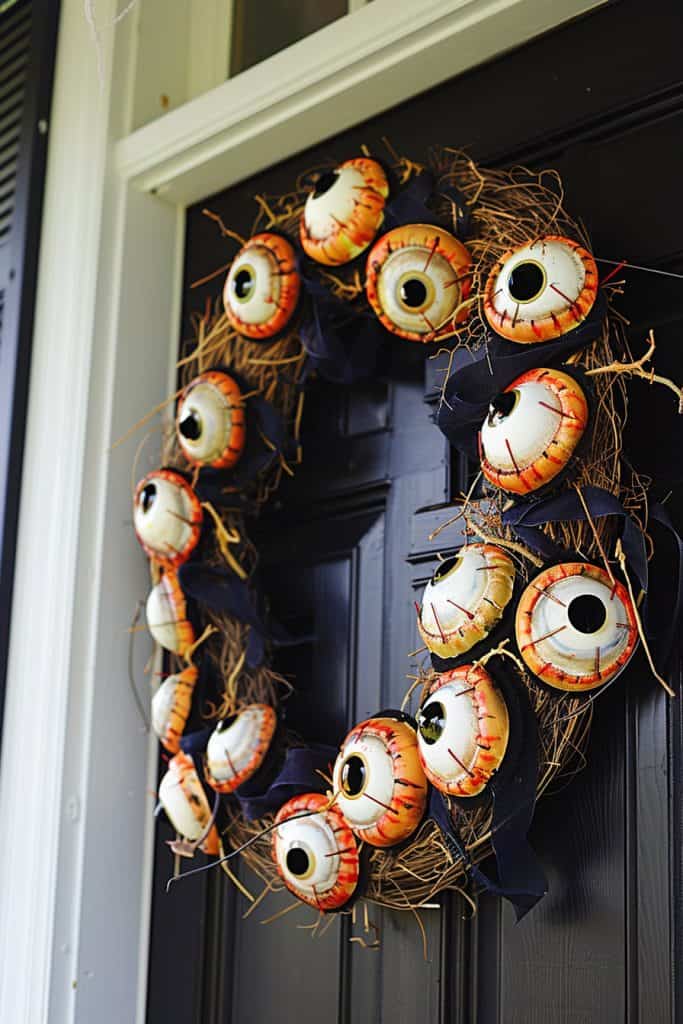
Difficulty: Easy
Best for: Front door, interior door or party wall
Storage: Moderate
Main materials: Wreath base, plastic eyeballs or painted ping-pong balls, black ribbon, faux moss or dark yarn, suitable craft adhesive
- Wrap the wreath base with black ribbon, yarn or another dark material so gaps between the eyeballs are less noticeable.
- Attach eyeballs in small clusters instead of spacing them perfectly around the ring.
- Fill a few remaining gaps with faux moss, shredded dark paper or short pieces of yarn and add a hanging loop at the top.
Make it better: Mix large and small eyes and angle a few sideways. The variation creates a more unsettling effect than a neat ring of identical eyeballs.
Potion Shelf

Difficulty: Very easy
Best for: Tabletop, bookshelf, kitchen corner or party display
Storage: Small to moderate
Main materials: Empty bottles and jars, paper labels, twine, colored tissue/cellophane, beads or dry craft filler, tray or small freestanding shelf
- Collect bottles in several shapes and heights. Remove modern labels and wash the containers before decorating them.
- Add handmade labels with simple names such as “Nightshade,” “Moon Dust” or “Spider Venom.” Use colored tissue, cellophane, beads or other dry filler inside the bottles instead of relying on liquid effects.
- Arrange the tallest bottles toward the back and group smaller containers in front on a tray or freestanding shelf.
Make it better: Limit the color palette to two or three tones. A shelf full of every bright color can look like a craft display; a tighter palette feels more like one old apothecary collection.
How to Make Homemade Halloween Props Look More Realistic
Cheap materials do not have to look cheap. The biggest improvement usually comes from controlling shape, texture, color and placement rather than adding more supplies.
Start With the Silhouette
Step back several feet before adding details. If the prop already reads as a spider, ghost, broom or figure from across the room, you have a strong base. Fix the overall shape before spending time on tiny features.
Layer Texture Instead of Painting Everything Flat
Use gauze over glass, yarn over a wreath base, wrinkled paper over a witch hat or uneven fabric over a figure. Two simple textures layered together often create more depth than one perfectly smooth surface.
Use a Narrower Color Palette
Black, grey, dirty white, brown and one accent color usually feel more cohesive than a mix of every Halloween color. Add brighter orange, green or red where you want the eye to land rather than covering the whole prop in it.
Vary Heights, Angles and Sizes
A row of identical objects can look store-bought. Tilt one witch hat, hang one ghost lower, make one eyeball larger or angle the spider legs differently. Small inconsistencies make a homemade scene feel intentional rather than repetitive.
Let Placement and Lighting Do Some of the Work
A simple silhouette in a doorway can be more effective than a detailed prop in bright overhead light. Use shadows, corners, backlighting and layered objects to create depth. If you use electrical decorations outside, follow the outdoor electrical safety guidance for products, cords and wet conditions.
Choosing Materials for Indoor and Outdoor Halloween Props
The “best” material depends on what you expect the prop to do. A one-night indoor party piece does not need the same construction as a yard prop you want to reuse every October. Start with the display location and lifespan, then choose the material.
| Material | Good fit | What to keep in mind |
| Paper, cardstock, felt and gauze | Indoor or sheltered, short-term props | Light, inexpensive and easy to store, but best kept out of direct rain unless the specific product is made for outdoor use. |
| Corrugated polypropylene | Flat silhouettes, signs and reusable outdoor-facing pieces | Products such as Coroplast corrugated polypropylene are marketed as waterproof and suitable for indoor and outdoor applications. Follow the sheet manufacturer’s guidance for cutting, fastening and finishing. |
| Exterior plywood | Larger reusable shapes that need more rigidity | Look for panels specifically marked Exterior when long-term weather exposure matters. APA plywood guidance distinguishes Exterior panels from Exposure 1 panels, which are not intended for permanent outdoor exposure. |
| Plastic jugs, bottles and planters | Lightweight ghosts, jars and cauldrons | Easy to reuse, but the finished prop still depends on the paint, adhesive, attachments and lighting you add. Secure lightweight outdoor pieces so wind cannot move them into walkways. |
| Foam and other plastics | Lightweight shapes and details | Suitability varies by product. Check manufacturer instructions for outdoor exposure, adhesives, coatings and heat; keep combustible materials away from flames and hot light sources. |
Temporary vs. Reusable Builds
There is no single right answer here. If you only need a prop for an indoor party, paper, cardboard and fabric may be the most practical choice. If you want a yard silhouette or large structure you will reuse for several seasons, it can make sense to choose a material intended for repeated outdoor exposure even if it takes more effort to cut and store. Build for the lifespan you actually need.
If you want to mix these props with softer handmade decor, BrighterCraft also has easy crochet pumpkin ideas that work well on shelves, tables and covered seasonal displays.
Start With One Prop and Build the Scene Around It
You do not need all 20 projects to make a Halloween setup feel complete. Start with one prop that fits your space and skill level, then repeat a color, texture or shape around it. A giant spider can anchor a porch, a mummy jar can start a small potion shelf, and a handful of felt bats can connect several areas of a room without taking up storage space later.
If you would rather keep the Halloween creativity on paper, these Halloween drawing ideas offer another beginner-friendly way to work with ghosts, pumpkins, witches and haunted-house themes.
DIY Halloween Props: Frequently Asked Questions
What are the easiest DIY Halloween props for beginners?
Felt bats, a mummy mason jar, a milk jug ghost and ping-pong eyeballs are some of the easiest places to start. They use simple shapes, common materials and very little construction. Pick one project with only a few steps, finish it, then use the same materials to make two or three variations.
What materials do I need to start making Halloween props?
A basic kit can be surprisingly small: scissors, a craft knife and cutting mat, glue or tape, cardstock or felt, gauze or fabric, paint or markers, twine, clean jars or bottles and battery-operated lighting. Add heavier materials only when a specific project needs more structure.
How can I make cheap Halloween props look more realistic?
Focus first on silhouette and scale, then add texture, a limited color palette and deliberate lighting. Uneven folds, layered materials, varied heights and selective distressing usually add more realism than lots of small decorations. Place the finished prop where shadows and negative space make its outline easy to read.
What can I use instead of an animatronic Halloween prop?
Use scale instead of movement. A life-size seated scarecrow, giant static spider, hanging cheesecloth ghost, large cauldron display or simple dark silhouette can create a strong focal point without motors, sensors or moving parts. This keeps the build more approachable for beginners and reduces the number of components you need to troubleshoot.
Can cardboard Halloween props be used outside?
Ordinary cardboard is best treated as an indoor or sheltered, temporary material unless you have a verified weather-protection plan for the exact product and conditions. If direct rain or repeated outdoor exposure is likely, consider materials intended for outdoor use, such as corrugated polypropylene or plywood specifically rated Exterior, and follow the manufacturer’s guidance.
How can I make Halloween props if I have limited storage space?
Choose flat or collapsible projects first. Felt bats, yarn spider webs, ping-pong eyeballs, potion bottles and lightweight witch hats take far less storage than large figures. You can also reuse and repaint older props instead of adding a new bulky piece every year.