A pottery bowl gives you a few different places to play with a design. The center can hold one strong motif, the rim works well for repeating details, and the curved sides suit stripes, vines, waves, and loose patterns.
These pottery bowl painting ideas are made for the parts of a bowl that are actually fun to decorate: the center, inner rim, and curved outer wall. You’ll find simple dots and stripes, florals, checkerboards, celestial motifs, and a few more detailed designs that still feel manageable for a casual pottery-painting session.
If you’re still choosing what kind of ceramic piece to work on, these pottery painting ideas for beginners are a good place to browse first.
Before you paint your pottery bowl
Simple designs tend to sit well on a curved bowl when you give them a clear place to live. Repeating patterns fit nicely around the rim, and larger motifs such as a flower, moon, mandala, or piece of fruit are easier to read in the center.
Before picking up the brush, decide whether you want to decorate the center, inner rim, outer wall, or most of the surface. For a flatter ceramic piece, these easy plate painting ideas for beginners use many of the same borders, florals, fruit motifs, and painted patterns.
At a paint-your-own-pottery studio, use the materials and firing process the studio provides. Underglaze directions vary by product, and Mayco’s Fundamentals underglaze guidance gives one example of product-specific application, glazing, and firing instructions.
Easy pottery painting designs for bowls
Start with simple bowl painting ideas that are forgiving for beginners. Dots, stripes, waves, and color blocks work well on curved ceramic surfaces and don’t need precise brushwork.
1. Simple polka dot bowl
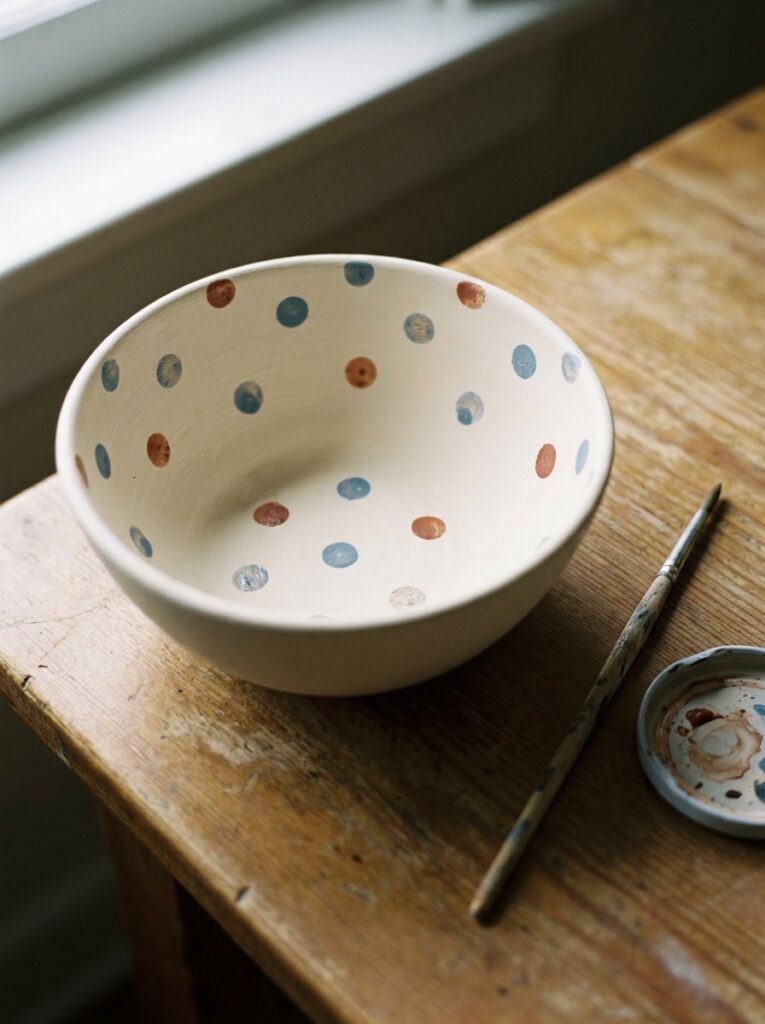
Scatter dots across the inside of the bowl or keep them in a loose ring near the rim. A mix of slightly different dot sizes gives the pattern an easy handmade feel.
2. Single stripe rim bowl
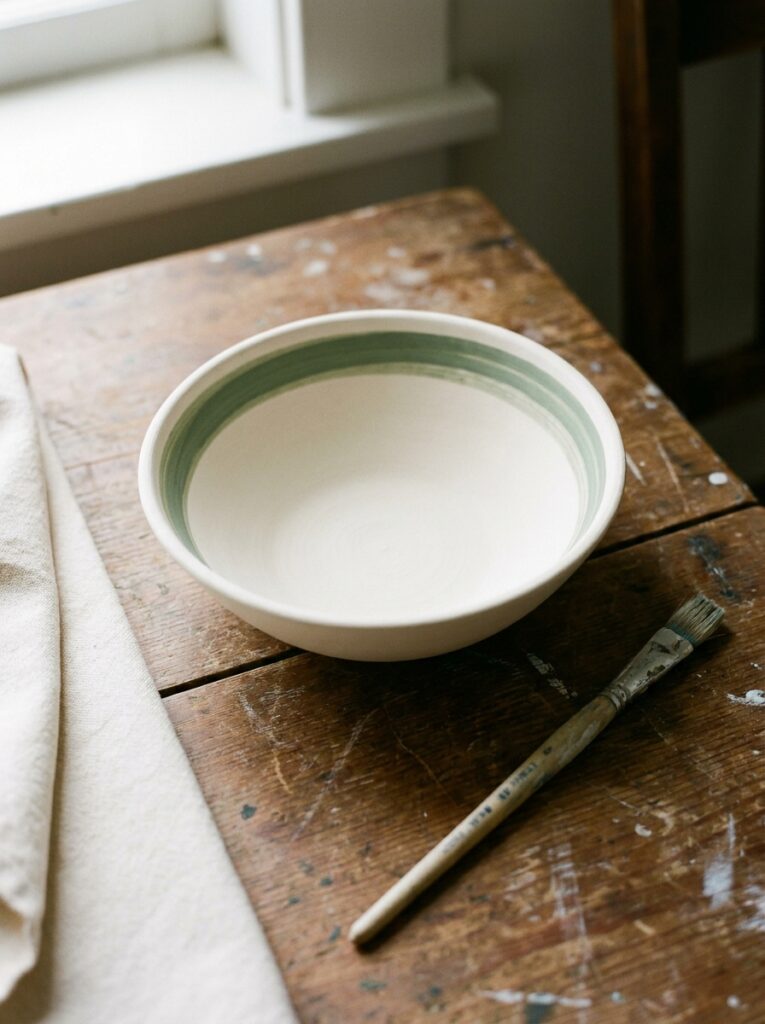
A single painted band can make a plain bowl feel finished with very little brushwork. Follow the circular edge and let the stripe become the main detail.
3. Ombre dip bowl
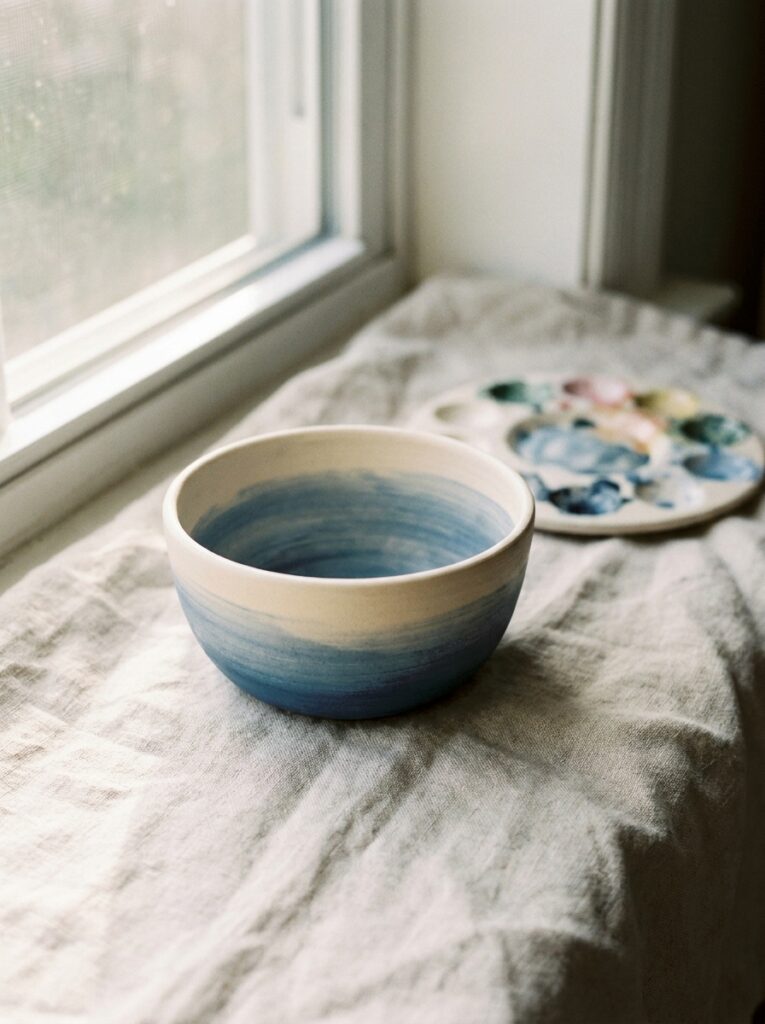
Blend one color from deep to pale across the lower half of the bowl. The curve helps the fade feel gradual, especially along the exterior.
4. Dotted border bowl
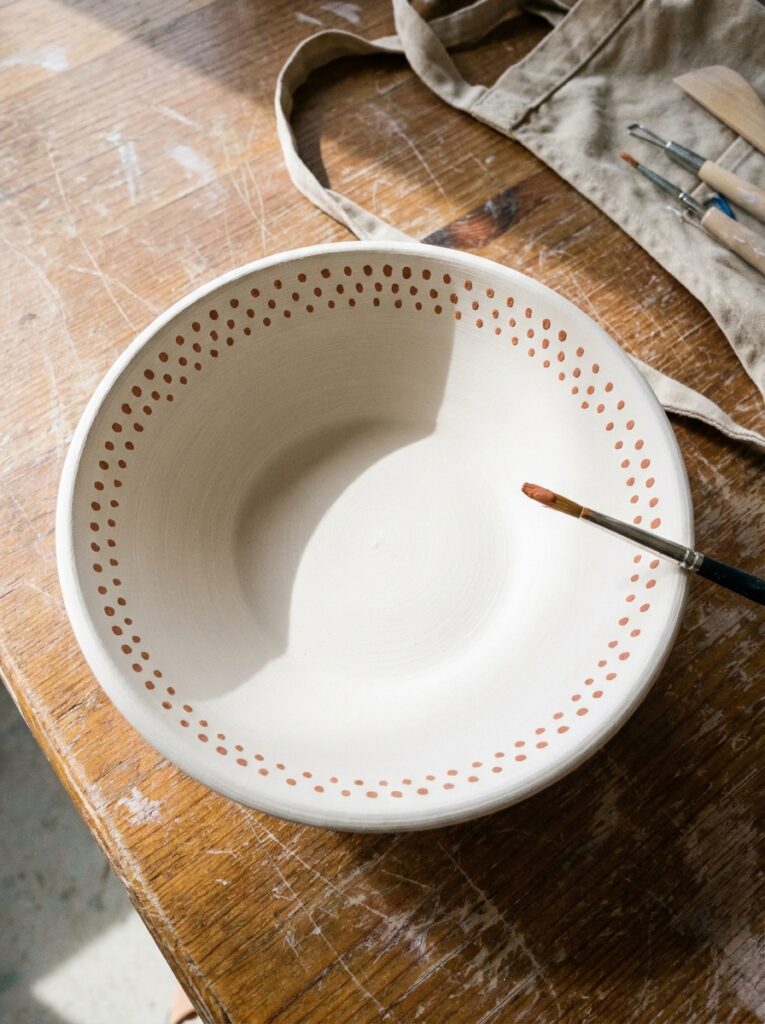
Paint a row of dots just inside the rim and leave the center open. Keeping the pattern in one narrow band makes the design easy to control.
5. Freehand wave bowl
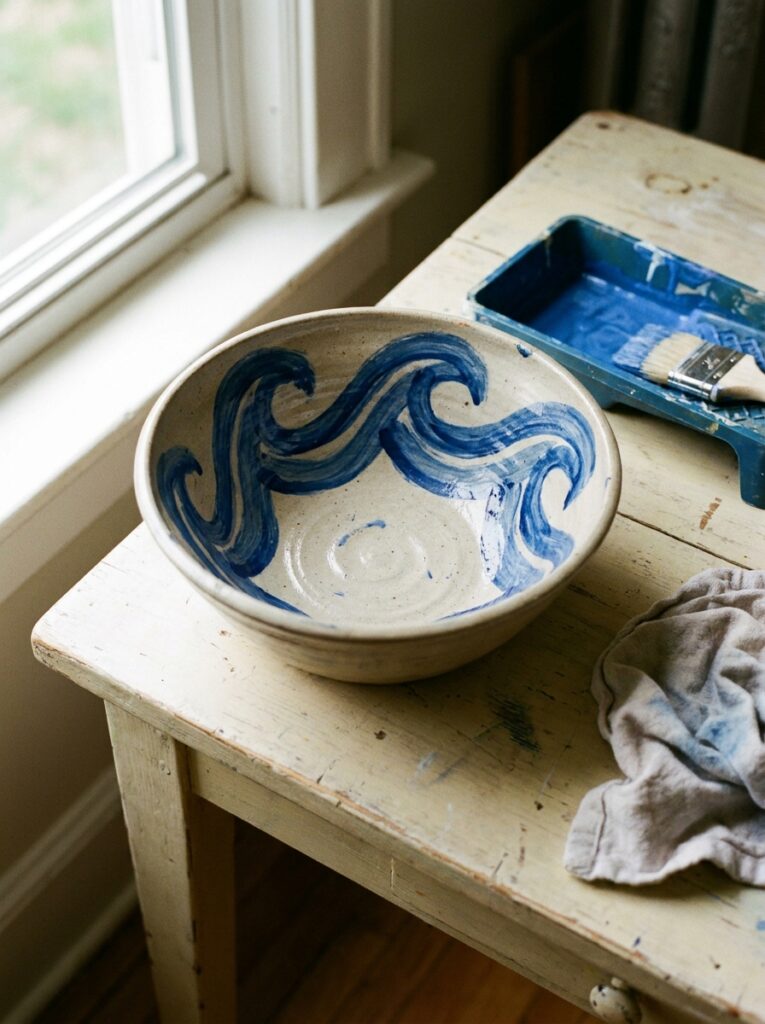
Paint loose waves around the inside or outside in one or two colors. Gentle changes in the curves make the lines feel hand-painted and relaxed.
6. Speckled confetti bowl
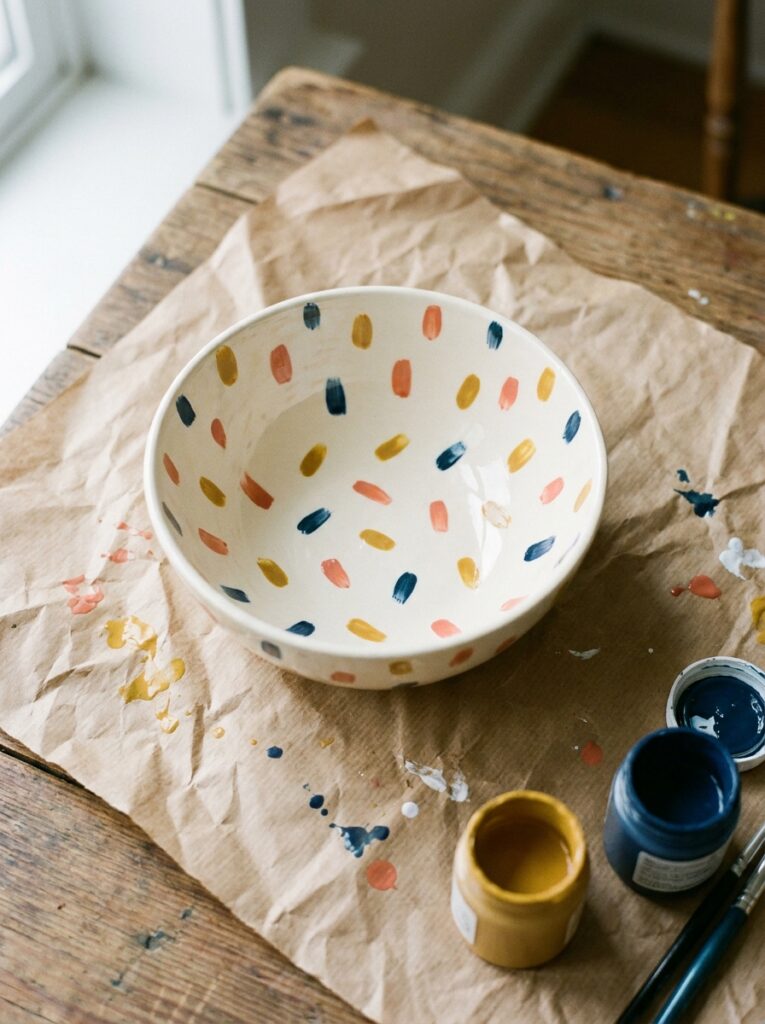
Use tiny dashes, dots, and short marks in 2 or 3 colors across the surface. Keep the spacing loose so the bowl feels playful rather than planned down to the millimeter.
7. Half-dipped color block bowl
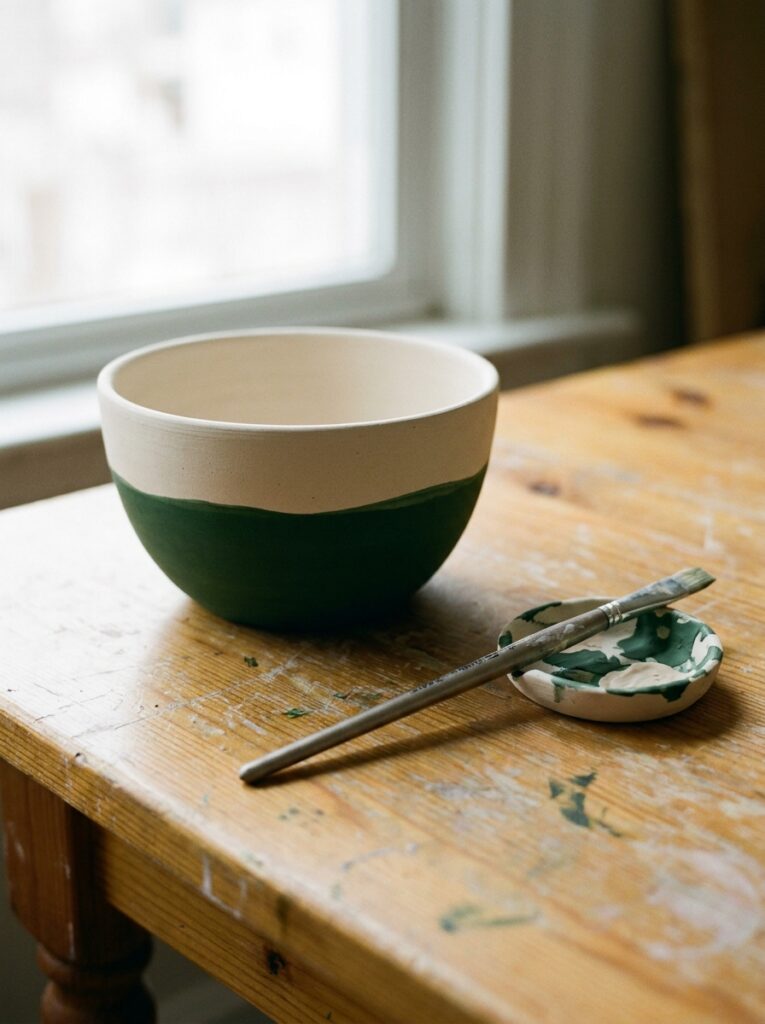
Paint one portion of the bowl in a solid shade and leave the rest bare. A clean block of color already carries enough visual weight, so the design can stay very simple.
Pottery painting bowl patterns
These pottery bowl patterns use repeated shapes to create more structure without making the design too complicated. Try checkerboards, scallops, triangles, florals, mandalas, and herringbone details around the rim or interior.
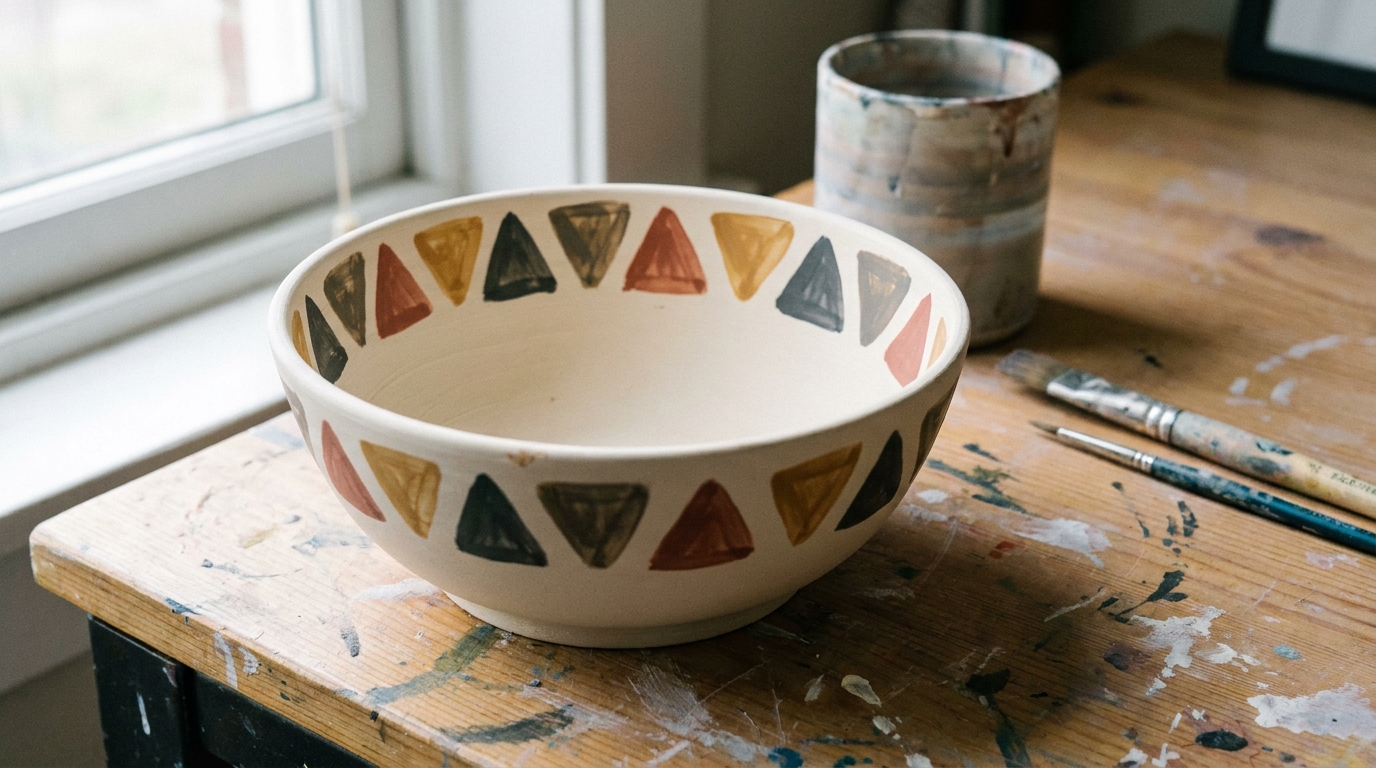
8. Geometric triangle bowl
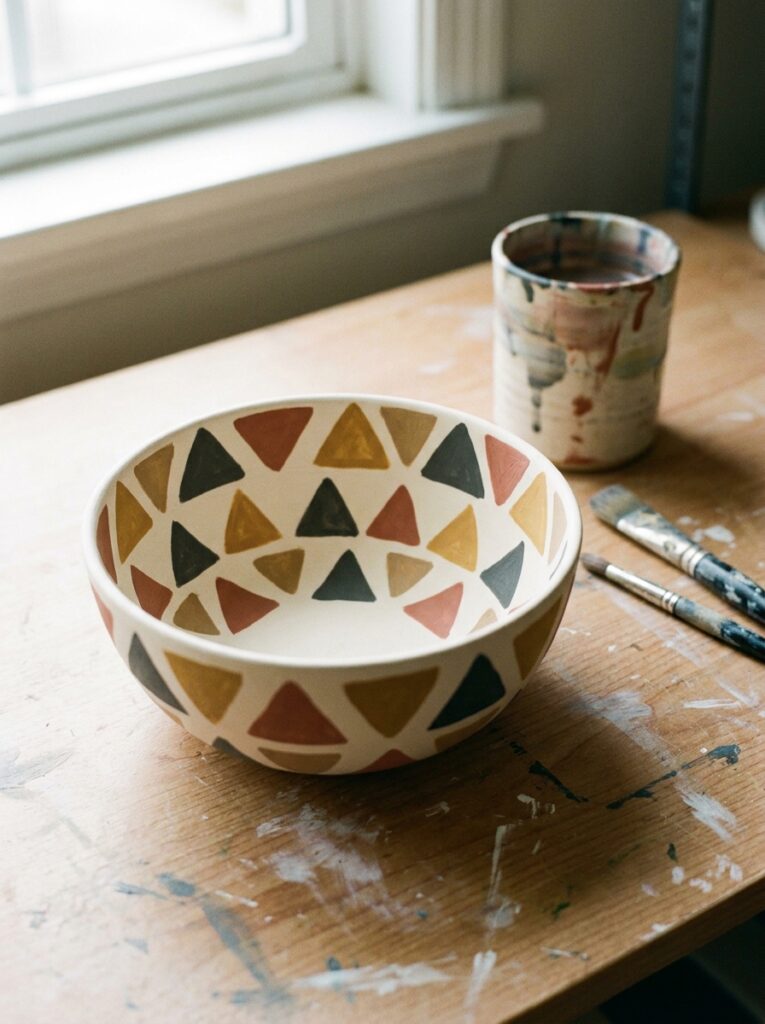
Repeat small triangles around the rim or outer wall. Two or 3 colors are enough to give the pattern movement without making the bowl feel crowded.
9. Checkerboard bowl
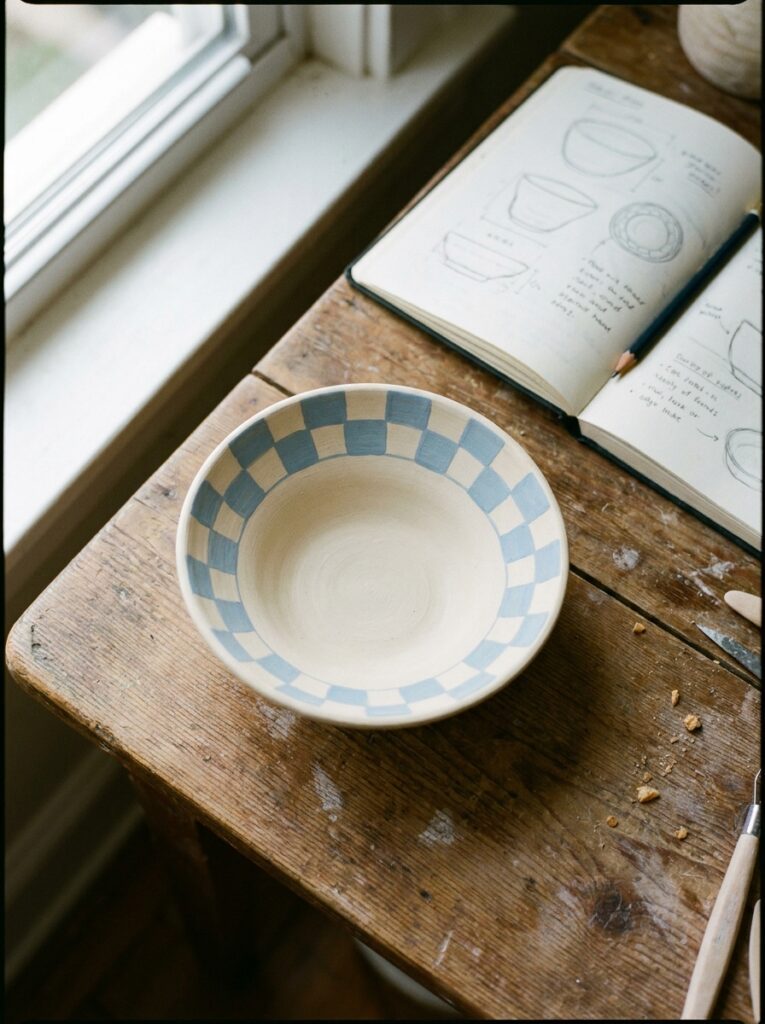
Paint alternating squares around the edge or across the interior. A narrow checkerboard band is easier to manage on the curve and still gives the bowl a strong graphic look.
10. Scalloped edge bowl
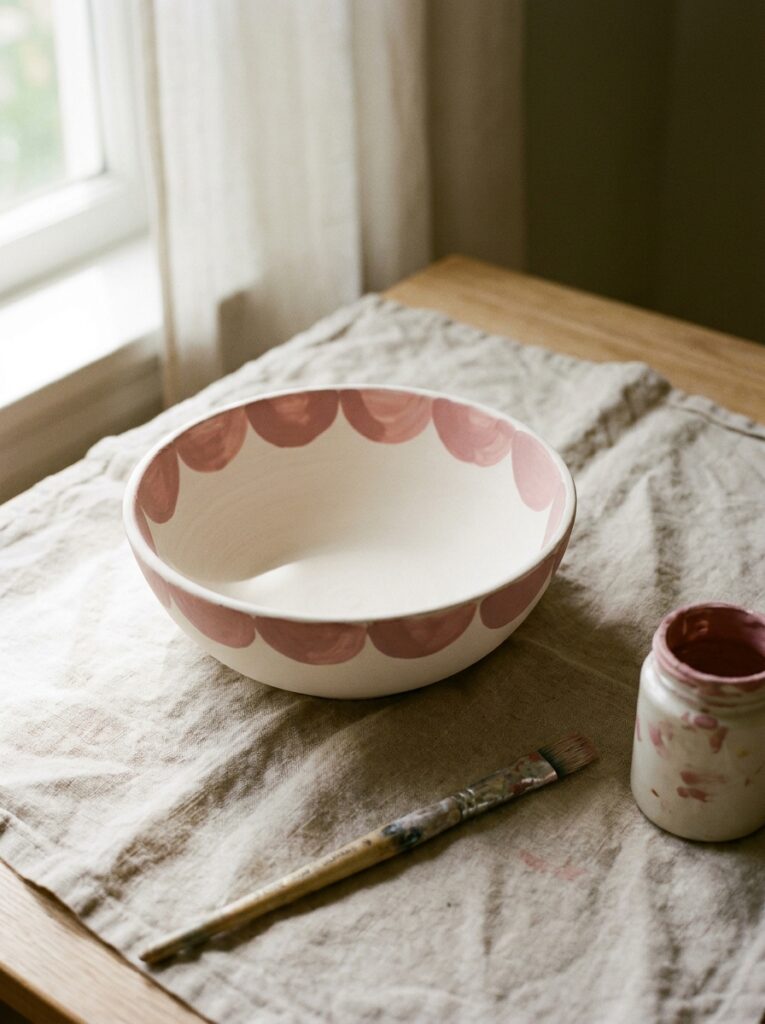
Paint repeating half-circles around the rim to create a scalloped border. Let the edge guide the shapes so the pattern follows the bowl naturally.
11. Floral vine bowl
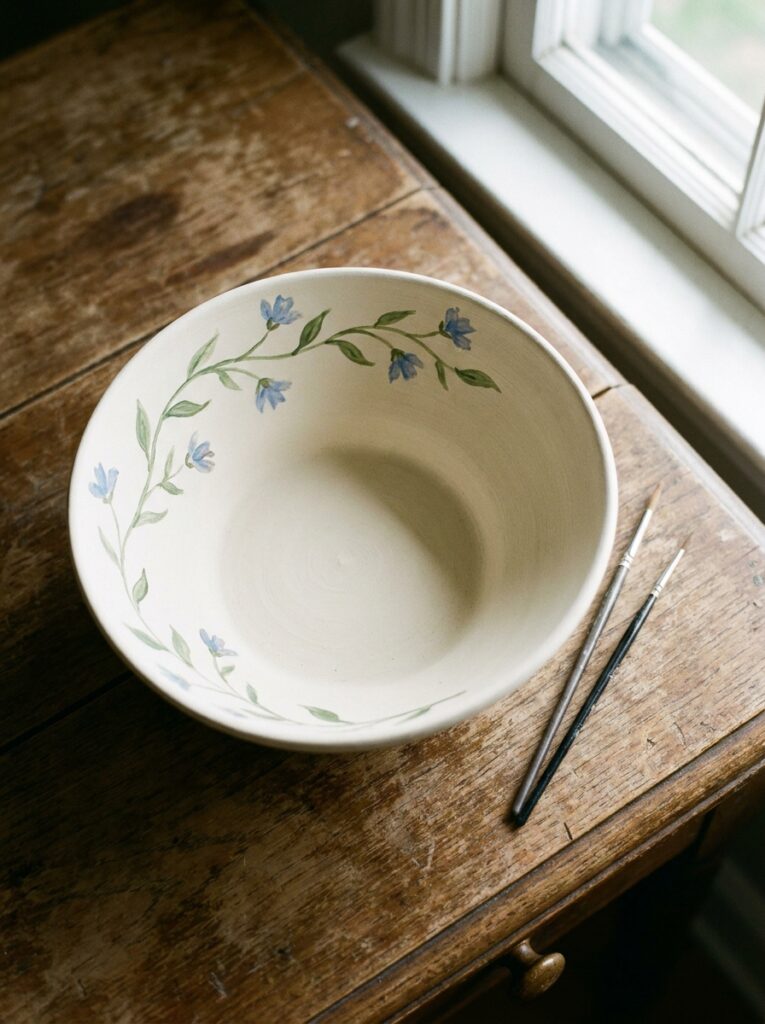
Curve one slender vine around the inner rim, then add tiny leaves and flowers. Leave small gaps between the details so the pattern has room to breathe.
12. Mandala center bowl
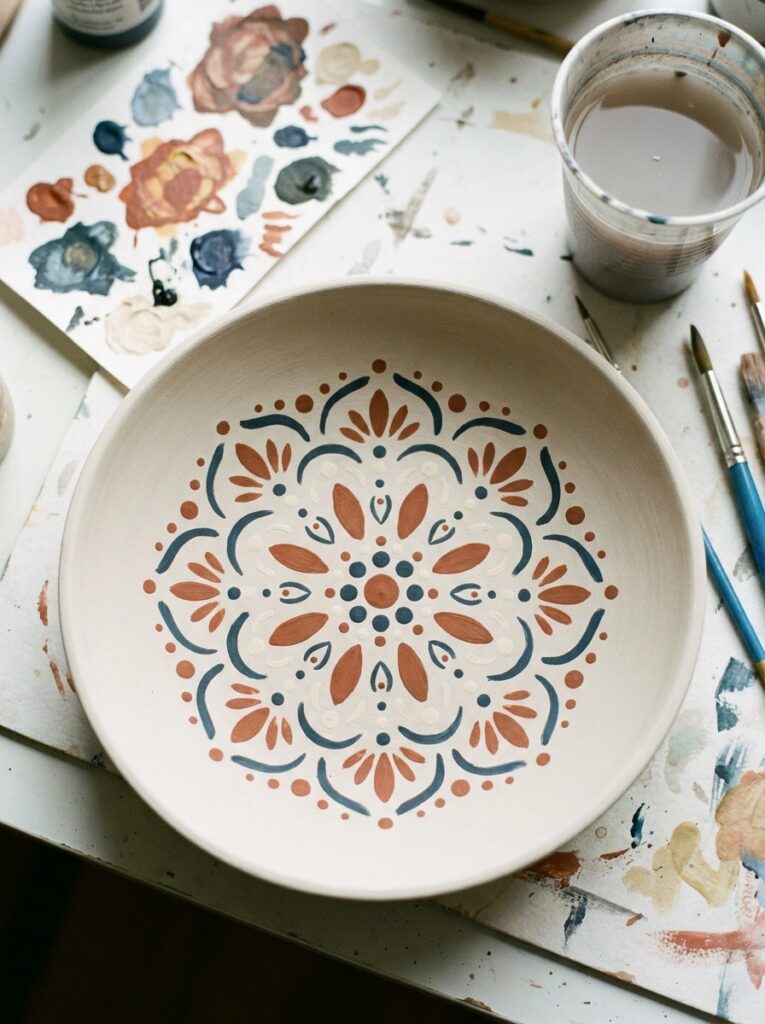
Start in the middle with a small flower or dot, then build outward in rings. Repeating simple marks can create a detailed-looking mandala without using complicated drawing.
13. Herringbone stripe bowl
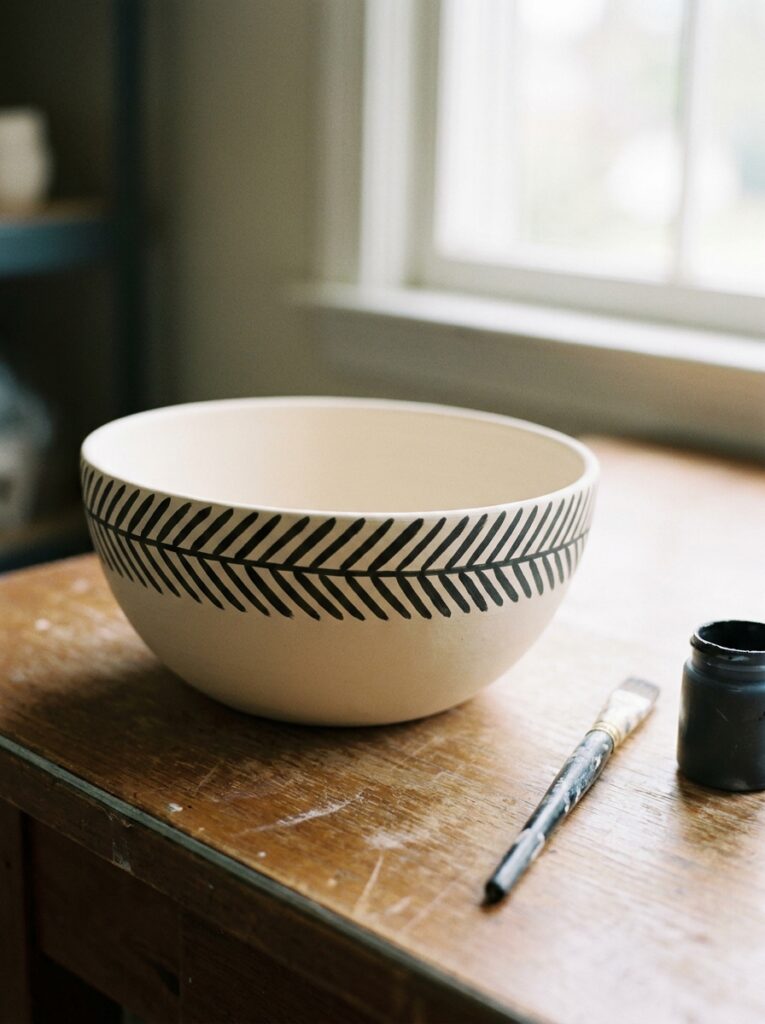
Build a narrow herringbone band from short diagonal strokes that meet in V shapes. The pattern sits neatly around the rim or exterior where you can repeat the same motion.
Black and white pottery painting designs
Black and white pottery painting designs keep the focus on shape, line, and contrast. Stripes, checks, splatters, and loose line art can give a ceramic bowl a clean graphic look with a hand-painted finish.
14. Black and white stripe bowl
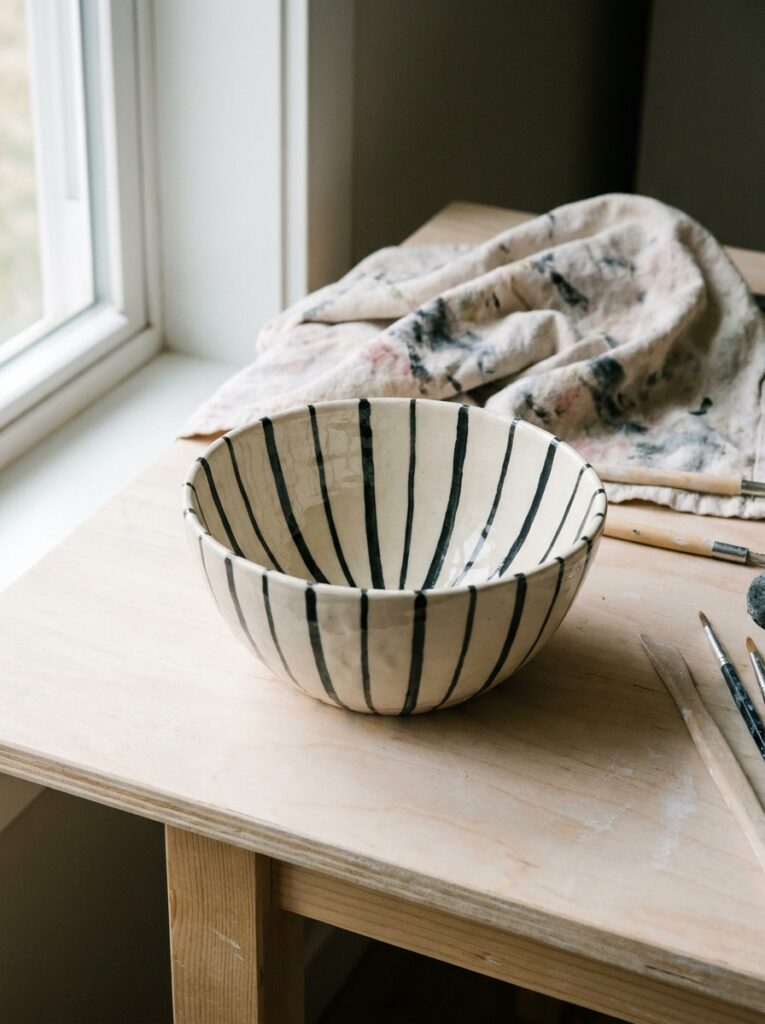
Paint black stripes across a cream or white base and let them follow the curve of the bowl. Slight shifts in width give the stripes an easy studio-made character.
15. Checkered monochrome bowl
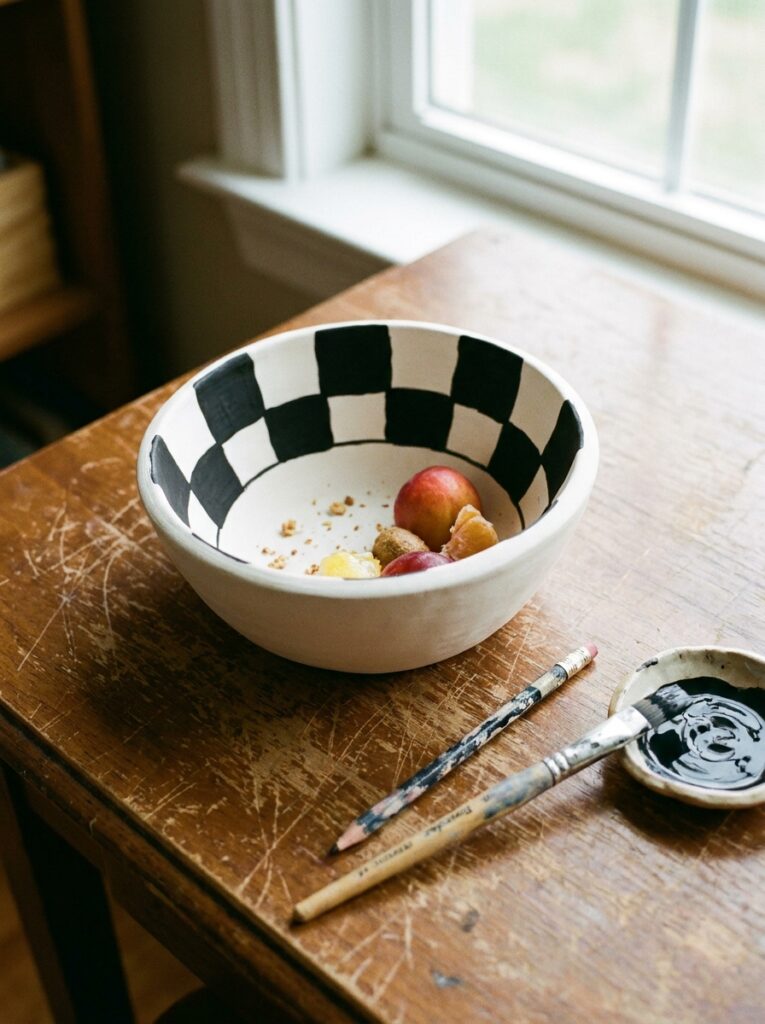
Use black and white squares for a bold checker pattern. Larger squares are easier to paint across a curved surface and give the bowl a slightly playful graphic feel.
16. Ink splatter bowl
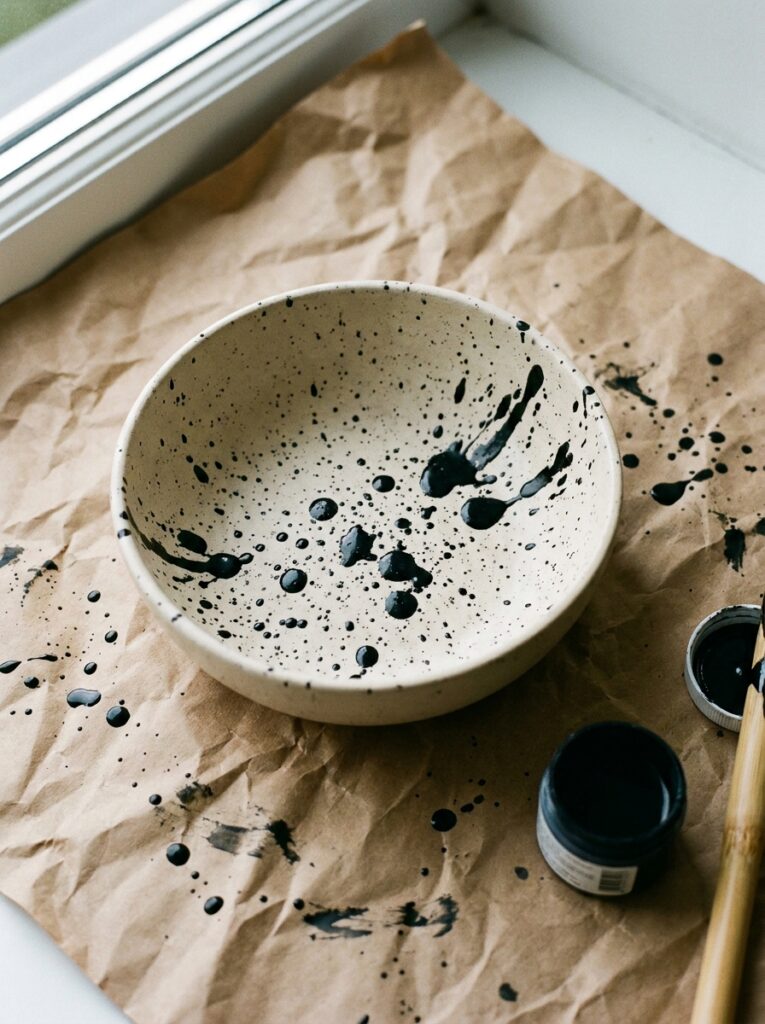
Scatter black specks and irregular marks across a pale bowl for an ink-splatter effect. Loose placement keeps the pattern lively and makes every bowl look a little different.
17. Abstract line art bowl
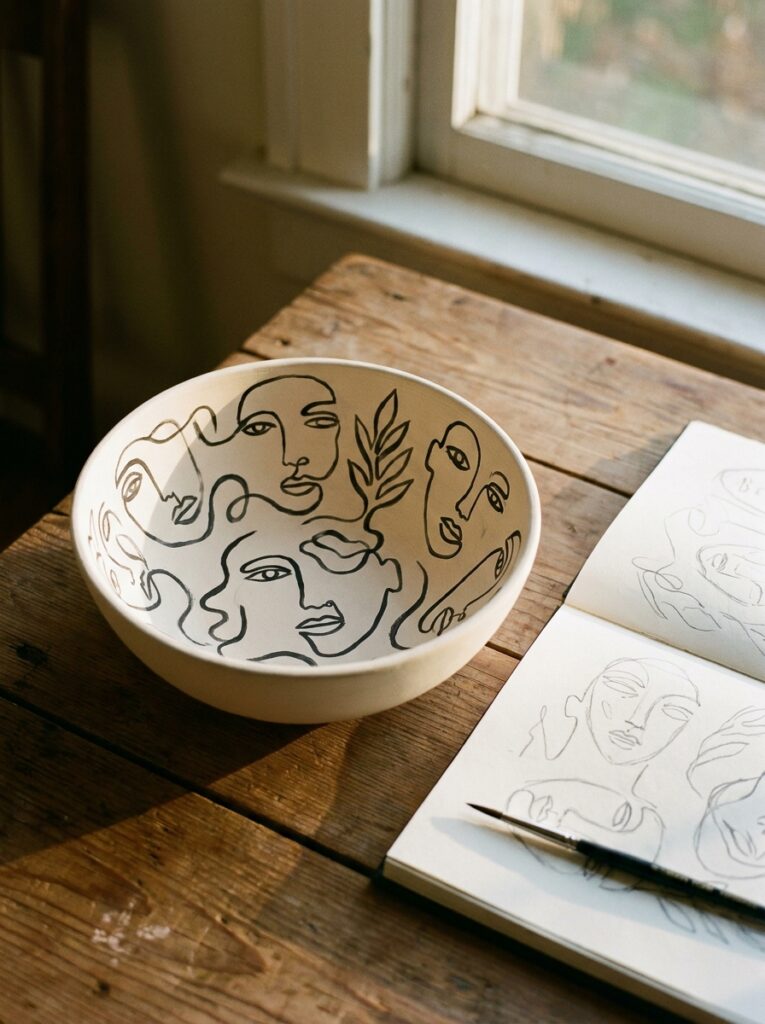
Paint flowing faces, leaves, loops, or simple continuous curves inside the bowl. Give the drawing plenty of empty space so the lines stay clear against the ceramic.
Themed pottery painting ideas for bowls
These themed pottery bowl painting ideas use recognizable motifs such as stars, lavender, lemons, mushrooms, and celestial designs. Keep the shapes simple and place the main detail where it follows the bowl’s curve naturally.
18. Starry night sky bowl
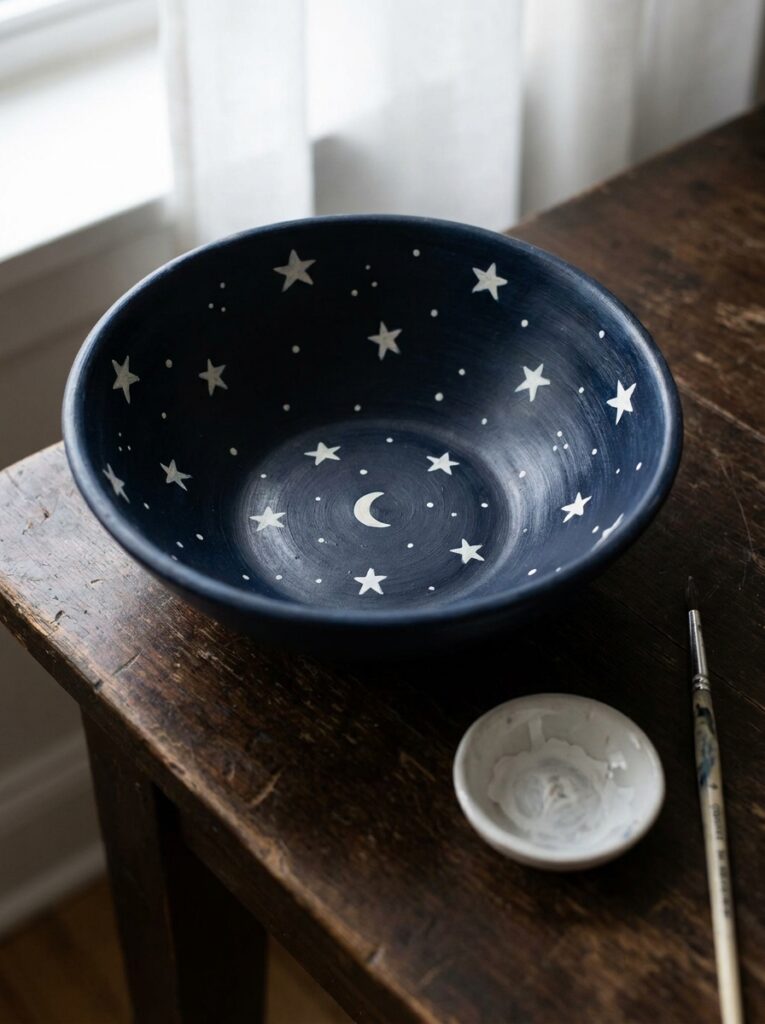
Cover the bowl in deep blue and add small stars, dots, and a crescent moon. Place the largest detail near the center, then scatter the smaller stars outward toward the rim.
19. Lavender sprig bowl
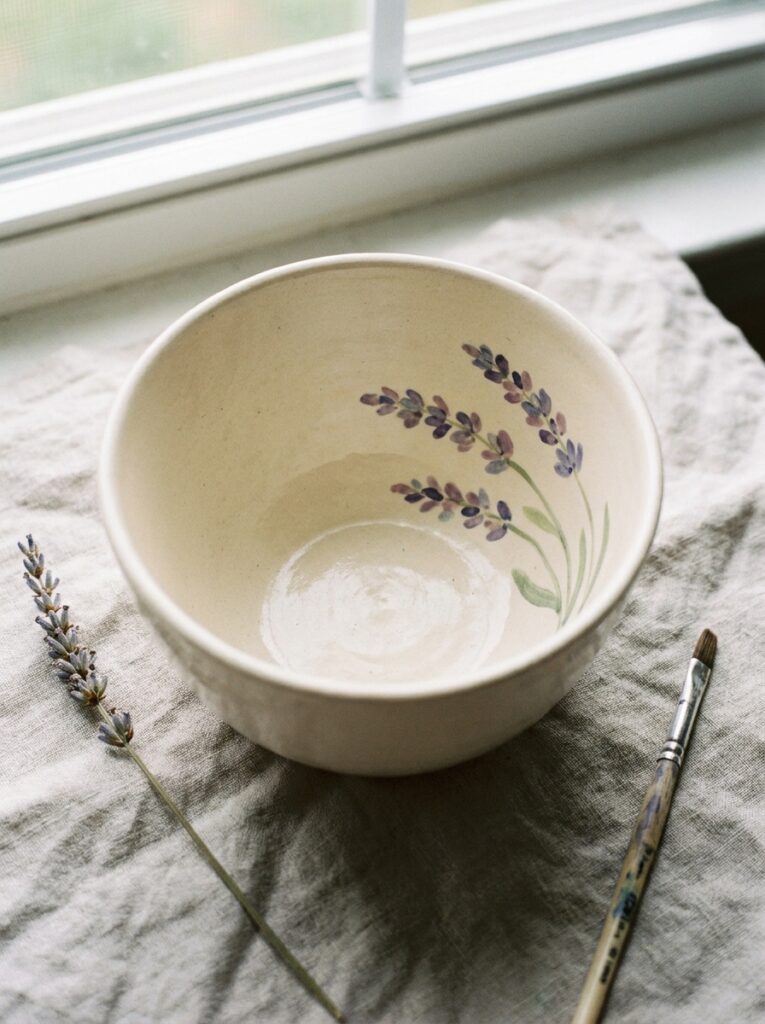
Paint a few thin lavender stems rising from one side or curling gently around the rim. Different stem heights keep the arrangement loose and natural.
20. Lemon slice bowl
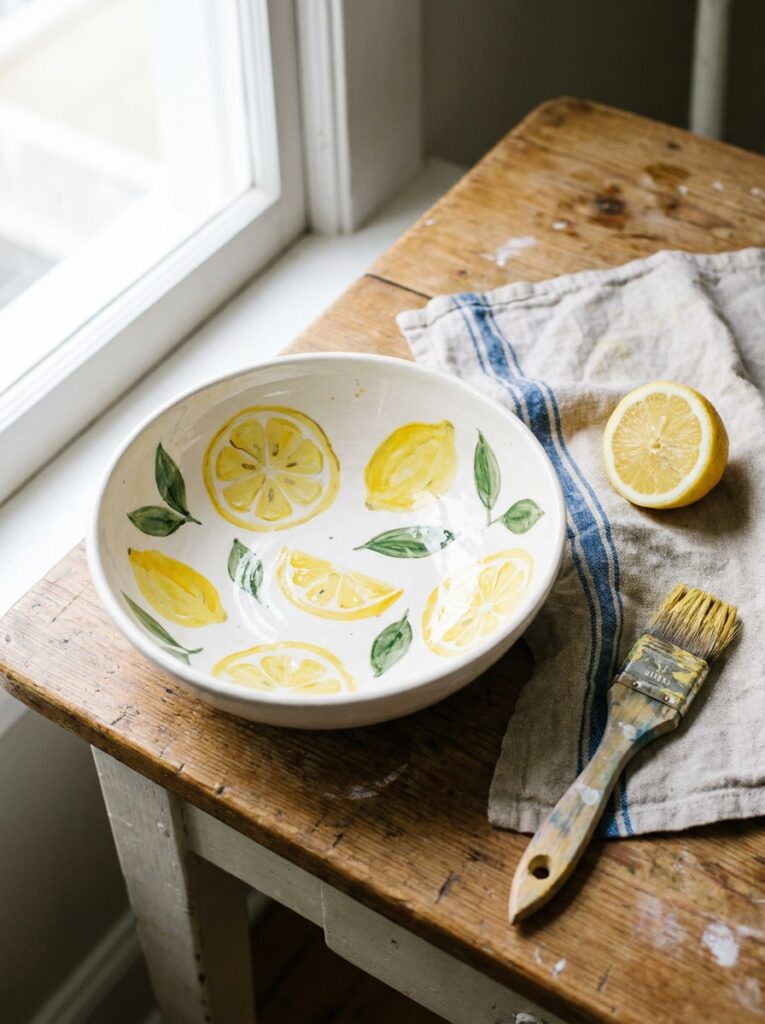
Paint lemon slices or wedges around the inside using yellow, cream, and small touches of green. A few fruit shapes are enough to make the bowl feel cheerful without filling every inch.
21. Mushroom forest bowl
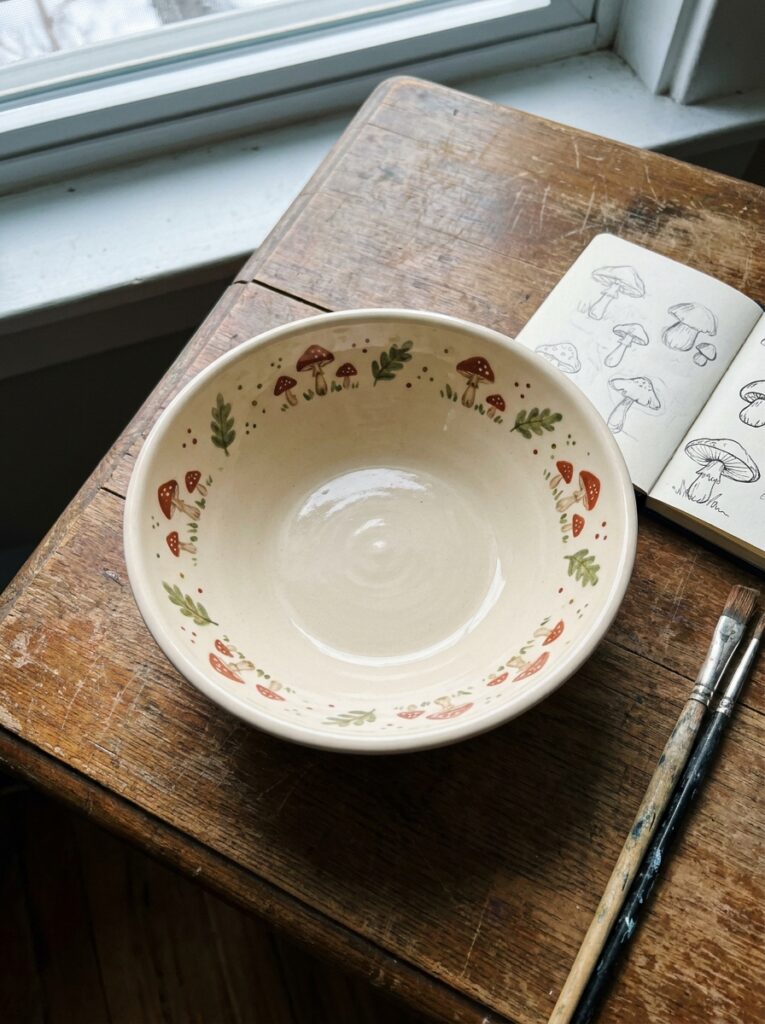
Paint tiny mushrooms and leaves around the lower interior or near the rim. Simple caps, stems, and dots can build a woodland scene without turning it into a detailed illustration.
22. Sun and moon bowl
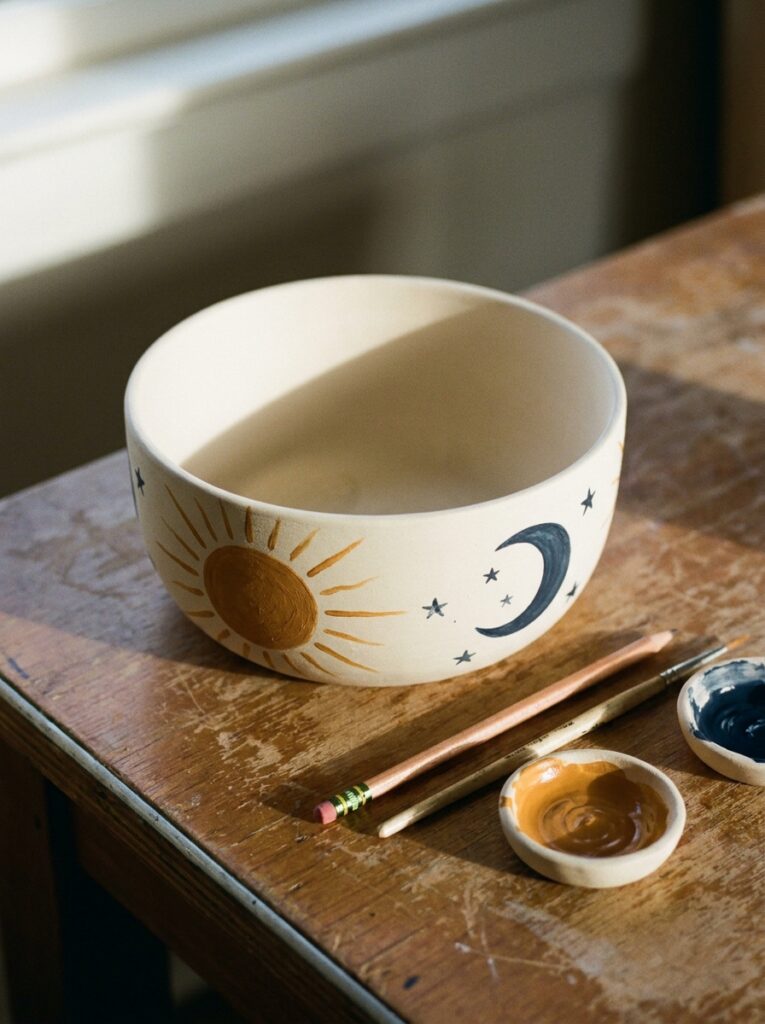
Place a simple sun and crescent moon opposite each other or make one the main design in the center. A few scattered stars can connect the two motifs and keep the rest of the surface quiet.
For a darker seasonal take on stars, moons, and other ceramic motifs, these Halloween pottery painting ideas include pumpkins, ghosts, bats, and more designs you can adapt to bowls.
How to choose a bowl painting design
First-time pottery painters usually have the easiest time with dots, one rim stripe, waves, speckles, or a block of color. They rely on simple marks and leave plenty of room for small variations.
For a repeating pattern, try triangles, scallops, checkerboards, or herringbone. Florals, lavender, lemons, mushrooms, and celestial motifs work well when you want something more illustrative.
Mandala and line-art designs suit people who enjoy slower, more detailed brushwork.
Pick a design and start with the part of the bowl you can see
A row of dots works beautifully around a rim. A flower, moon, or mandala belongs naturally in the center. Pick one area of the bowl, give the design enough space, and work outward from there.
For another curved ceramic surface, these cute mug pottery painting ideas include florals, characters, patterns, and wraparound designs you can try next.
Pottery bowl painting FAQs
What are the easiest pottery bowl painting ideas for beginners?
Polka dots, rim stripes, dotted borders, freehand waves, speckles, and color blocks are good beginner choices. Each one uses simple marks that are easy to repeat around a curved ceramic surface.
Where should I place a design on a pottery bowl?
Use the center for one main image such as a mandala, moon, sun, or fruit motif. The inner rim suits dots, florals, scallops, and stripes, and the outer wall works well for waves, herringbone, or broad color blocks.
Checks, speckles, and scattered dots can spread across a larger area when you want the whole bowl decorated.
What should I use to paint a pottery bowl?
The material depends on the ceramic surface and how you plan to use the finished bowl. At a paint-your-own-pottery studio, use the ceramic paints or underglazes supplied there and follow the studio’s firing process.
For already-fired decorative ceramics at home, choose a product made for that surface and follow its curing directions. DecoArt Americana Multi-Surface Acrylics can be used on ceramics, but the manufacturer says the product isn’t intended for food-contact surfaces.
Can a painted pottery bowl be used for food?
That depends on the materials, glaze, and firing process used on the finished piece. If you plan to prepare, serve, or store food in the bowl, make sure the ceramic finish is specifically suitable for food use. The FDA’s guidance on lead-glazed pottery explains why ceramic glazes, decorations, and firing conditions matter for food-contact pottery.