Get ready to embrace the cozy spirit of fall with these 30 fun and easy woodland creature doodles, perfect for autumn fans! Whether you’re a beginner looking to explore playful art ideas or an experienced doodler eager to add some seasonal charm to your sketchbook, these adorable woodland creatures are sure to inspire.
From curious foxes and playful squirrels to charming hedgehogs and wise owls, each doodle captures the essence of autumn’s enchanting wildlife.If you want to mix those woodland characters with even more seasonal subjects, these easy cute autumn doodlesinclude pumpkins, acorns, cozy drinks, fall leaves, and other beginner-friendly sketchbook ideas.
Grab your pens and pencils, and bring these lovable woodland friends to life as you celebrate the beauty of the fall season!
All artwork provided is original and can be used as a reference for your own drawings.
Table of Contents
Beaver Building A Dam
Mouse On Top of Toadstool Mushroom
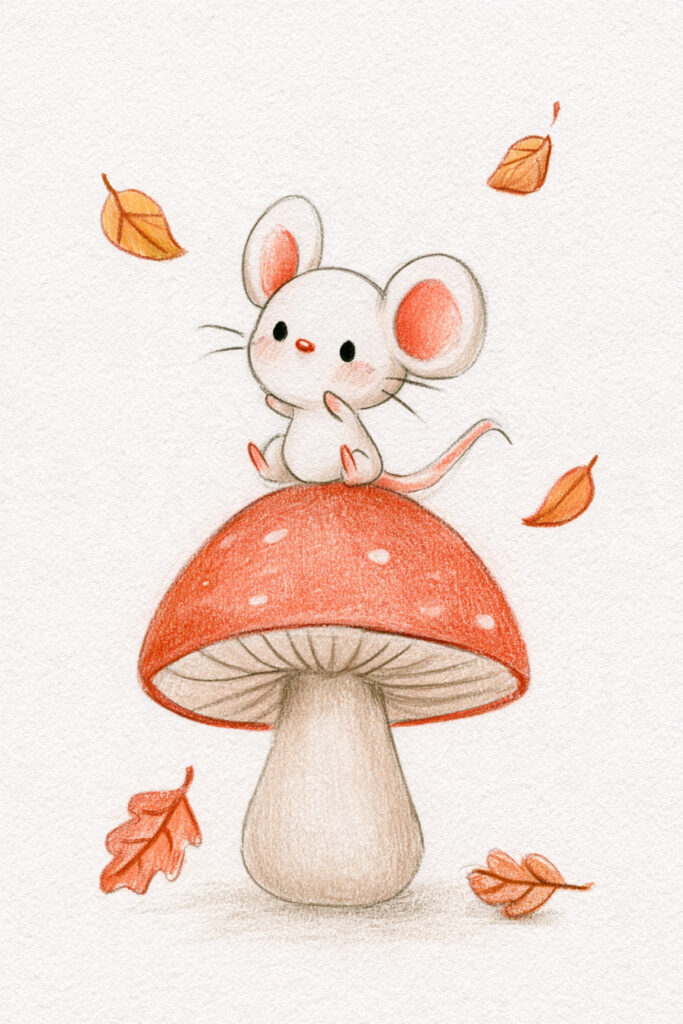
This illustration’s got such a great balance of realism and fantasy. The mouse is beautifully detailed – you can almost feel the texture of its fur – but then it’s perched on this fanciful toadstool that’s straight out of a fairy tale.
You could apply this style to all sorts of unexpected scenes. Imagine a corporate boardroom, but with woodland creatures in business attire. Or how about a gritty urban landscape, but with oversized flowers and mushrooms sprouting from the sidewalks? The key is keeping that contrast between the meticulously rendered main subject and the more stylized, whimsical elements surrounding it.
I’d love to see this approach used for everyday objects too. Picture a hyper-realistic coffee maker, but it’s plugged into a cartoon-y wall socket with a face. Or a precisely drawn smartphone resting on a cloud made of cotton candy. The possibilities are endless when you start mixing the mundane with the magical.
Oh, this mouse and mushroom illustration is adorable! I love how the artist has captured the mouse’s expression as it sips from a tiny cup. To put a fresh spin on this concept, why not reverse the scale? Imagine a gigantic mouse lounging on a normal-sized toadstool, using a full-sized mug as its teacup. That could create a fun, surreal twist.
Another idea – let’s change up the setting entirely. Picture this scene underwater, with the mouse as a sea creature. The mushroom could become a colorful coral formation, and the teacup might transform into a bubble the mouse is blowing. You could play with wavy lines and floating elements to really sell the aquatic vibe. What do you think? Pushing familiar elements into unexpected contexts often yields intriguing results.
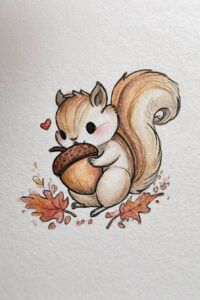
Squirrel Holding An Acorn
Squirrel On A Branch
Squirrel Holding A Pumpkin
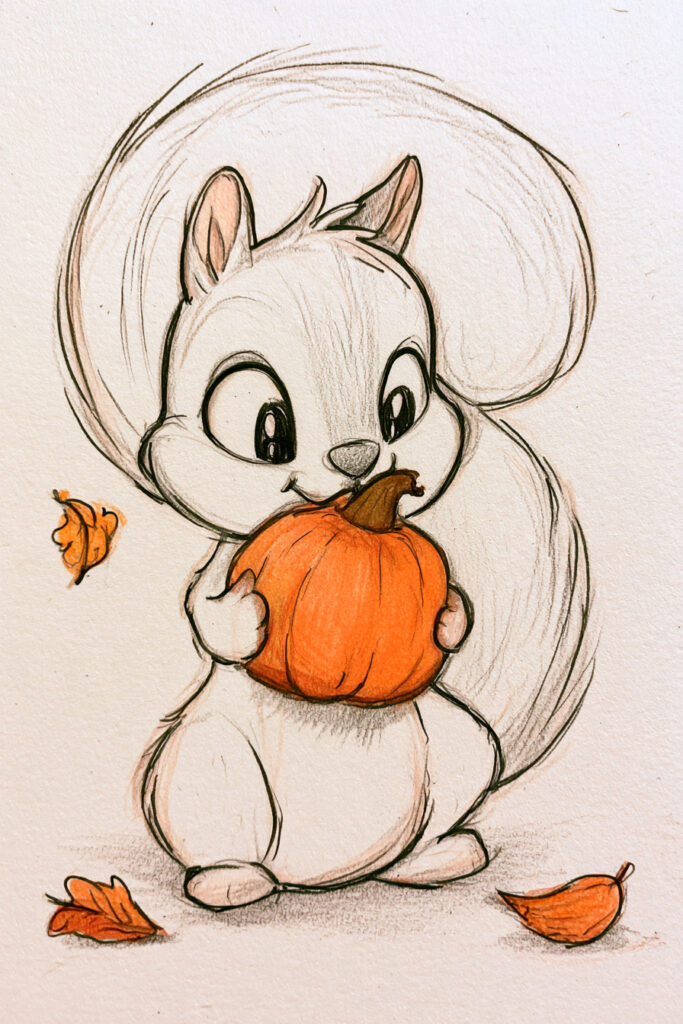
The negative space in this squirrel illustration is pretty minimal, but it’s used effectively to define the character’s shape and features. Look at how the white background creates a clear silhouette, especially around those tufted ears and bushy tail. It’s a smart choice that keeps the focus on the vibrant orange squirrel.
I’m particularly drawn to how the artist handled the pumpkin. See how they left parts of it uncolored? That negative space suggests highlights and dimension without overworking it. It’s a neat trick that adds depth while maintaining a loose, sketchy feel. As a beginner, try experimenting with leaving strategic bits of your paper blank – it can really make your drawings pop.
The overall composition is tight, with barely any empty space around the main elements. While this works for this playful Halloween scene, don’t be afraid to play with more generous white space in your own drawings. It can create interesting visual tension and guide the viewer’s eye. What do you think about the balance here?
For this lively squirrel and jack-o’-lantern sketch, I’d suggest experimenting with coffee as an unconventional medium. The warm sepia tones of coffee could beautifully capture the orange fur and pumpkin, while varying the concentration would create depth. You could use a fine brush dipped in espresso for the detailed whiskers and eyes.
The loose, energetic line work reminds me of gesture drawing. To recreate that spontaneous feel, try speed-sketching with your non-dominant hand. It forces you to focus on capturing the essence rather than perfectionism. For the squirrel’s tufted ears and tail, you might even try flicking the paper with a toothbrush dipped in watercolor – it creates a great textured effect. Don’t be afraid to get messy and have fun with it!
Fox Sleeping On A Bed Of Moss
Skunk Holding An Autumn Leaf
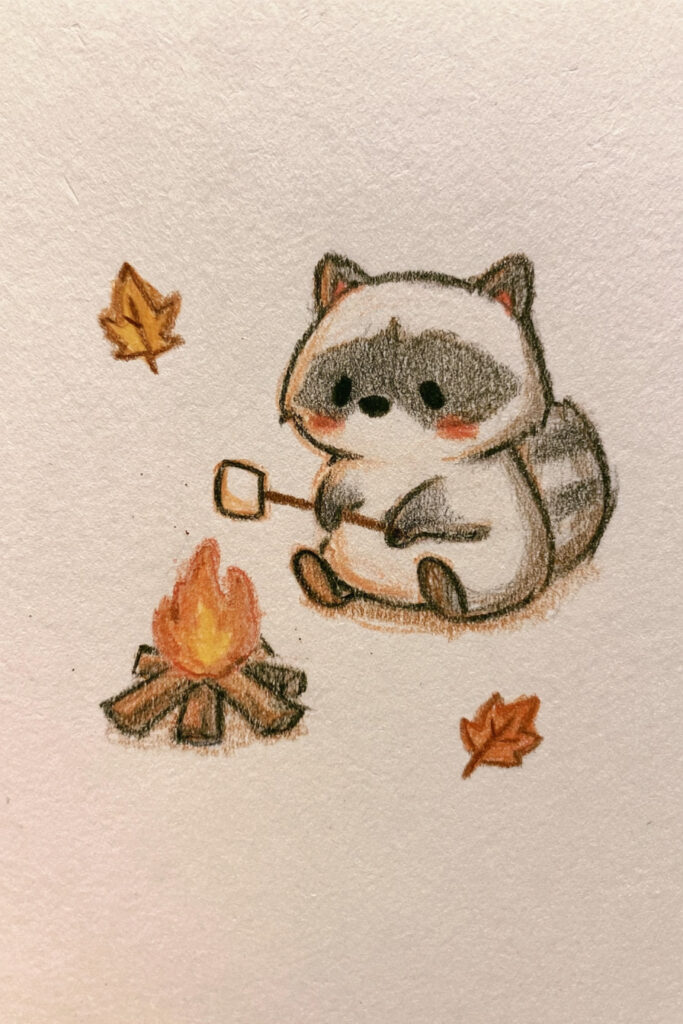
Raccoon Roasting A Marshmallow
The low angle perspective in this raccoon drawing creates an endearing, relatable view of the character. We’re at eye level with the little guy, which pulls us into his cozy campfire moment. Shifting to a bird’s eye view could make the scene feel more distant or observational, while a worm’s eye view might emphasize the raccoon’s mischievous nature by making him loom larger.
Experimenting with the horizon line could also yield interesting results. Tilting it slightly might add a touch of whimsy or instability to the scene. And don’t underestimate the power of zooming in or out. A tighter crop on just the raccoon’s face and marshmallow could create a more intimate, focused piece, while pulling back to show more of the forest setting would change the narrative entirely. The current framing strikes a nice balance, but there’s always room to play with composition to evoke different emotions or tell new stories.
Looking at this adorable raccoon illustration, I’m struck by how effectively the artist has captured the character’s mischievous nature. The soft, rounded forms and expressive eyes create a really endearing quality.
To add more texture, I’d suggest incorporating some fine line work to represent the raccoon’s fur, particularly around the face and tail. Short, delicate strokes following the contours of the body could give a sense of the animal’s fuzzy coat without overwhelming the clean style. You might also consider adding some subtle crosshatching to the shadows, which could enhance depth while introducing textural interest.
The campfire presents another opportunity for texture. Some irregular, jagged lines within the flames could convey the flickering, unpredictable nature of fire. And don’t forget the marshmallow – a few well-placed dots or stipples could suggest its spongy surface. These additions would complement the existing watercolor-like washes nicely, adding visual richness without losing the illustration’s charm.
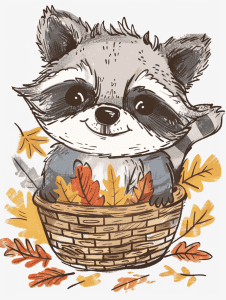
Raccoon Inside Leaf Filled Basket
Raccoon Wearing A Bagpack
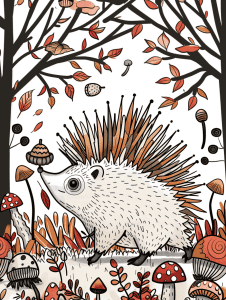
Porcupine Balancing An Acorn On It’s Nose
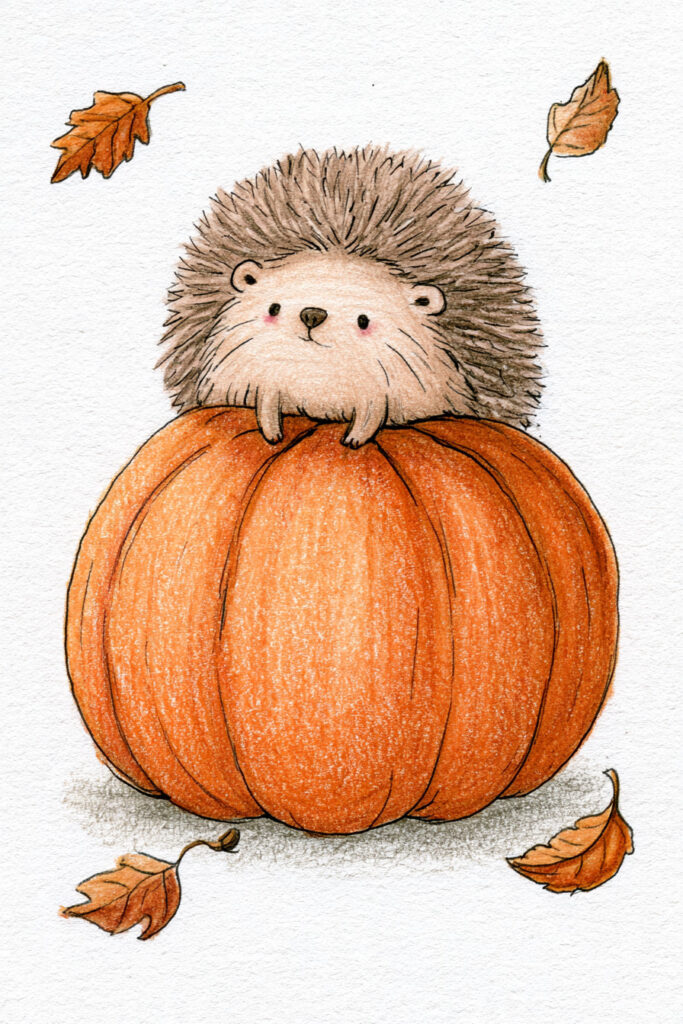
Porcupine On Top Of A Pumpkin
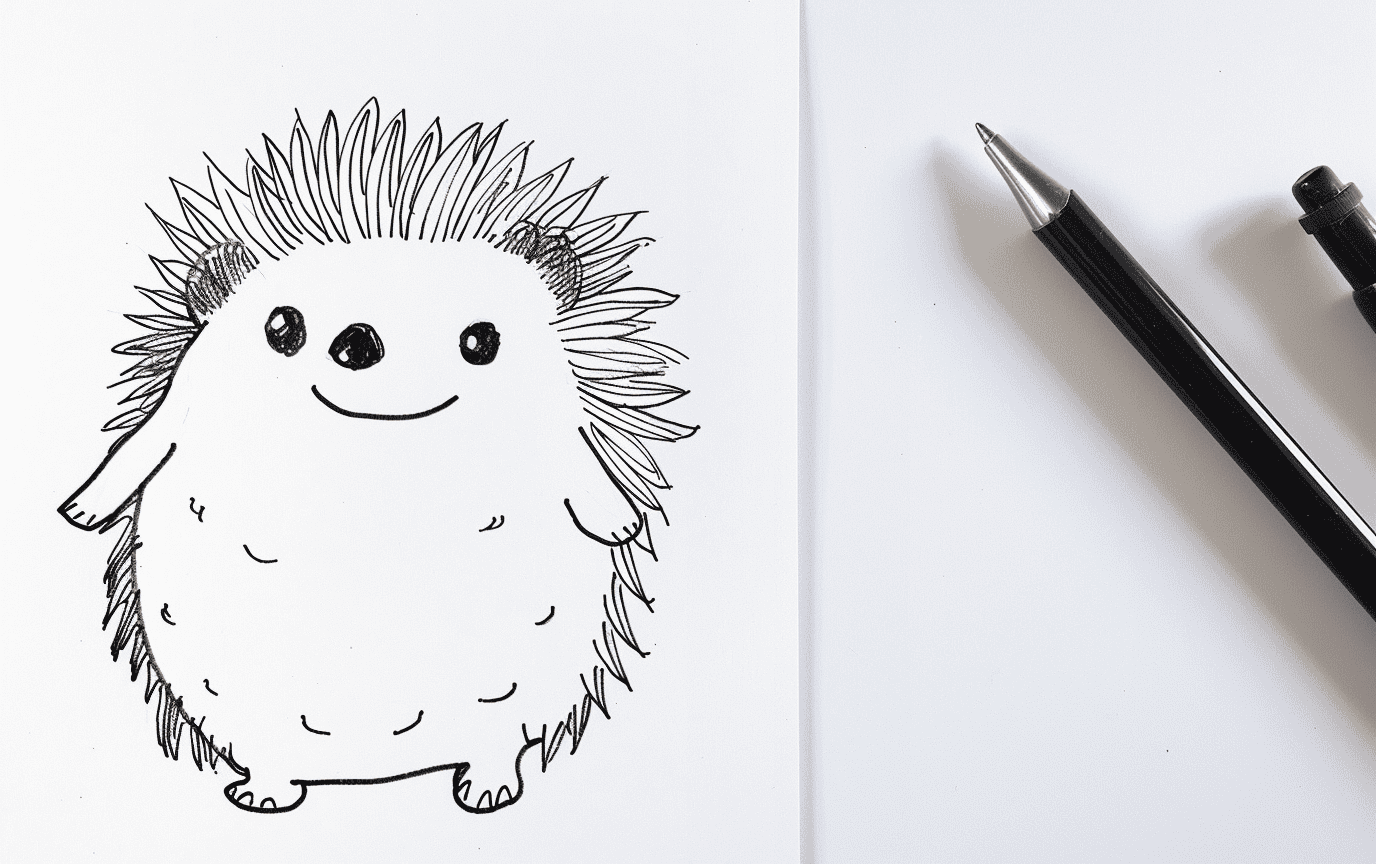
The artist really nails the hedgehog’s spiky texture through repetitive, radiating lines. Those quills create a striking contrast against the smooth, round pumpkin. It’s a clever way to emphasize the hedgehog’s defining feature while also giving the whole piece a sense of energy and movement.
Looking closer, you can see patterns in the falling leaves and scattered mushrooms too. The leaves echo the spiky quills in miniature, while the spotted mushroom caps mirror the pumpkin’s round shape. These repeating elements tie the composition together nicely. I particularly like how the artist varied the size and placement of these details – it keeps things from feeling too uniform or static.
This adorable hedgehog and pumpkin illustration has a lot of potential for adaptation into different media. The line work and shading technique would translate beautifully into an etching or linocut print. The crisp, defined lines of the hedgehog’s spines and the pumpkin’s ridges would really pop using those methods.
For a more tactile approach, I could see this working well as a textile piece. Imagine the hedgehog’s body in soft, fuzzy fabric with embroidered spines. The pumpkin could be padded for dimension, with the leaves and mushrooms appliquéd on. It’d make a charming autumn pillow or wall hanging. The falling leaves might even be left loose to dangle freely, adding movement to the piece.
Hedgehog Curled Into A Ball
Owl Nestle In A Hollow Tree
Hedgehog Holding A Rake
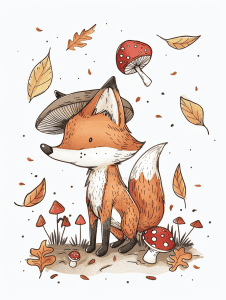
Fox Wearing A Mushroom Hat
Owl Wearing Glasses
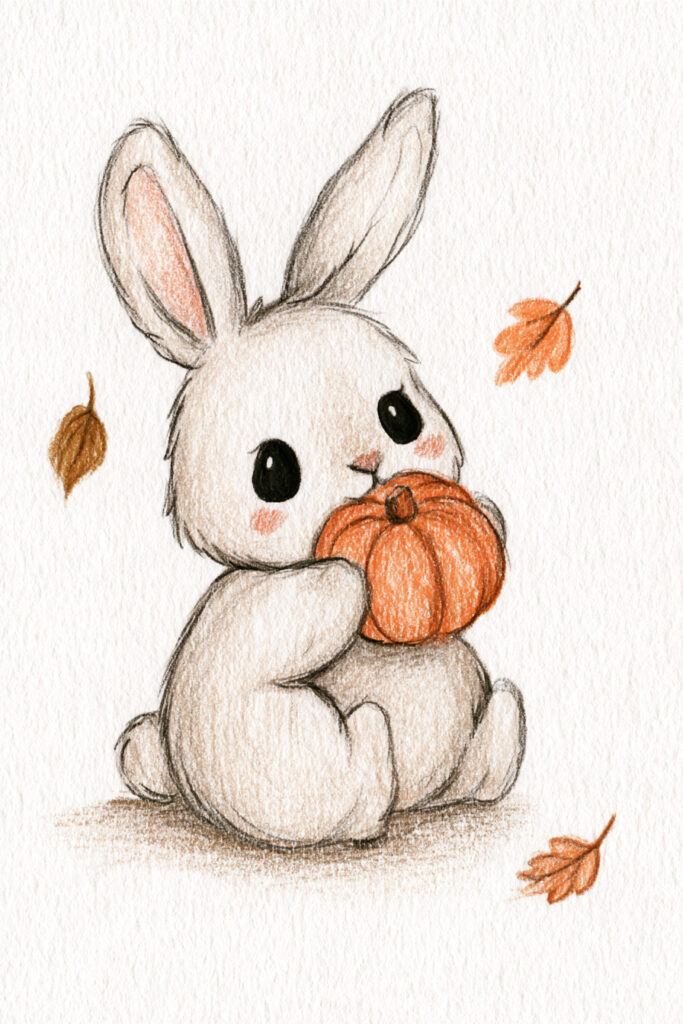
Bunny Holding Pumpkin
Let’s focus on those adorable bunny ears! They’re such a defining feature. Try sketching just the ears in different positions – floppy, perked up, at various angles. Play around with the proportions too. Sometimes exaggerating certain elements can really bring a character to life.
The pumpkin offers a great opportunity to practice basic shapes and shading. Start with a simple sphere, then add subtle curves to give it that classic pumpkin form. Experiment with light pencil strokes to create the ridges. This exercise helps develop your eye for how light and shadow interact with rounded objects.
Those delicate flying insects add a lovely sense of movement. For a quick warm-up, try rapid gesture drawings of different insect flight patterns. Use loose, flowing lines to capture that sense of motion. It’s a fantastic way to loosen up your hand and inject some energy into your sketches.
This adorable bunny illustration offers a great opportunity to practice drawing soft, rounded forms. I’d suggest starting with quick gesture sketches to capture the overall shape and posture of the rabbit. Focus on the big circular body and those oversized ears – get comfortable with those curves.
Once you’ve got the basic form down, try isolating individual elements to refine your technique. The pumpkin, for instance, is perfect for practicing how to show volume with simple shading. And those delicate mushrooms and flying insects are ideal for working on small details and creating a sense of scale. Don’t forget the grass and leaves – they’re a chance to loosen up your hand with some free, organic linework.
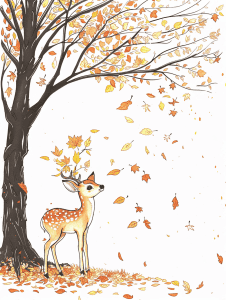
Fawn Under A Tree
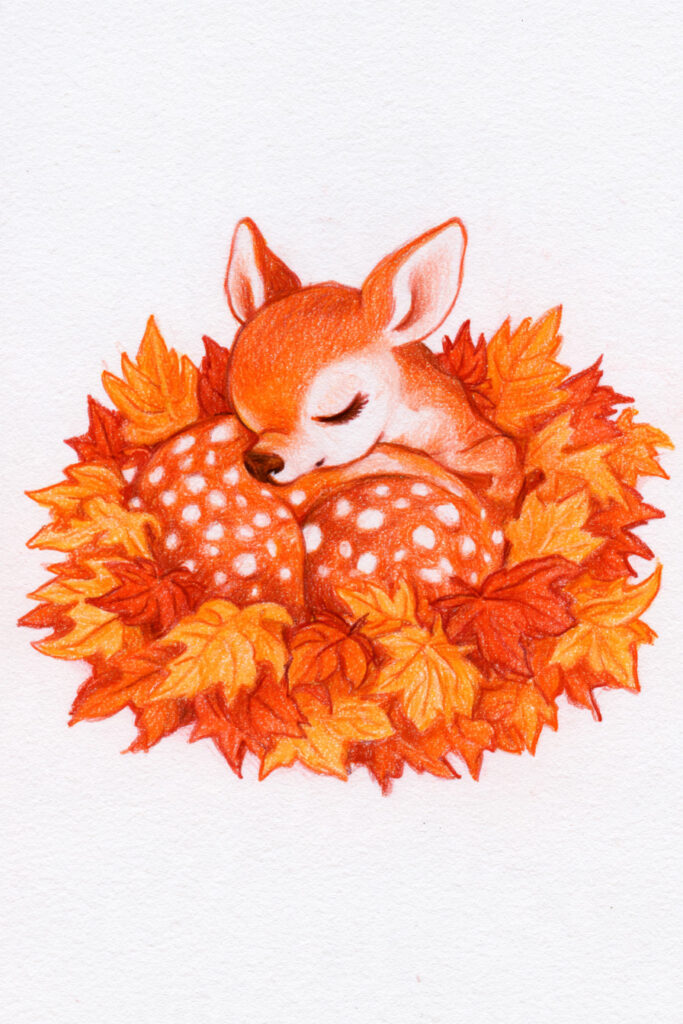
Fawn Sleeping On Autumn Leaves
This illustration captures such a peaceful autumn scene. The sleeping fawn nestled in a bed of fallen leaves is beautifully rendered, with delicate linework defining its spots and form. The tree trunk and colorful foliage create a lovely framing effect.
If I were to suggest one addition, I’d recommend incorporating some subtle background elements to enhance the depth and atmosphere. Perhaps a few distant trees or bushes sketched lightly in the background could provide a sense of the surrounding forest. This would help situate the scene in a broader environment without distracting from the main focal point. Alternatively, a gentle suggestion of misty air or dappled sunlight filtering through leaves could add an extra layer of autumnal mood. What do you think about playing with background elements to complement the existing composition?
This illustration beautifully captures the cozy essence of autumn. The fawn nestled in a bed of colorful leaves under an oak tree is beautifully rendered. The artist’s attention to detail, especially in the texture of the tree bark and the delicate spots on the deer, really brings the scene to life.
If I were to suggest one addition, I’d consider incorporating a subtle background element to add depth. Perhaps a distant treeline or rolling hills fading into a soft autumn sky. This could create a sense of perspective and place the intimate scene within a broader landscape. It wouldn’t need to be detailed – just a few simple strokes could make a big difference in the overall composition.
What do you think about that idea? Of course, there’s always a balance between adding elements and maintaining the focus on the main subject. Sometimes less is more, but in this case, I feel a hint of background could really elevate the piece.
Deer On A Patch Of Mushrooms
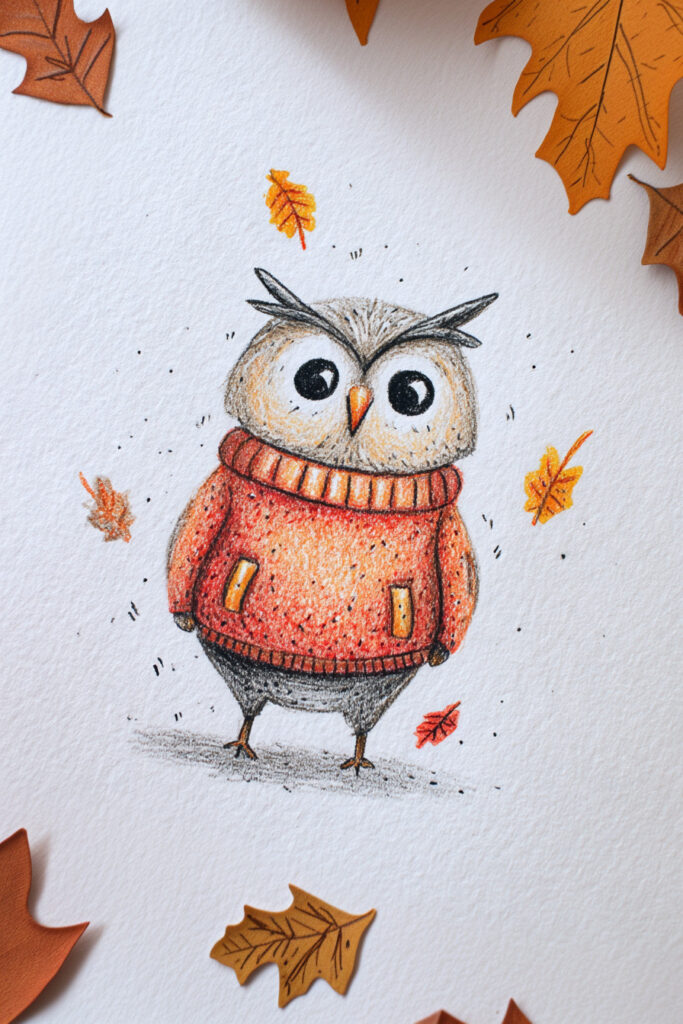
Owl Wearing A Sweater
Looking at this adorable owl illustration, I’d say mastering texture is crucial for beginners aiming to create similar pieces. Notice how the artist has skillfully rendered the owl’s fluffy feathers, especially around its face and body. The knitted sweater texture adds another layer of complexity that really brings the character to life.
To achieve this level of detail, practice creating various textures through different line work and shading techniques. Start with simple patterns and gradually build up to more intricate ones. Pay close attention to how light interacts with different surfaces – the shine in the owl’s eyes versus the matte finish of the falling leaves, for instance. Developing a keen eye for these subtle differences will elevate your drawings from flat to wonderfully dimensional.
The texturing in this owl drawing is absolutely fantastic. As a beginner, I’d recommend focusing on developing your shading techniques to capture that fluffy, feathery look. Notice how the artist has used short, varied strokes to create depth and dimension, especially around the owl’s face and body. That’s not easy to pull off, but it really brings the character to life.
Another crucial skill here is creating expressive eyes. Those big, soulful owl eyes are the heart of this piece. Practice drawing circles and spheres to nail the shape, then work on adding highlights and reflections. It takes time to get right, but mastering eyes will elevate your animal drawings immensely. The way this artist has captured that wide-eyed, slightly startled owl expression is just spot-on.
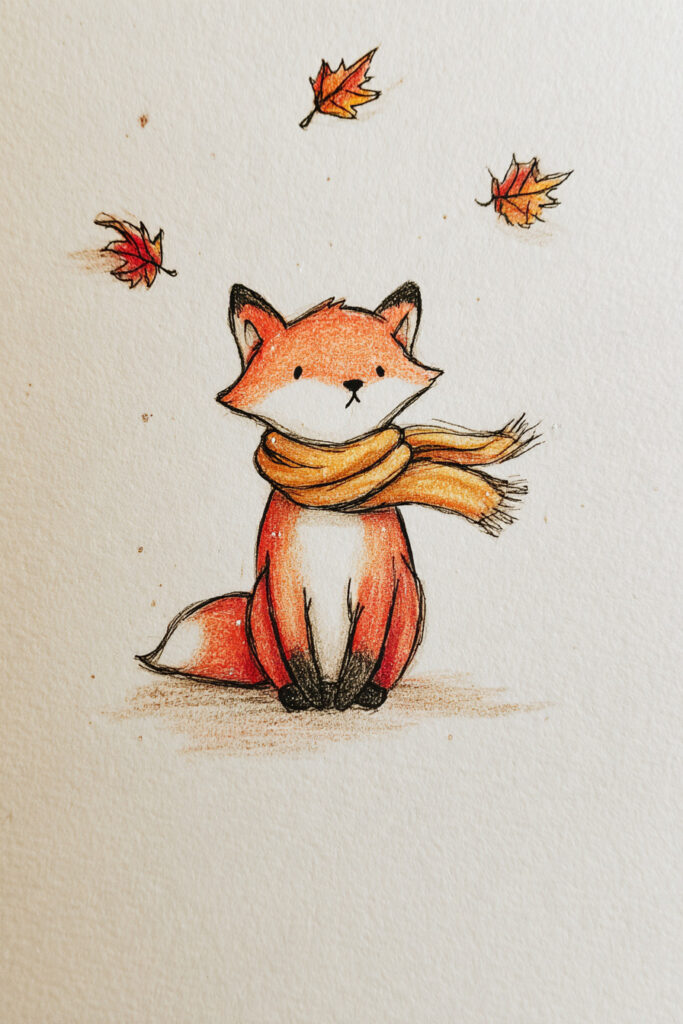
Fox Wearing A Scarf
Let’s tackle this adorable fox piece step by step. For a beginner, I’d suggest starting with the basic shapes – the fox’s body is essentially an oval, with triangular ears and a fuzzy tail. Simplify those leaf shapes too – maybe just go for basic maple leaf outlines instead of all the intricate details.
The shading and texture are what really bring this illustration to life, but that can be overwhelming at first. I’d recommend focusing on the main color blocks initially – the orange of the fox, the red of the scarf, and some brown for the leaves. You could even leave out the falling leaves in the background to start. Once you’ve got the main elements down, then you can begin adding in some of those lovely details that give the fox its charm and personality. The expression is key here, so pay special attention to those eyes and that little smile!
Let’s break this down for a beginner. The fox’s basic shape is a good starting point – it’s essentially a few ovals and triangles. You could simplify the face to a circular shape with pointed ears and a triangular snout. The scarf could be reduced to a simple curved rectangle around the neck.
For the autumn leaves, I’d suggest not trying to draw each one individually. Instead, you might use a few loose, curved shapes to suggest clusters of leaves around the fox. The falling leaves could be simplified to basic leaf outlines or even just small dashes and dots. This would still convey the autumn feeling without overwhelming a new artist. Remember, it’s often more effective to suggest detail rather than meticulously render every element, especially when you’re just starting out.
Chipmunk Pushing A Wheelbarrow
Chipmunk Popping Out From A Log
Chipmunk Hugging An Acorn
The defining stylistic choice here is the masterful blend of loose, sketchy lines with more refined details. Look at how the fur is suggested with quick, energetic strokes, giving a sense of texture without meticulously rendering each hair. Yet the chipmunk’s eyes and the pattern on its scarf are more carefully delineated, creating focal points that draw the viewer in.
I’m particularly impressed by the use of color. The warm, earthy palette perfectly captures an autumnal mood, with that pop of reddish-orange in the oak leaf tying everything together. The way the artist has left areas of white paper showing through adds a lightness to the piece, preventing the browns from becoming too heavy or muddy. It’s a technique that takes confidence to pull off, but it really pays off here in creating a fresh, spontaneous feel.
The standout stylistic choice here is the blend of realistic texturing with a cartoonish expression. Look at how the artist captured the squirrel’s fur – those short, sketchy lines give a wonderful sense of its soft, fluffy coat. But then you’ve got those oversized, expressive eyes that wouldn’t be out of place in an animated film. It’s a delightful contrast that gives the drawing so much personality.
I’m particularly drawn to the scarf. The plaid pattern adds a pop of color and complexity that balances nicely against the simpler tones of the squirrel and background. It’s not an easy thing to pull off – plaid can be tricky – but here it works beautifully. The way it’s slightly rumpled and how it wraps around the squirrel’s neck adds a cozy, autumn feel to the whole piece.
Bunny Wrapped In A Sweater
Cub Playing In A Pile Of Leaves
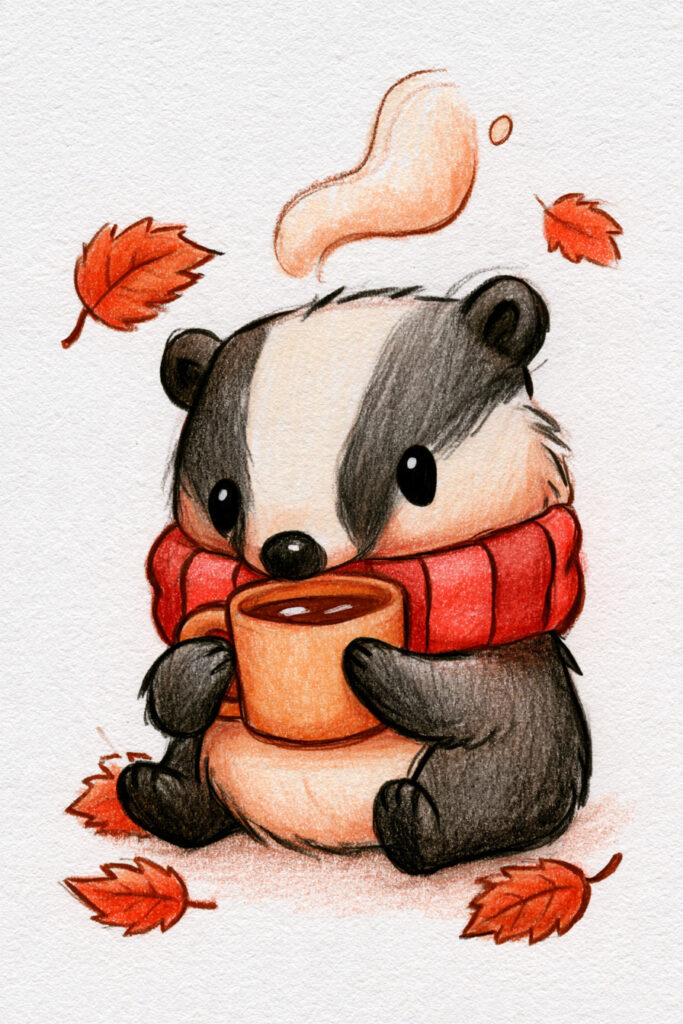
Badger Holding A Cup Of Cocoa
This piece really draws the eye to the central panda figure through some clever compositional choices. The artist has placed the panda smack in the middle, perched on that rock, which immediately makes it the focal point. But what I find particularly effective is how the falling leaves frame the character, creating a sort of natural vignette that further emphasizes its importance.
The panda’s large, round shape contrasts nicely with the angular rock and leaves, helping it stand out even more. And did you notice how the white of its face and belly creates a bright spot that grabs attention? That tonal contrast is doing a lot of work here. I also appreciate how the artist has left some negative space around the figure, which prevents the composition from feeling too cluttered despite all the falling leaves. It’s a great example of using white space effectively in a busy scene.
The focal point of this composition is undoubtedly the adorable panda character. Its large, round form dominates the center of the image, immediately drawing the eye. The artist cleverly uses the panda’s stark black and white coloring to create contrast against the softer, earthy tones of the autumn leaves and rock it’s perched on.
Those falling leaves add a sense of movement that guides the viewer’s gaze around the drawing. They frame the panda nicely, creating a subtle circular flow. I particularly like how the artist varied the size and orientation of the leaves – it gives the scene a natural, organic feel. The rock beneath the panda anchors the composition, providing a solid base that balances out the lightness of the floating foliage. Overall, there’s a lovely balance between the weighty, central panda figure and the airy, drifting elements surrounding it.
Badger In A Pile Of Leaves
As you finish doodling these 30 fun and easy woodland creatures, take a moment to enjoy the delightful autumn vibes you’ve brought to life. Each fox, owl, and hedgehog reflects your creativity and love for the cozy season. Your sketchbook is now filled with charming characters that capture the magic of autumn’s woodland wildlife. Keep your drawing tools handy and your creative spirit alive as you continue to explore the wonders of nature’s cutest creatures. Happy doodling!